
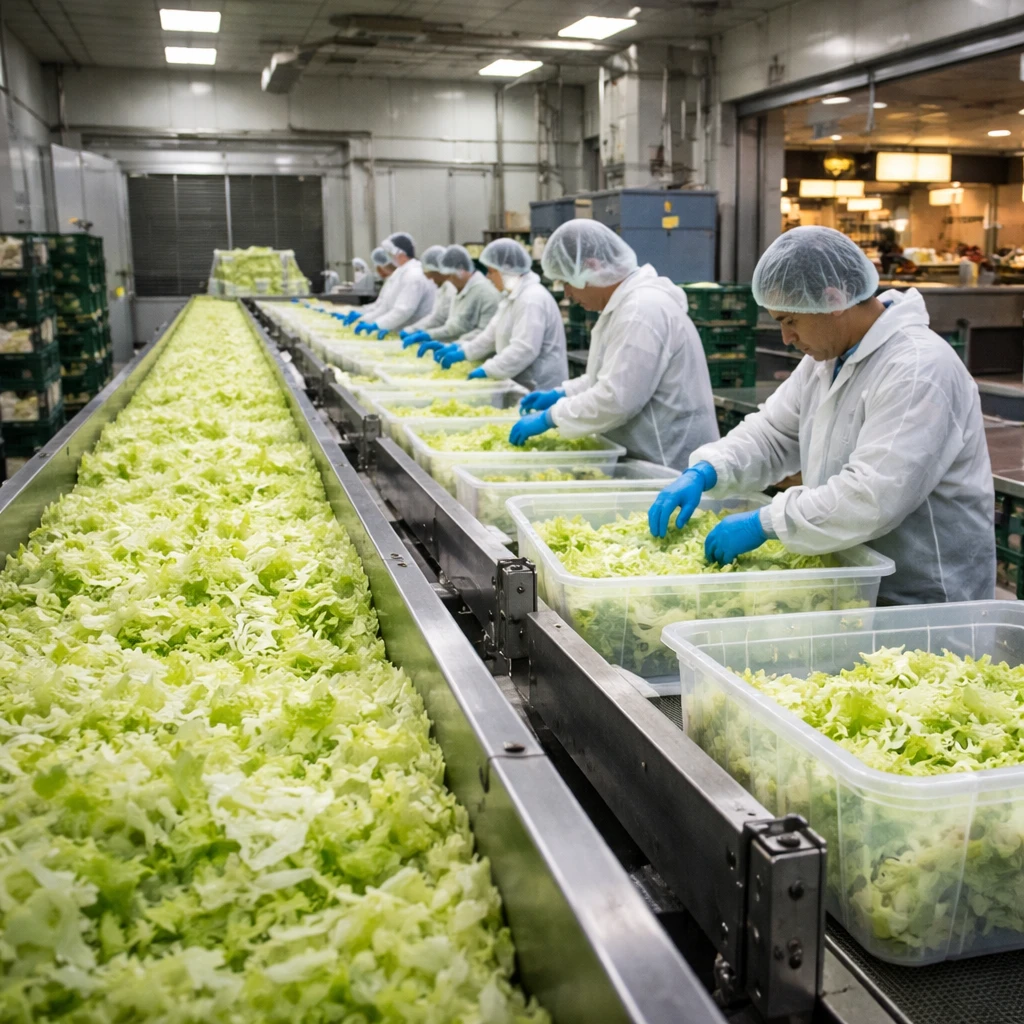
Federal and state public health bodies are working to contain and trace a substantial outbreak of cyclosporiasis, the intestinal illness caused by the cyclospora parasite. The U.S. Food and Drug Administration (FDA), the Centers for Disease Control and Prevention (CDC) and health agencies in multiple states have been investigating a spike in cases that has become one of the largest U.S. outbreaks in recent years.
Michigan alone has reported more than 9,000 cases and officials there are looking beyond the initial cluster of infections tied to lettuce, according to information reported by public health authorities. At the same time federal tracebacks have connected thousands of illnesses to shredded iceberg lettuce served at Yum Brands’ Taco Bell restaurants in nine states: Indiana, Kentucky, Michigan, Ohio, West Virginia, Illinois, Kansas, Oklahoma and Pennsylvania.
Investigations into other potential sources remain active even as the FDA and state agencies focus on the lettuce link. The CDC has reported 1,947 laboratory-confirmed cases of cyclosporiasis beginning with cases detected on June 22 and said 98 of those patients had been hospitalized. The agency has cautioned that the confirmed total will rise: it expects thousands more cases to be identified because it can take up to six weeks to determine whether an ill person is part of the outbreak.
What is cyclosporiasis?
Cyclosporiasis is an intestinal infection acquired by ingesting food - most commonly raw fruits and vegetables - or water contaminated with feces carrying the cyclospora parasite, the CDC explains. Symptoms vary from mild to severe. Children, older adults and people with compromised immune systems are more vulnerable to serious illness.
While the infection is not considered fatal, untreated cyclosporiasis can persist for weeks and may lead to hospitalization, primarily due to dehydration. The CDC designates May 1 to August 31 as the annual cyclosporiasis season in the United States. U.S. history includes previous multistate outbreaks linked to fresh produce; for example, a 2020 outbreak tied to bagged salads sickened nearly 700 people across 13 states.
What have regulators learned about the implicated produce?
FDA traceback work has identified a connection between thousands of cases and shredded iceberg lettuce sold in Taco Bell restaurants across the nine listed states. On July 18 the FDA reported that a sample of shredded iceberg lettuce supplied by Taylor Farms had tested positive for the parasite, but the agency withdrew that specific finding a day later after a laboratory review determined the result was a false positive.
Despite the withdrawal of that single laboratory result, FDA investigative activity continues to point to Taylor Farms. The company issued a voluntary recall of iceberg lettuce sourced from central Mexico and closed its processing plant in that region. The recall covered Marketside-branded product sold at Walmart and products distributed through Sysco and other companies, according to the FDA.
Taylor Farms stated on July 24 that the recall was voluntary and emphasized its existing cyclospora prevention protocols, and that it is no longer sourcing iceberg lettuce from the affected region.
How can people protect themselves?
The FDA advises that the most reliable way to kill cyclospora is to cook produce to at least 158 degrees Fahrenheit (70 degrees Celsius), because the parasite is resistant to routine chemical disinfection. Additional consumer guidance includes discarding the outer leaves of leafy vegetables and thoroughly rinsing fruits and vegetables before peeling or eating them.
Public health agencies note that cyclospora is typically spread through contaminated food or water and is not commonly transmitted from person to person.
Treatment and prior links to produce
For those diagnosed with cyclosporiasis, the CDC recommends treatment with the antibiotic combination trimethoprim-sulfamethoxazole - commonly known by the brand name Bactrim - taken twice daily for seven to 10 days. The agency adds that people living with HIV may require a longer course of treatment.
Past outbreaks in the United States have been associated with a variety of fresh produce items, including bagged salad mixes and kits, fresh cilantro and basil, raspberries, snow peas and green onions.
Surveillance and reporting
Cyclospora is a nationally notifiable pathogen and most states maintain comprehensive data collection that they share with the CDC through national disease surveillance systems, said Gwen Biggerstaff, deputy director of the CDC’s Division of Foodborne, Waterborne and Environmental Diseases. Healthcare providers are legally required to report cyclosporiasis cases to public health departments in 47 states.
The Foodborne Diseases Active Surveillance Network, known as FoodNet, is a collaboration among the CDC, the U.S. Department of Agriculture, the FDA and ten state health departments. Last July, FoodNet stopped tracking six of eight pathogens, including cyclospora, because of funding reductions. The stated goal of FoodNet is to assess trends over time, and the network does not replace national surveillance, Biggerstaff said. Participating states continue to report cyclospora cases on a national basis, and the data being used for this outbreak are consistent with previous reporting arrangements.
Public health agencies continue their investigations to identify all potential sources and to quantify the full scale of the outbreak. In the meantime, regulators, suppliers and foodservice operators are coordinating recalls and consumer guidance as more laboratory-confirmed cases are reported and the tracing work proceeds.