
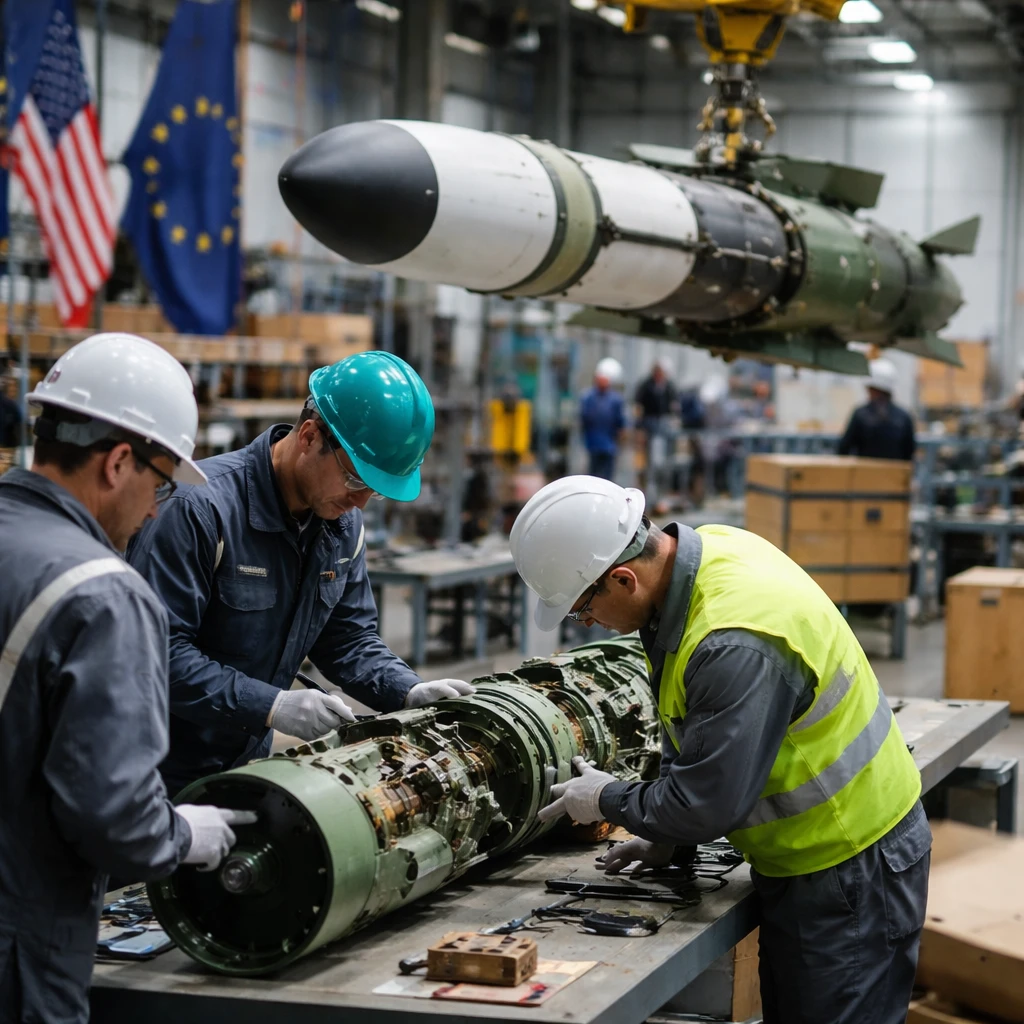
The United States is pressing forward with internal talks about permitting Ukraine to produce Patriot interceptor missiles, sources familiar with the conversations said, even after President Donald Trump publicly expressed reservations. The discussions, according to four people with direct knowledge of the matter, include options that would have Ukraine manufacture some missile components domestically and send them to Europe for final assembly.
Kyiv has been urgently requesting additional PAC-3 interceptors - the most advanced version of the Patriot missile - because they are among the few systems able to counter the growing number of ballistic missiles Russia has launched into Ukraine. Ukrainian President Volodymyr Zelenskiy warned last week that his country had exhausted its supply of Patriot interceptors; he said that of 27 ballistic missiles fired by Moscow on a single day, only one was shot down.
During a meeting in Ankara last month, President Trump indicated the United States would provide Ukraine a license to manufacture PAC-3 interceptors, a development that Kyiv viewed as a significant boost. But in a later public comment after a White House meeting with Zelenskiy that several sources described as difficult, Mr. Trump said the U.S. had not agreed to authorize production in Ukraine and warned that Washington must be "very careful about letting somebody build them."
Those calls by Zelenskiy for domestic production of interceptors had previously been deprioritized by Washington amid the ongoing conflict, according to three sources, because industry leaders and U.S. military officials raised security concerns. Despite those hesitations, the sources said deliberations have continued.
Who is driving the effort
Washington's envoy to NATO, Matthew Whitaker, is leading renewed efforts to reach a workable arrangement. Whitaker traveled to Kyiv last month to consult with Ukrainian officials and weapons industry executives about potential paths forward, the four sources said. A senior White House official confirmed that several possible avenues for defense industrial cooperation with Ukraine are being explored and emphasized that any arrangement would need to protect sensitive U.S. technology.
Whitaker's spokesperson summarized his visit as an effort to "explore collaboration opportunities on battlefield innovations, such as drones, which will benefit the U.S. warfighter," without explicitly referring to the Patriot discussions.
One of the anonymous sources involved in the deliberations said no directive was issued to stop the talks and that conversations continued with U.S. arms manufacturers, military officials and other stakeholders. The White House declined to comment when contacted.
Options on the table
According to the four sources, officials are weighing several specific options. These include:
- Building Patriot components in Ukraine and shipping them to Germany for final assembly.
- Integrating Ukraine into an existing U.S.-European Patriot interceptor program.
- Authorizing Kyiv to produce a lower-cost variant of the PAC-3 interceptor.
A U.S. official familiar with the talks described the most viable near-term option as having components manufactured in Ukraine and assembled in Germany. Germany already produces an older Patriot model, and the more advanced PAC-3 is expected to be produced there as well, the official noted.
Separately, the sources said Ukraine could potentially join Lockheed Martin's newly announced PAC-3 Adapted Capability Effector (ACE) program, a lower-cost Patriot interceptor design unveiled last month. Lockheed Martin, according to a former Ukrainian ambassador to the U.S., is actively engaged and preparing to send a team to Ukraine soon; the company did not respond to a request for comment.
Timing and immediate needs
Even if an agreement to permit Ukrainian manufacture were reached, officials caution that it would not yield immediate deliveries. Any nascent production arrangement would be unlikely to supply new missiles for at least a year or longer. That delay reflects the complexities of establishing new production lines and the need to safeguard technology, the sources said.
As a result, Ukraine continues to press allies for the transfer of existing interceptors to meet urgent operational needs. Former ambassador Olha Stefanishyna said Kyiv is also pursuing long-term purchases of PAC-3 missiles and is exploring options to swap delivery schedules with other countries to obtain interceptors sooner.
Industrial and strategic constraints
U.S. officials say licensing U.S. weapons production in Europe has been under active consideration since gaps in European arsenals became apparent following Russia's 2022 invasion. Some licensing deals have already been concluded for other systems. But officials also warn that opening new component production lines is complex: production commonly does not commence until three to seven years after a licensing agreement is finalized.
Compounding the challenge, global inventories of high-end interceptors have tightened since the conflict in the Middle East, with Patriot missiles that had been destined for Ukraine redirected to equip U.S. forces and allied militaries in the Gulf. Ukraine hopes a production agreement would allow it to rebuild an indigenous inventory of interceptors over time, even as near-term sourcing remains critical.
Diplomatic reverberations
President Trump's apparent retreat from his prior public endorsement of a licensing arrangement surprised many observers and reportedly unsettled the Ukrainian leadership. Following the president's remarks, Zelenskiy reiterated the urgency of replenishing interceptors in a phone call with U.S. Vice President JD Vance, who, according to a source, reassured the Ukrainian president that presidential agreements would be honored.
Ukraine's embassy in Washington did not reply to a request for comment on the discussions. The sources speaking about the internal deliberations did so on condition of anonymity to speak freely about sensitive negotiations.
Outlook
For now, U.S. officials and industry participants continue to examine multiple pathways that aim to balance Ukraine's immediate operational requirements with long-term prospects for indigenous production. The discussions reflect the tension between urgent battlefield demands, the security of advanced U.S. technologies and the practical timelines required to stand up new production capabilities.
Any final decision will need to address those trade-offs, and even the most optimistic production scenario outlined by U.S. officials still leaves Ukraine dependent on allies' existing stockpiles in the near term.