
Introduction
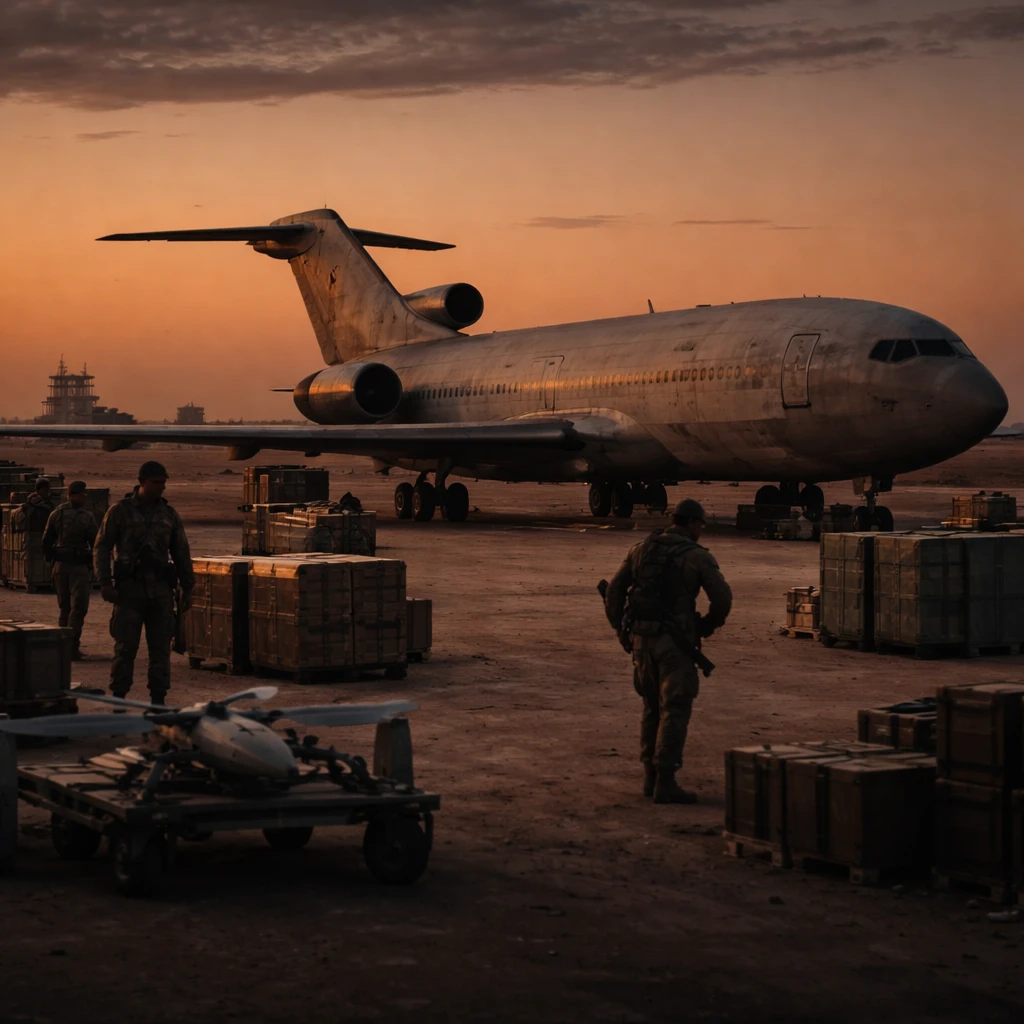
United Nations investigators have concluded that multiple Boeing 727 aircraft connected to a U.S. military contractor’s business network were used to move fighters, mercenaries and military materiel for Sudan’s Rapid Support Forces (RSF), according to a draft U.N. report due to be published in September. The Panel of Experts on Sudan compiled the draft and has submitted it to the U.N. Security Council for review.
What the U.N. found
The draft report states plainly: "The Panel received reliable information from four sources that the aircraft had transported RSF fighters and mercenaries, as well as military equipment, including drones and weapons." The panel cited two eyewitnesses in Nyala - the RSF’s primary military and logistics hub in Darfur - and communications from two member states as the bases for that information.
The investigators documented repeated nighttime landings of several Boeing 727s and some Ilyushin Il-76 transport planes in Nyala between January and July 2026. The report also asserts that the RSF relied on an air corridor from N'Djamena, Chad, to Nyala to carry fighters, foreign mercenaries and military equipment into Darfur.
Movements, tracking and steps to avoid detection
The draft indicates that three Boeing 727s appeared in Chad from November 2024 and operated from the military apron at N'Djamena's international airport. Two of those 727s were acquired from a Michigan-based company, and one had been sold in Brazil to a company linked to the U.S. contractor. The panel reported that none of the three aircraft movements had been logged since they arrived in N'Djamena and expressed suspicion that the Boeings were taking "deliberate steps to avoid detection while in flight," though it did not provide technical details on how that was accomplished.
Investigators used satellite imagery, cell phone data and an open source video to track the aircraft movements from N'Djamena to RSF hubs in Libya and Sudan. The report notes that independent flight trackers did not register the flights because the aircraft lacked records on the signals normally broadcast during flight.
One of the aging Boeing aircraft in the network - a Boeing 737 - was reported to have had RSF fighters onboard when it was destroyed in May 2025. The draft confirms the presence of fighters on flights into RSF logistics hubs but does not offer a comprehensive cargo manifest for each mission.
Ownership and business links
Company records reviewed by the panel show joint ownership in a South African entity that bought two of the 727s from the Michigan-based firm. The business partner named in those records previously denied any connection between the South African company and the RSF, calling earlier findings that the aircraft had landed in Nyala and Kufrah in Libya "to the best of our knowledge, false."
The Michigan-based seller's attorney told investigators the company had conducted extensive due diligence before selling the planes and did not flag any sanctions violations.
Responses from implicated parties
The U.S. contractor identified in the report did not respond to questions about the U.N. findings. The RSF also did not provide comment to inquiries. Chad’s Civil Aviation Authority stated that none of the Boeings had authorization to operate from Chad and emphasized that it does not manage military aviation or the services responsible for tracking flight movements. Chad’s foreign minister said questions concerning the planes were subject to defense secrecy and framed Chad’s role as limited to diplomatic efforts to restore peace.
Colombian mercenaries and their role
The U.N. panel’s investigation extends beyond aircraft movements to examine the scale of foreign combat support provided to the RSF. The report finds that estimates of 1,500-2,000 Colombian mercenaries, reportedly known as the Desert Wolves, are credible. According to the draft, these mercenaries established a base in Nyala in March 2025 and worked alongside RSF forces, operating drones and participating in planning during the siege and capture of al-Fashir in October 2025.
The report attributes the hiring of the Colombian fighters to a company based in the United Arab Emirates, identified as Global Security Services Group (GSSG). The panel documents their operational role during the al-Fashir assault, which the U.N. has previously said included mass killings, sexual violence and child abductions and amounted to acts that rose to the level of genocide.
Colombian government officials did not respond to queries, and representatives for the Desert Wolves were not reachable. The UAE mission to the United Nations provided a statement that UAE authorities had investigated GSSG and concluded it was not involved in mercenary activity in Sudan and had no links to individuals reported to be mercenaries in the country. The statement added that GSSG is acting in compliance with UAE laws, regulations and international law.
Context of the conflict and embargo monitoring
Sudan’s civil war began in 2023 when the army and the RSF broke down over efforts to integrate forces during a failed transition to civilian rule. The conflict has resulted in an estimated death toll in the hundreds of thousands and has deepened famine and disease, creating what the U.N. calls the world’s worst humanitarian crisis.
The Panel of Experts on Sudan was mandated by the U.N. Security Council to monitor an arms embargo on Darfur that dates back to 2004. The draft report under review is part of a broader investigation into alleged violations of that embargo and documents how foreign-sourced aircraft and contracted fighters have been used in support of RSF operations.
Gaps and limitations noted by investigators
While the panel presents information from eyewitnesses and communications from member states, it also notes limitations. For several of the aircraft the report indicates that movements were not logged and flight-tracking systems did not capture transmissions, suggesting evasive measures were employed. The report does not provide a full accounting of cargo manifests or an exhaustive list of all flights and actors involved.
Implications for monitoring and enforcement
The draft underscores challenges for arms embargo enforcement and the monitoring of aerial movements in regions where aircraft may operate outside of normal tracking protocols. It highlights how a combination of older transport aircraft, night operations and use of regional airfields can complicate verification efforts by international monitors.
Closing
The draft Panel of Experts report will be circulated to the Security Council before its scheduled publication in September. It compiles eyewitness testimony, satellite and other technical data, and diplomatic communications to present an account of how certain civilian transport aircraft were used in support of RSF operations in Darfur and how contracted foreign fighters were deployed alongside RSF units during key offensive operations.