
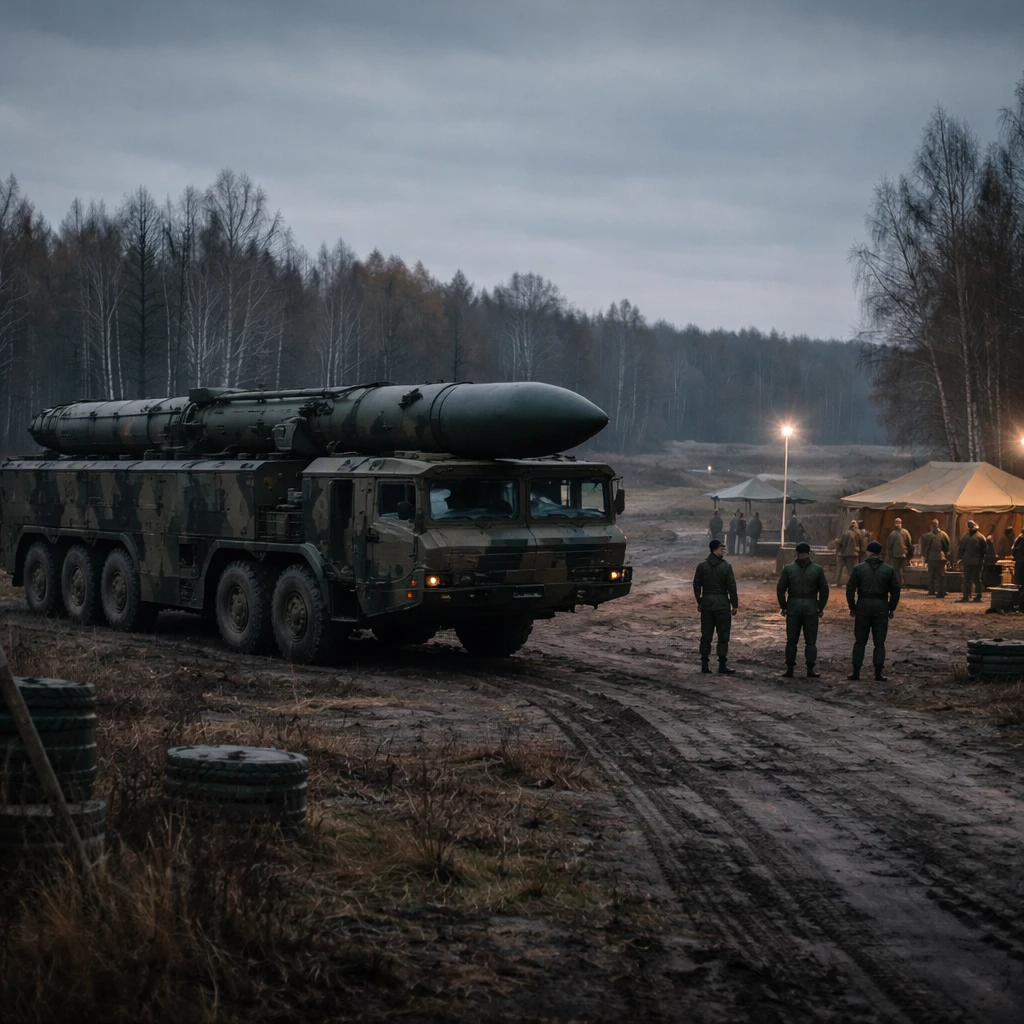
A Ukrainian military intelligence official has said a North Korean missile unit is being positioned in western Russia and could be armed with up to 120 ballistic missiles and six launchers for operations targeting Ukraine. The official described the unit as comprising roughly 90 North Korean personnel who would be based in the Voronezh region and attached to Russia's 112th Missile Brigade.
The intelligence official, Andrii Cherniak of Ukraine’s Main Directorate of Intelligence, said Pyongyang has already sent a fresh consignment of 40 KN-23 and KN-24 missiles along with personnel to Russia. He added that the ultimate configuration of the deployment and the total number of missiles would be finalised at upcoming top-level talks next month, and that Russian planners presently expect the deployment to total 120 North Korean ballistic missiles and six launchers.
It is not clear from Cherniak’s account what specific operational role North Korean personnel would have within Russian missile operations, or whether they would operate independently or under Russian command. The reported movement appears to coincide with recent missile activity: Russia fired what Ukrainian officials say were its first two North Korean missiles at Ukraine since last August, an action that aligns with the broader increase in ballistic missile use noted by Kyiv.
Ukraine has been described by its intelligence services as critically short of high-end air defence systems. That shortfall has contributed to a tactical emphasis by Russia on ballistic missile strikes, which Ukrainian analysts say are particularly difficult to intercept without systems such as U.S.-supplied Patriot batteries. Rob Lee, a senior fellow at the Foreign Policy Research Institute, framed the arrival of additional North Korean missile resources as a significant escalation of the threat Kyiv faces, noting that any rise in the number of ballistic missiles would complicate Ukrainian air-defence efforts.
Cherniak said last week’s strike on a residential area in the central Ukrainian village of Radushne - which Ukrainian authorities reported flattened a home and killed at least five members of the same family - was the first strike recorded as using North Korean ballistic missiles since August 2025, and that it had drawn from the new batch of 40 missiles.
The missiles being transferred from North Korea include KN-23 and KN-24 models. According to Ukrainian military sources cited by Cherniak, those missiles have a longer range and larger payload than Russia’s Iskander system, but are considerably less precise and have been linked to attacks producing high civilian casualties. Cherniak said North Korea supplied some 150 of these missiles between the end of 2023 and August 2025, and that Russia began firing KN-23 and KN-24 missiles at Ukraine towards the end of 2023.
Ukrainian officials also point to a broader and deepening military relationship between Moscow and Pyongyang. The two countries signed a mutual defence pact in 2024, and, according to Ukrainian statements, North Korea has provided millions of artillery shells to Russia’s war effort. Kyiv has also asserted that 14,000 North Korean troops were sent to Russia’s Kursk region in 2024 to help repel a Ukrainian ground incursion; Cherniak said there are currently around 9,500 North Korean troops in the Kursk region but that they are not directly involved in operations against Ukraine at present.
Ukrainian officials have also reported that Russia is preparing to receive additional North Korean forces. President Volodymyr Zelenskiy said last month that the Kremlin sought a further 30,000 North Korean troops and that preparations were under way in the Voronezh region to accommodate such a deployment.
Cherniak characterised the most recent intelligence as sensitive and said the details could not be disclosed publicly. Those assertions could not be independently verified at the time of the report. Requests for comment to Russian defence authorities and to North Korea’s diplomatic mission were not responded to immediately, according to the intelligence official.
Analysts and Ukrainian officials warn that the winter months present particular risks. With Ukraine’s air-defence posture already stretched, Russia could again mount heavy attacks aimed at the power grid, as it did in past winters, intensifying civilian harm and complicating recovery and resilience efforts.
Context and implications
If the deployment described by Ukrainian intelligence proceeds as outlined, it would represent a tangible expansion of operational cooperation between Russia and North Korea, extending beyond materiel transfers to the placement of missile personnel and systems on Russian soil. Kyiv’s concern is that more and larger ballistic missiles in the theatre will heighten civilian risk and further strain Ukraine’s limited capacity to protect critical infrastructure and population centres.