
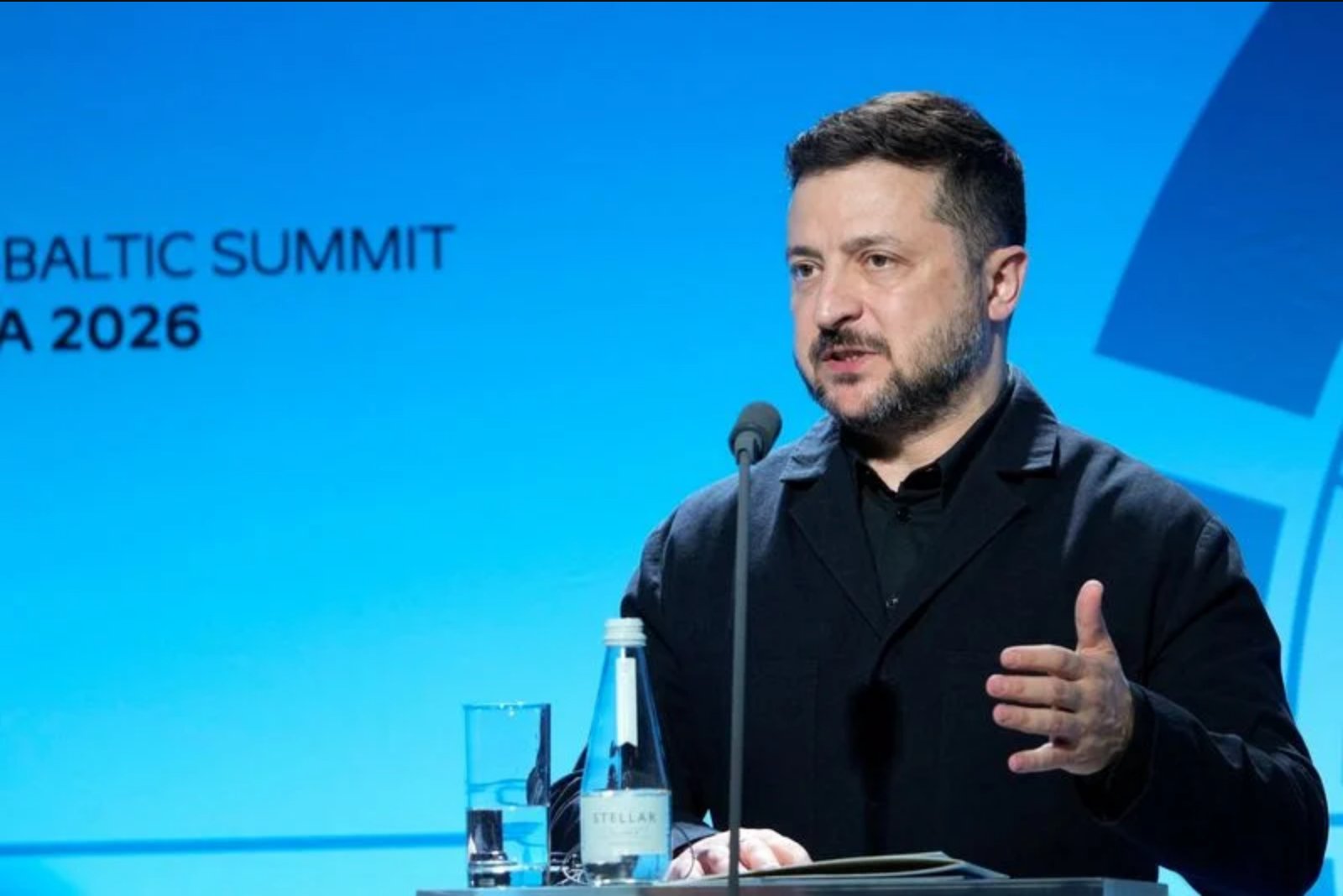
Ukraine announced a formal agreement with Latvia on drone cooperation on Tuesday, President Volodymyr Zelenskiy said, following a meeting with Latvian Prime Minister Andris Kulbergs on the sidelines of a summit in Tallinn that brought together Ukraine and the leaders of the Nordic and Baltic states.
The talks in the Estonian capital convened prime ministers from the group of eight - Estonia, Latvia, Lithuania, Iceland, Finland, Sweden and Norway - and came shortly after Zelenskiy returned from a meeting in London where the leaders of Britain, France and Germany expressed readiness to support ceasefire talks.
Zelenskiy described the agreement as part of practical steps to bolster shared defence capacity and industrial co-operation. In a post on X he said: "These are concrete things to strengthen our joint defense and co-production, and, importantly, this also means Ukraine’s expertise and experience helping to strengthen our partners." He did not provide further technical or commercial details about the arrangement with Latvia.
Latvian Prime Minister Andris Kulbergs said the deal will transfer technological know-how and open opportunities for co-production. Speaking at a joint press briefing with Zelenskiy and other summit participants, Kulbergs said: "We need to protect our skies, and nobody knows how to do that better than Ukraine," adding that drones had caused the vast majority of deaths of Russian troops in the Ukraine war.
Following the summit, Kulbergs indicated on X that the agreement foresees the "immediate" arrival of Ukrainian anti-drone combat unit experts to Latvia. He outlined the aim of the deployment: "Its goal is to adopt Ukraine’s anti-drone expertise, technological solutions, and training from Ukrainian drone warriors in Latvia, as well as to develop joint production in the military industries of Latvia and Ukraine."
The announcement is part of a broader pattern of diplomatic activity by Zelenskiy since the outbreak of the Iran conflict in late February. The president has leveraged Ukraine's battlefield experience in drone warfare into multiple diplomatic arrangements during visits to the Middle East and Europe.
Rustem Umerov, the chairman of Ukraine's defence and security council, said Latvia became the sixth country to join Kyiv's drone cooperation initiative. Zelenskiy has previously said that nearly 20 countries had expressed interest in similar deals.
On X, Zelenskiy emphasised Ukraine’s objective in the partnerships: "Ukraine is interested in ensuring that every region of Europe has sufficient protection against Russian threats."
The agreement with Latvia arrives against a backdrop of recent drone activity near the Baltic states' airspace. The three Baltic NATO members have reported several instances of drones entering their airspace in recent weeks as Kyiv has intensified long-range strikes on Russian energy infrastructure.
Ukraine has attributed some of those incursions to Russian use of electronic warfare to alter drone flight paths. During an earlier joint press conference with his Estonian counterpart Alar Karis, Zelenskiy reiterated that Kyiv would send its experts to assist partners in protecting their skies.
In a joint statement following the Tallinn meeting, the group known as NB8 set out a framework for cooperation with Ukraine that focuses on incorporating battlefield experience, training and information-sharing alongside defence-industrial and technological collaboration. The statement said: "We welcome the cooperation on drones and other Ukrainian technologies proven on the battlefield, including Ukraine’s willingness to share data and export defence industry and technology for co-production with European partners."
Separately, the Kremlin said on Tuesday that Europe was likely not ready to act as a mediator in the Ukraine peace process. The statement noted that U.S. efforts had been leading the talks intended to end the more-than four-year-long conflict before attention shifted amid the Iran conflict. The Kremlin’s comment set those diplomatic assessments alongside the recent surge of bilateral and multilateral security arrangements across Europe.
At the Tallinn summit, the practical outcome was a concrete step in defence cooperation: the transfer of Ukrainian anti-drone expertise to Latvia, a plan for training and the prospect of joint production in the military industrial bases of the two countries. The move reflects an intensifying effort by Kyiv to export battlefield-proven technologies and to embed that expertise into partner states’ defense capabilities.
As these partnerships develop, Latvia joins a growing list of countries engaging directly with Ukraine on drone technology and countermeasures, formalising knowledge transfer and exploring industrial collaboration to strengthen European defenses against ongoing threats.