
TAIPEI, July 28 - Taiwan's defence ministry announced on Tuesday that the island will use its upcoming annual Han Kuang war games to test the relocation of weapons production lines and the conversion of civilian factories for military purposes, with the stated aim of preserving the capacity to sustain combat operations if Chinese strikes target supply hubs.
The exercise, scheduled from August 5 to 14, will include scenarios in which China conceals large-scale assault preparations within routine military drills, prompting Taiwan's armed forces to immediately heighten combat readiness and carry out rapid-response operations. The planning outline published by the ministry said the war games will evaluate whether industrial production can be dispersed while still producing the output necessary to support Taiwan's military during a conflict.
That emphasis reflects a central wartime concern for Taipei: that China - which claims the democratically governed island as its own - would attempt to paralyse command centres, ports, logistics hubs and defence industry facilities early in any attack. Taiwan's government rejects Beijing's sovereignty claims and says it is already an independent country.
Major General Lu Wen-yuan, head of the Joint Operations Division, told a press briefing the drills assume "Chinese forces use routine annual joint military exercises as cover for large-scale landing training, concealing plans to attack Taiwan while completing final assault preparations." Lu said the exercise will simulate a wartime relocation of the Armaments Bureau's 202nd Arsenal in the capital Taipei and will mobilise civilian factories responsible for "whole-system assembly" once an emergency order is issued.
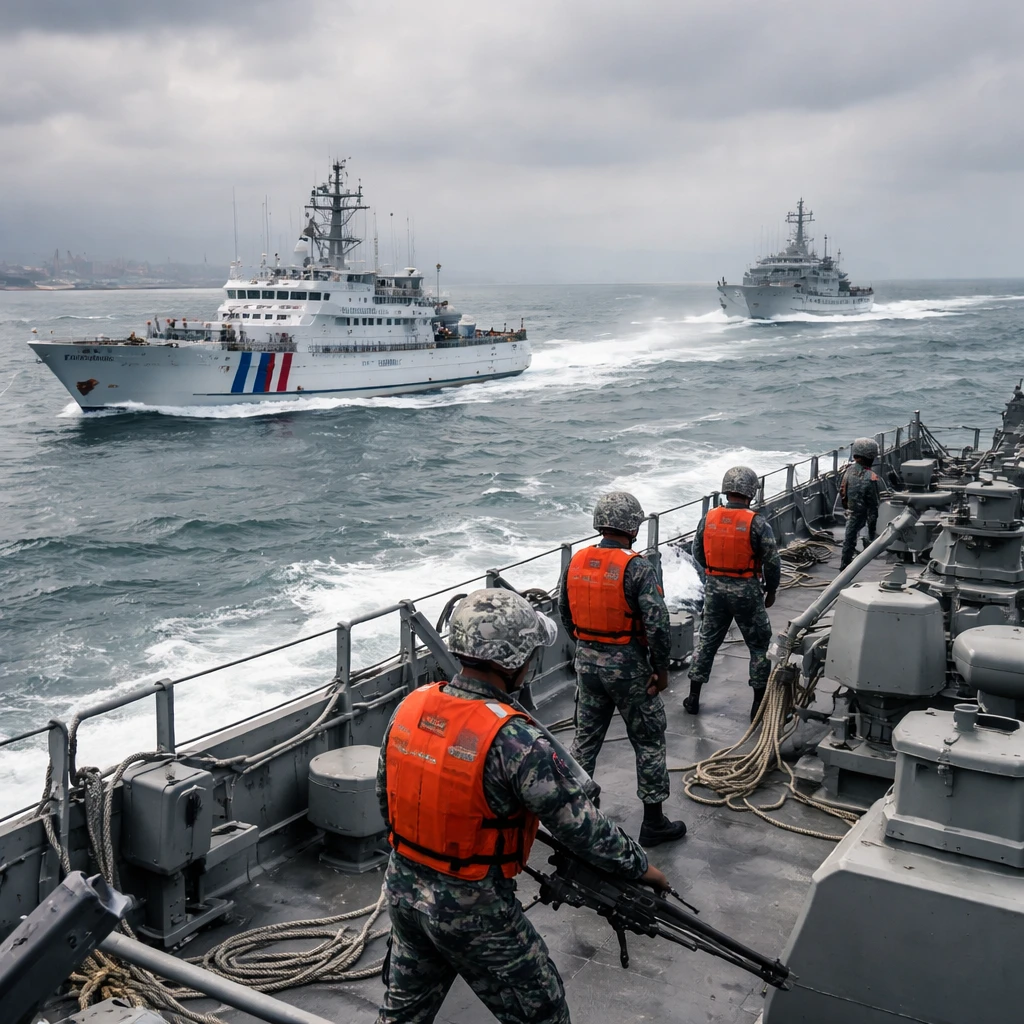
In addition to industrial dispersal and factory mobilisation, the drills will examine Taiwan's ability to keep sea lanes open and to protect shipments of critical supplies. Lu said the navy and coast guard will carry out joint operations using live troops, equipment and ammunition to rehearse coast guard vessel refits, coastal strike scenarios, maritime law enforcement and convoy escorts for essential shipments.
The announcement arrives amid Taiwanese reports of a sharp rise in Chinese coast guard activity around the island, a development that has increased concern in Taipei that Beijing could step up pressure off Taiwan's Pacific coast and threaten vital supply routes.
For the first time, the 10-day exercise will deliberately slow mobile internet speeds, a test designed to assess how citizens would communicate if bandwidth became scarce during emergencies ranging from natural disasters to a potential Chinese invasion. The ministry said this measure will help evaluate civilian communications resilience under constrained network conditions.
What the drills will test
- Relocation of military production facilities, including a simulated wartime move of the Armaments Bureau's 202nd Arsenal in Taipei.
- Mobilisation and conversion of civilian factories engaged in whole-system assembly after an emergency order.
- Maritime operations to keep sea lanes open and protect critical supply shipments, with joint navy and coast guard live exercises.
- Reduced mobile internet speeds to evaluate civilian communications under constrained bandwidth.
Reporting is based on the defence ministry's planning outline and statements given at the press briefing.