
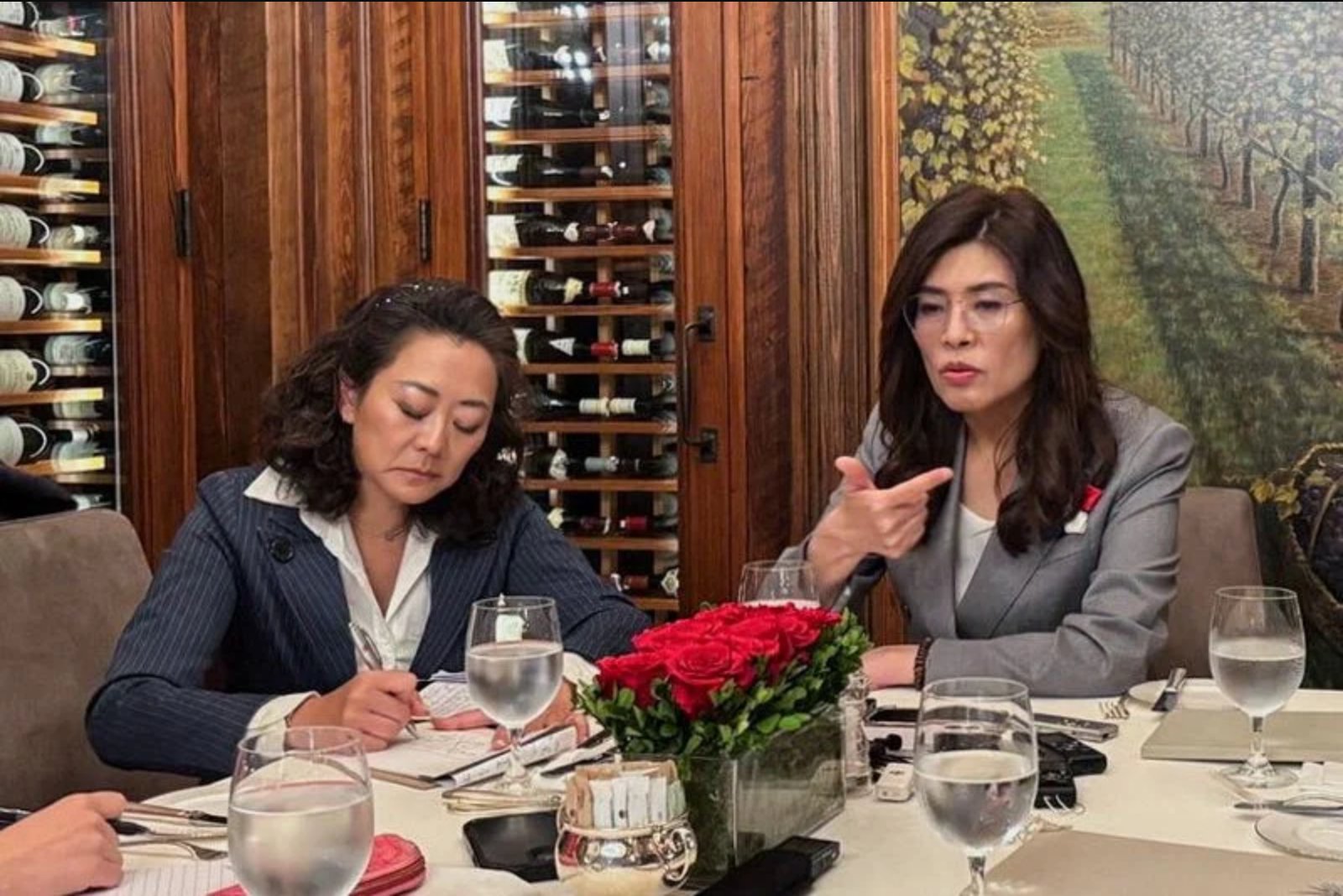
Cheng Li-wun, chairwoman of the Kuomintang (KMT), said on Friday that her two-week visit to the United States had been intended to address "many misunderstandings" surrounding the party’s approach to China. The trip followed an April visit to China where Cheng met President Xi Jinping.
Speaking to reporters, Cheng said she had met nine members of the U.S. Congress from committees responsible for finance, defense and foreign affairs, as well as academics and representatives from think tanks. She said those meetings allowed others to see "the real KMT and the real me" and cited a personal exchange in English, saying she was "honest and candid … and they can tell it when they meet me in person."
Cheng acknowledged criticism in Washington over recent decisions by her party and its small ally, the Taiwan People’s Party, which together hold a parliamentary majority. She noted that the coalition had cut by one third a previously proposed government plan to spend an additional $40 billion on arms, a move that has drawn sharp rebukes from U.S. lawmakers who favor more robust defense spending for Taiwan.
Republican Senator Dan Sullivan warned that the KMT was "playing with fire," reflecting concerns among so-called China hawks in Washington that reductions in the planned arms outlay could weaken Taiwan’s defensive posture. In response, Cheng said that U.S. think-tank experts had advised the KMT to take a more proactive role in drafting its own defense spending legislation, and she said the party was giving that suggestion serious consideration.
Commitment to defense and democracy
Cheng was explicit that the party’s preference for peaceful engagement across the Taiwan Strait should not be interpreted as a willingness to abandon either national defense or democratic freedoms. "Seeking peaceful dialogue across the Taiwan Strait does not mean we will give up Taiwan’s national defense capabilities, still less that we will give up Taiwan’s democracy and freedom," she said.
The broader context, Cheng and others note, is that Beijing claims Taiwan as its territory and has not ruled out the use of force to achieve unification. At the same time, U.S. law obliges Washington to provide Taiwan with the means to defend itself, and the United States has been a consistent arms supplier and key international backer despite the absence of formal diplomatic relations.
Reactions to recent diplomacy
Cheng praised both U.S. President Donald Trump and Chinese leader Xi Jinping, saying their recent summit last month contributed to peace and stability. She declined, however, to comment on a remark by President Trump after meeting Xi that a pending $14 billion U.S. arms sale to Taiwan was a "very good negotiating chip," a comment that had caused alarm in Taipei; she told reporters the matter had not been raised during her Washington meetings.
Asked about her personal impression of Xi following their April meeting, Cheng described him as "very gentle and very nice and very real," and said that demeanor suggested to her a desire to resolve the Taiwan issue by peaceful means.
- Meetings held: Nine U.S. lawmakers from finance, defense and foreign affairs committees; academics; think-tank representatives.
- Parliamentary position: KMT and the Taiwan People’s Party together hold a majority in Taiwan’s parliament.
- Defense budget change: The parliamentary coalition cut by one third a plan to add $40 billion to arms spending.