
Overview
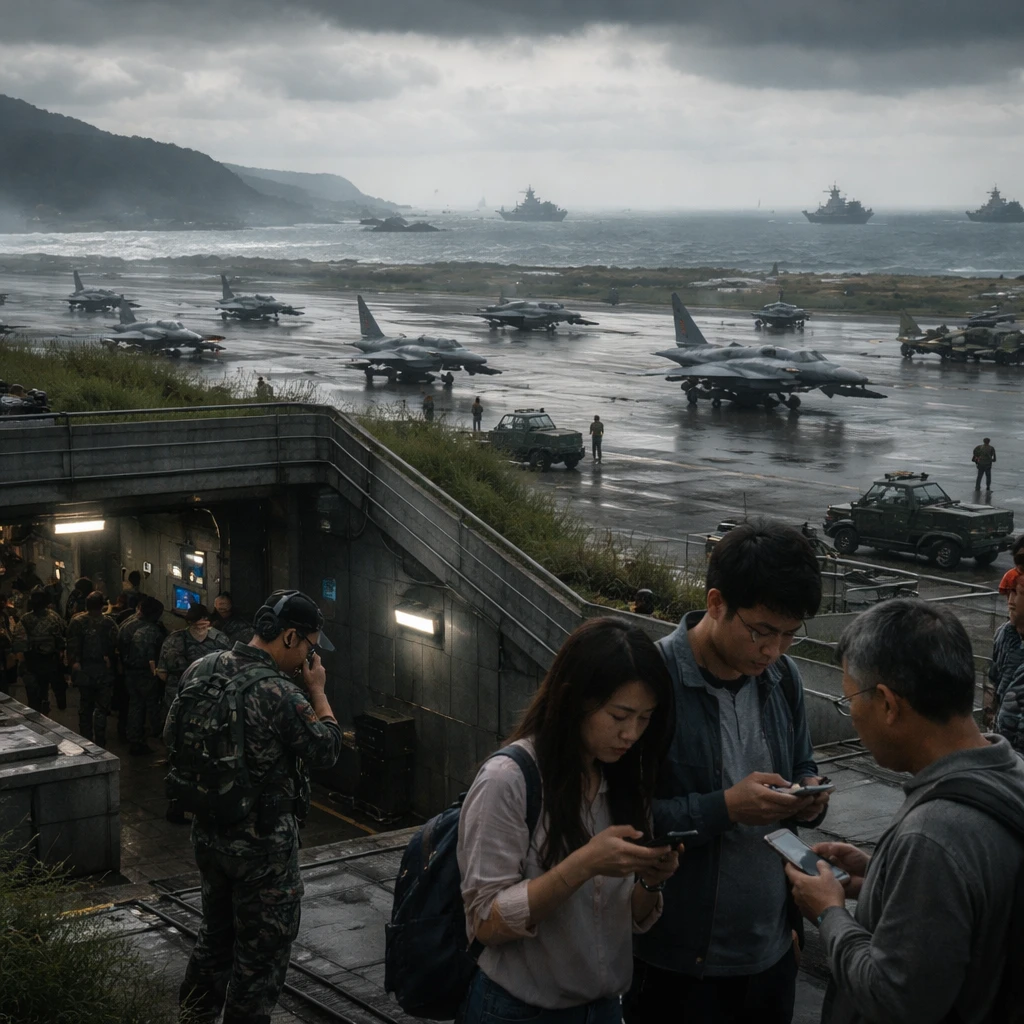
Taiwan has launched its largest annual Han Kuang war games, a 10-day set of drills designed to assess commanders' ability to react flexibly when enemy moves do not follow preplanned scenarios. Exercise orders were issued early in the morning from an underground command centre in Taipei, prompting a range of combat-readiness actions that include dispersing fighter jets and putting naval units on emergency footing, two senior Taiwan officials briefed on the operation said.
Command flexibility and procedural changes
For the first time, the exercise will use a 'backbrief' approach modelled on U.S. military practice, in which junior officers who receive orders must restate mission details to their superiors. Officials described the measure as a coordination mechanism aimed at making sure leaders and subordinates have a shared grasp of operational intent. One official said the requirement is intended to "ensure commanders and subordinates are in sync on operational intent." The officials declined to be identified because of the sensitivity of the operation.
The drills place special emphasis on testing command decision-making under conditions that deviate from the original enemy scenario. Field commanders will face "unexpected scenarios" and be evaluated on how they reassess, adjust and rapidly issue orders in response, one defence official said. Those scenarios are intended to probe the officers' ability to fight on the fly when realities on the ground diverge from prewar plans.
Communications, resilience and civilian preparations
Organisers will, for the first time, deliberately slow mobile internet speeds during the exercises to evaluate how civilians and officials would communicate if bandwidth became scarce in wartime. The military will also simulate a wartime relocation of a major arsenal, mobilise civilian factories and conduct escort drills off Taiwan's Pacific coast. Officials said these activities respond to concerns that an adversary could seek to paralyse command centres, ports, logistics nodes and defence industry sites early in a conflict.
Resilience drills already form an important part of the broader exercise program. Planners will test how local officials would keep government functions operating amid cascading crises that could range from natural disasters to hostile military action. A defence official characterised the current series of exercises as part of "a series of toughening exercises - this is no longer a laboratory-like exercise in a vacuum." The official said the aim is to bring training closer to "real field environment" conditions and reach that state in the final phase of training.
Force mobilisation and information operations
The drills will mobilise more than 20,000 troops, including roughly 5,000 reservists. Military movements already scheduled include fighter jet dispersals and emergency naval deployments triggered by the underground command centre's order. Organisers will also introduce an "embedded reporter" mechanism to review wartime frontline news releases and to test efforts to counter enemy disinformation.
Officials stressed that the exercises are intended to involve the entire population. "The emphasis will be on how our entire population, the Republic of China as a whole - especially our citizens - should face war," a defence official said, using Taiwan's official name.
Context and external responses
The drills are timed amid rising regional military pressure. Officials said they are concerned that Beijing could be preparing ways to sever Taiwan's Pacific supply lines. China claims Taiwan as its own and has not renounced the use of force to assert control. China's defence ministry did not respond to a request for comment about the exercises.
Duration
Field commanders will be tested across varied and unexpected scenarios through the duration of the exercise, which concludes on August 14.
Key points
- Han Kuang is a 10-day annual exercise focused on improving commanders' rapid decision-making when adversary actions deviate from planned scenarios.
- For the first time the drills introduce a 'backbrief' approach and deliberate slowing of mobile internet speeds to test coordination and civilian communications under bandwidth constraints.
- The drills mobilise more than 20,000 troops, including about 5,000 reservists, and include fighter jet dispersals, emergency naval deployments, wartime arsenal relocation and mobilisation of civilian factories.
Risks and uncertainties
- Potential for disruption to civilian communications and commerce if mobile internet speeds are intentionally reduced - this could affect telecommunications and information services sectors.
- Escalation risk linked to heightened military activity near Taiwan's coasts and the focus on protecting ports, logistics and defence industry sites - impacts could extend to shipping, logistics and regional trade flows.
- Information environment risks from contested frontline reporting and enemy disinformation, which may affect media outlets and public information channels.
Note: The article reports officials' descriptions of the exercises and related security concerns. It reflects only the information those officials provided and what has been reported about official responses and the exercise timetable.