
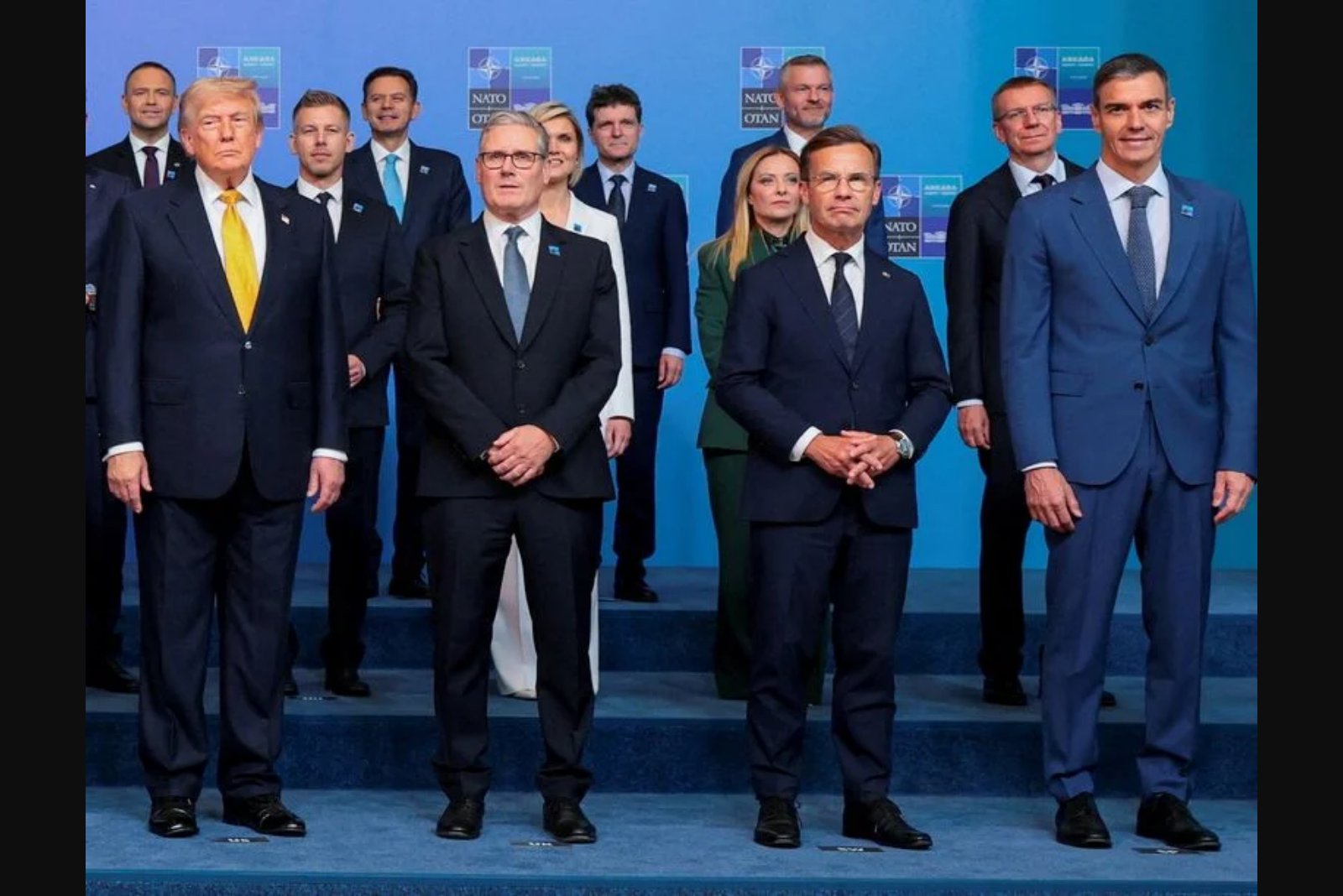
Spanish officials said on Thursday that U.S. President Donald Trump softened his public tone toward Spain after being informed of a significant increase in Madrid's contributions to NATO over recent years. The comment followed a sharp exchange at a NATO summit in Ankara where Trump criticised Spain's defence spending and openly ordered an immediate halt to trade with the NATO ally.
At the summit, Trump called Spain a "terrible partner". But aboard Air Force One while returning to the United States, he told reporters: "I did have issues, and I still do. But Spain, they came back all the way today. Spain was very generous today." When asked what Spain had done, the president continued: "They honoured a request for lots of payments, and if they didn’t, we wouldn’t have even talked to them." Spanish officials interpreted that remark as referring to Madrid meeting NATO’s previous defence spending target of 2% of GDP.
Spain’s prime minister highlighted the spending increase at the summit. According to statements from Madrid, the government emphasised it would reach the 2% goal this year after more than doubling nominal defence spending from 0.98% of GDP in 2017 to nearly 33 billion ($37.7 billion). The prime minister also played down the dispute, characterising his exchange with the U.S. president as "very cordial."
Despite Spain's movement toward the 2% benchmark, Trump has repeatedly urged a far higher target, calling for NATO members to agree to a new objective of 5% of GDP on defence by 2035. Spain’s left-wing government says it prefers to allocate resources in response to concrete threats rather than raise defence budgets indiscriminately, warning that forcing higher defence outlays could require cuts to social benefits.
It was not immediately clear what the apparent softening in tone would mean for Trump’s earlier order to halt trade with Spain. A U.S. official in Washington told reporters that federal agencies would compile a "menu" of Spanish products that might be subject to embargo following the president’s directive. Trade lawyers note the president could use the International Emergency Economic Powers Act to impose a full or partial embargo on Spanish imports.
Trump's previous trade actions against Spain include a 30% anti-dumping tariff on Spanish black olives imposed during his first administration in 2018. Whether the most recent comments will translate into concrete trade measures was still uncertain at the time Spanish officials issued their statement.
On the Spanish side, Defence Minister Margarita Robles was listed on the government's agenda to meet later that day with U.S. Ambassador Benjamin Leon for a "working meeting," though no further details were provided. Sources in the Spanish delegation to the NATO summit, cited by Spanish media, described the dispute as similar to a staged altercation lacking substantive conflict. They said Madrid had not observed any tangible economic fallout or a decline in investment in Spain in recent years despite the U.S. president's criticisms.
Political responses inside Spain were mixed. Members of the main opposition People's Party (PP) criticised Prime Minister Pedro Sanchez for the spat but stressed national unity in the face of external pressure. A senior PP official pointed to the economic interdependence between U.S. and Spanish firms, arguing that commercial reality would override rhetorical attacks aimed at Spain.
In the region of Aragon, governed by the PP and home to large data centre investments from U.S. technology companies including Amazon and Microsoft, local officials reported operations continuing as normal. By contrast, Santiago Abascal, leader of the far-right Vox party and an ally of the U.S. president, called the tensions "absolutely dramatic" and accused the prime minister of "destroying Spain’s credibility on the world stage."
At the time of reporting, the euro-dollar conversion stood at ($1 = 0.8746 euros).
Analysis note - The episode highlights the intersection of defence spending commitments, diplomatic rhetoric, and the potential for trade measures to be used as leverage. Several sectors could feel the consequences should an embargo or targeted tariffs move forward, including consumer food imports, technology infrastructure tied to foreign investment, and broader bilateral commercial ties.