
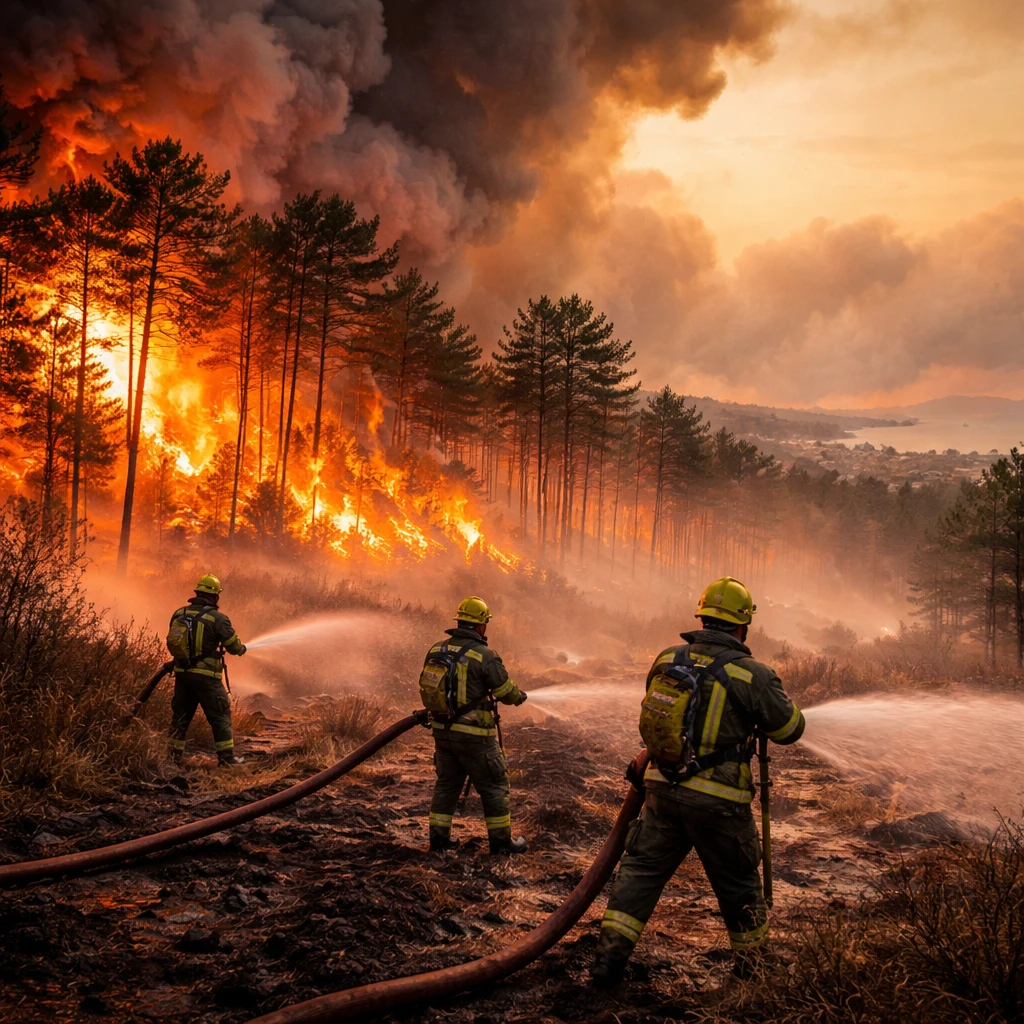
France is bracing for a fourth major heatwave this year as emergency teams continue to tackle a vast wildfire in the Bordeaux region. The combination of very high temperatures and parched conditions in the southwest has added strain to crews trying to keep the blaze in check.
Forecasters expect daytime temperatures in Bordeaux to reach 33 degrees Celsius (91 degrees Fahrenheit) on Tuesday - roughly 7 degrees above the long-term average high for the period between 1961 and 1990. Weather services warned that heat will build through the afternoon and is forecast to peak at 37 degrees Celsius on Wednesday, a development that could complicate containment.
President Emmanuel Macron, who flew to the area, described the situation on Monday evening as: "The situation we are dealing with today is the most severe we have ever recorded, the toughest since the Second World War." His visit came as officials reported that fire crews had managed to contain the blaze overnight, even as they cautioned the overall situation remained challenging.
Nathalie Delattre, senator for Gironde, which includes Bordeaux, said on BFM TV on Tuesday that the outcome would hinge on the efforts of firefighters operating on the ground. "Everything will depend on how the firefighters on the ground get on," she said.
Authorities say the wildfire has consumed some 42,000 hectares so far. The Landes area southwest of Bordeaux is dominated by pine forests that become highly flammable when dry, presenting a continuous hazard to suppression operations.
Officials have ordered the evacuation of roughly 220,000 people, a figure that covers both local residents and holidaymakers in the affected zone. In Biscarrosse, a town about 40 km to the south that was hit by a separate blaze last week, conditions have improved and around 15,000 people who had been evacuated were progressively allowed to return to their homes and a nearby campsite, the local administration said in a message posted on X.
But that administration also cautioned that easing restrictions should not be seen as elimination of danger, noting: "However, (the favourable) development does not mean the risk has been eliminated. Flare-ups remain possible, particularly due to weather conditions (wind, drought, etc.)," it said.
The combination of continued high temperatures, drought conditions and the flammability of pine stands has contributed to an unprecedented wildfire season in France. Authorities note that the area burned this year has already exceeded the total recorded in the previous high-water mark of 2022.
Sources cited in reporting: Statements from the French presidency, comments by Nathalie Delattre on BFM TV, a local administration post on X, and forecasts from Meteo France regarding expected temperature peaks.