
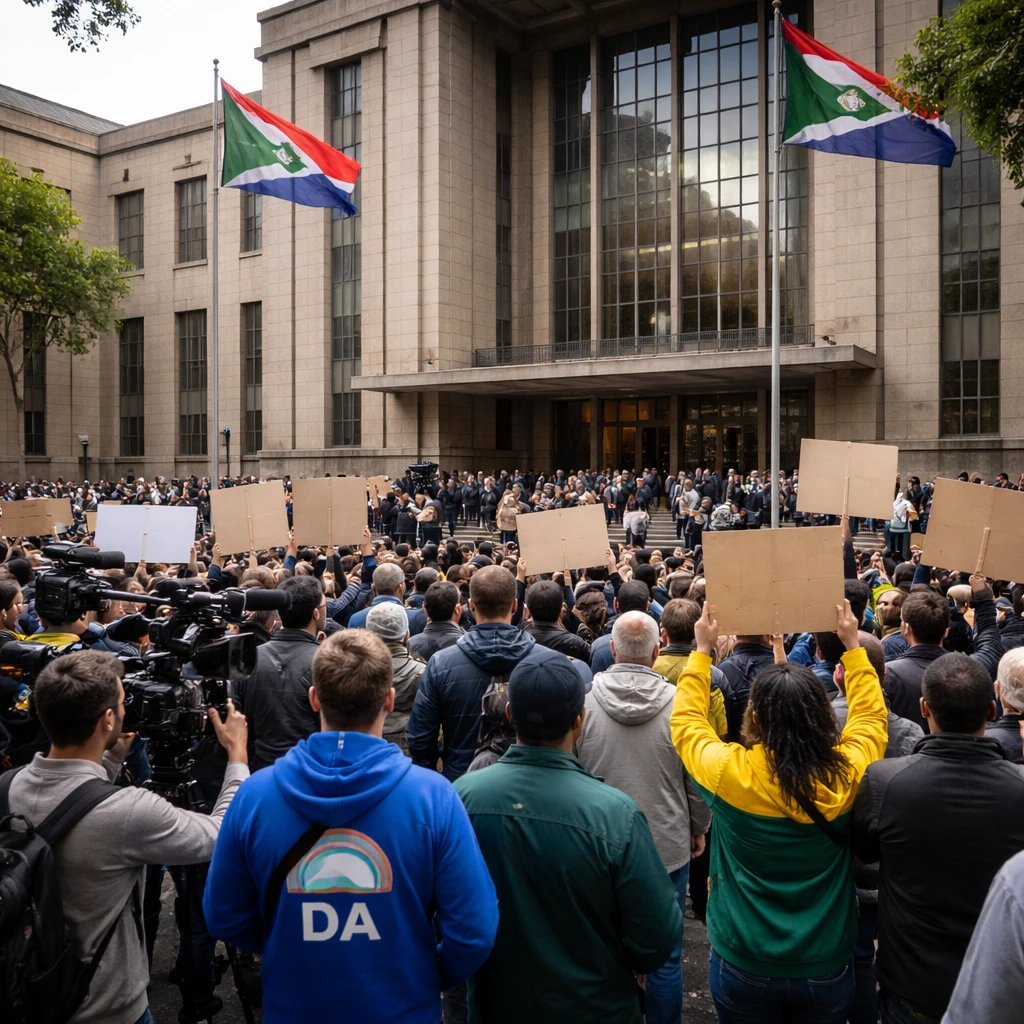
On Monday, the Democratic Alliance (DA), the second-largest member of South Africa's governing coalition, lodged a legal challenge to the Expropriation Act, a law that U.S. President Donald Trump referenced when he suspended aid to South Africa last year. The DA contends the statute grants the state overly broad powers to seize land "in the public interest," including provisions that could allow confiscation without compensation in some circumstances.
The legislation, which a long and often heated national debate preceded, was signed into law by President Cyril Ramaphosa in January 2025. It is framed as part of measures to redress the unequal distribution of land that remains a legacy of apartheid. To date, however, no land seizures have taken place under the new law.
The DA, a party that is pro-business and largely led by white politicians, argues the Expropriation Act uses "vague and sweeping powers" that will discourage investment. The party says the uncertainty created by the law poses risks for investors and the broader economy.
By contrast, the African National Congress (ANC) - the former liberation movement and the largest party in the coalition - has described the law as a milestone in attempts to reform an economy it says remains racially unequal, with the white minority still holding the majority of private farmland.
Independent political and governance analyst Sandile Swana characterized the court action as akin to a "shadowboxing match," suggesting the legal contest will allow the two coalition partners to contest land reform publicly while keeping their overall partnership intact. The legal challenge has introduced friction within the governing alliance as South Africa prepares for municipal elections in November.
The government has rejected President Trump’s criticisms of its land reform policies, maintaining that the Expropriation Act is comparable to similar legislation in other countries.
The DA's lawsuit will be heard together with two other challenges brought by groups representing Afrikaners - descendants of mostly Dutch settlers - who have launched cases alleging discrimination. The South African government firmly rejects claims of systemic discrimination against these groups. The ANC and DA entered a coalition in 2024 after the ANC lost its parliamentary majority for the first time since the end of white minority rule in 1994; despite tensions, that partnership has so far held.
Key points
- The DA has taken the Expropriation Act to court, arguing it grants excessive powers and could deter investment - sectors affected include agriculture, real estate, and foreign direct investment.
- The ANC views the law as a crucial step in addressing racial economic imbalances tied to land ownership, impacting agricultural land reform policy and rural economies.
- The case intensifies coalition tensions ahead of municipal elections and will be heard alongside Afrikaner-led legal challenges, adding legal and political uncertainty for markets.
Risks and uncertainties
- Legal uncertainty over how the Expropriation Act will be applied could dampen investor confidence in property and agricultural sectors.
- Strained relations within the ANC-DA coalition may affect policy stability and governance ahead of the November municipal elections, with potential knock-on effects for market sentiment.
- Parallel legal challenges by Afrikaner interest groups add complexity and could prolong judicial review, maintaining prolonged uncertainty for affected sectors.