
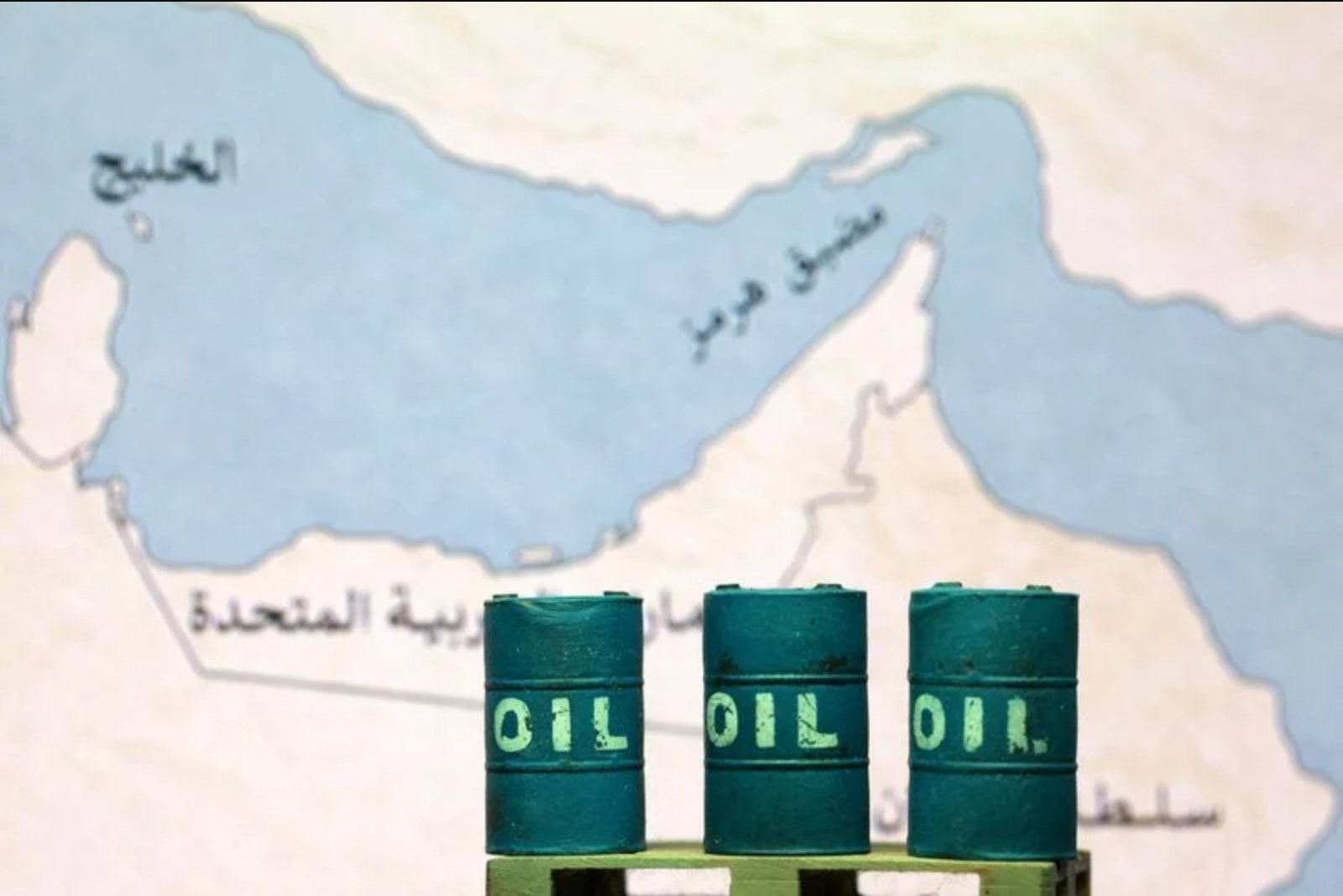
Sept 18 - Oil prices declined by roughly 1% on Friday, extending losses for a third consecutive session, while remaining above the $100-per-barrel threshold as markets weighed competing signals on supply disruption and mitigation efforts.
By 0020 GMT, Brent crude futures were down $1.01, or 1%, at $103.77 a barrel, and US West Texas Intermediate (WTI) futures had slipped $1.03, or 1%, to $100.88 a barrel. Both benchmarks had also finished about 1% lower on Thursday.
Traders largely looked past fresh concerns about potential supply interruptions even as Saudi Arabia and Yemen's Iran-backed Houthis exchanged new strikes along their shared border on Thursday, broadening the conflict front in the Middle East. Earlier in the week, oil had pushed to roughly four-month highs after reports indicated crude loadings at Saudi Arabia's Red Sea export hub of Yanbu were suspended and Riyadh had cancelled some deliveries to Europe following damage to its East-West pipeline in an attack last week.
Estimates provided by sources that spoke to news agencies varied on how long it will take to fully reopen the East-West pipeline and restore normal crude flows. Satellite imagery and three industry sources showed that three of the pipeline's pumping stations were damaged - one more station than had been assessed previously. Traders have warned that a prolonged closure of the pipeline to Yanbu could remove as much as 4% of global oil supply.
At the same time, reports indicated Saudi authorities were seeking to restore about half the East-West pipeline's capacity within days. Riyadh was also offering additional crude cargoes to Asian refiners using ship-to-ship transfers off Oman's Sohar port, a measure intended to offset some of the disruption caused by the pipeline attack.
US Energy Secretary Chris Wright added to the mixed signals by saying that crude should be flowing through the pipeline within days. The combination of repair efforts and alternative shipping options appears to have tempered some market anxiety about immediate, widespread shortages.
Complicating the picture, Iran's Revolutionary Guards Navy reported that a Togo-flagged oil tanker was struck while attempting what the Guards described as an "illegal passage" through the Strait of Hormuz on Thursday, according to Iranian state media early on Friday. The incident highlights continued security risks for tankers and chokepoints used for global oil shipments.
Reflecting the high level of uncertainty, JPMorgan stated on Thursday that it did not have a clear baseline view for oil markets for the first time since the start of the US-Israeli war on Iran. On diplomatic fronts, the United States and Iran have held no peace talks since an interim agreement reached in June collapsed within weeks. The conflict and its consequences are scheduled to be discussed at the United Nations General Assembly next week, and an Iranian delegation will be able to attend, according to the US State Department.
Market context
- Prices have eased despite recent pipeline damage and renewed cross-border strikes, as officials and market participants point to partial restoration efforts and shipping workarounds.
- Damage assessments show three pumping stations are affected, raising the prospect of a significant temporary reduction in supply if closure is prolonged.
- Tankers and transit routes remain exposed to incidents, underscoring ongoing transport and security vulnerabilities.