
Economy September 16, 2026 12:55 PM

Meloni Says She Will Serve Through End of Legislature, Rejects Snap Election Reports

Prime minister affirms commitment to full term amid polling gains for new far-right movement and recent coalition defections

By Leila Farooq
Share
Twitter Reddit Facebook LinkedIn

Italian Prime Minister Giorgia Meloni on Wednesday dismissed suggestions she would call an early election before next autumn, saying she intends to remain in office until the current legislature ends. Speaking after a cabinet meeting, Meloni said she is proud of her government's stability, even as polling shows support shifting toward a new far-right movement and the coalition faces internal strains following a recent parliamentary defeat on electoral reform.

Meloni Says She Will Serve Through End of Legislature, Rejects Snap Election Reports
Summarize with
ChatGPT Perplexity Claude Grok Gemini

Key Points

  • Prime Minister Giorgia Meloni said she will remain in office until the current legislature ends, rejecting reports of an early election before next autumn.
  • Her government became Italy's longest-serving administration since World War Two earlier this month; Meloni leads a coalition of Brothers of Italy, the League, and Forza Italia.
  • A new far-right movement led by Roberto Vannacci, National Future, has gained support in polls, reducing backing for Meloni's coalition and prompting speculation about a snap election - political shifts that could affect governance and investor sentiment.

Italian Prime Minister Giorgia Meloni told reporters on Wednesday that she plans to remain at the head of government until the conclusion of the current legislature, rejecting media reports that she might seek an early election before her term ends next autumn.

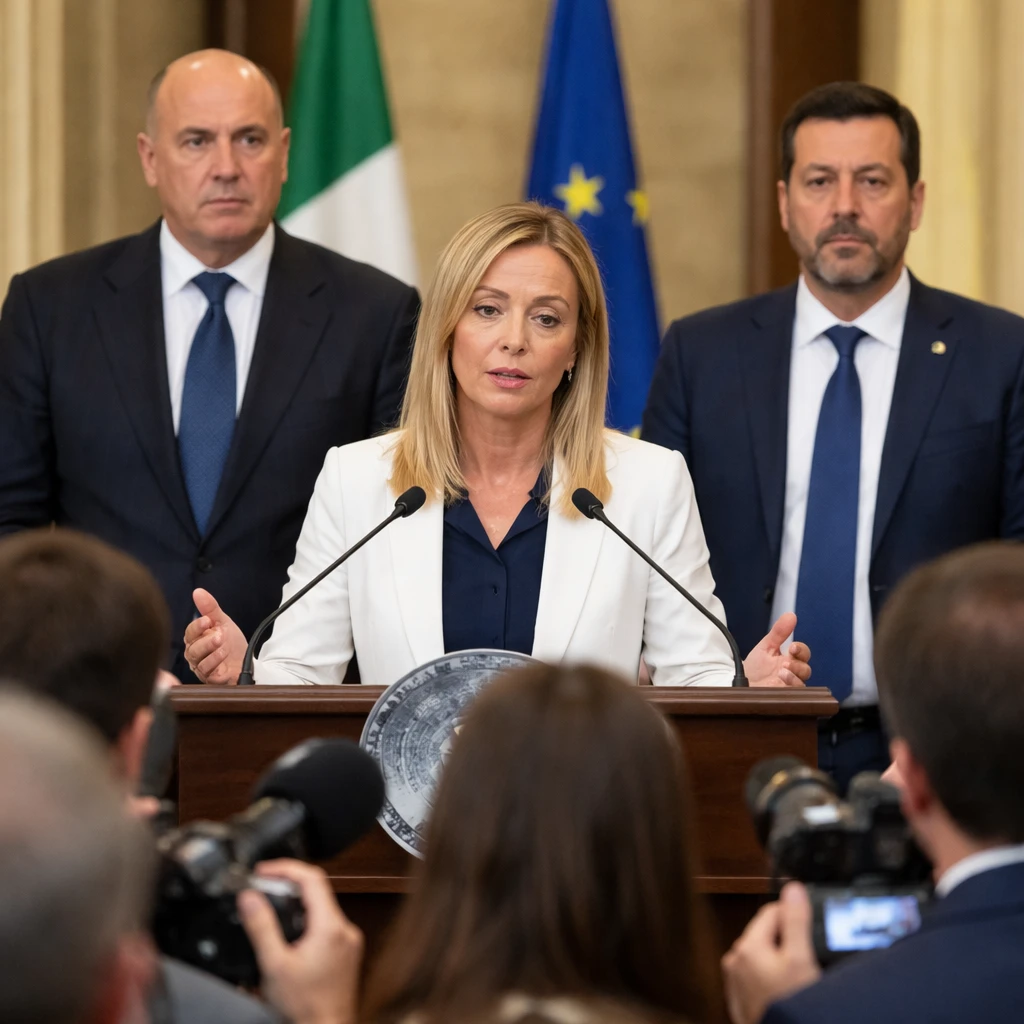
Addressing the speculation at a news conference held after a cabinet meeting, Meloni said she takes pride in the continuity her administration has delivered. Earlier this month, her government reached the milestone of becoming Italy's longest-serving administration since World War Two.

Meloni leads a conservative coalition composed of her Brothers of Italy party alongside the League and Forza Italia. At the news conference she spoke alongside Deputy Prime Ministers Matteo Salvini and Antonio Tajani, who head the League and Forza Italia respectively. She said the government will continue to govern so long as she retains a strong and solid parliamentary majority.

Recent polling has shown support rising for National Future, a new far-right movement led by former general Roberto Vannacci. That shift in public backing has come at the expense of Meloni's coalition and has fuelled speculation about a potential snap election.

The coalition has encountered difficulties in recent months. In July, the lower house voted down a government amendment tied to an electoral reform that Meloni strongly backed. That defeat followed defections within the ruling coalition and underscored strains among coalition partners.

Meloni emphasized the government's determination to continue its work while it commands a solid majority in parliament. Beyond her remarks on longevity, she framed stability as a point of pride for the administration and a condition for carrying forward its agenda.


Context and significance

While Meloni's statement is a straightforward denial of plans for an early ballot, it comes amid shifting voter preferences and demonstrated fragility inside the governing bloc. The combination of polling gains for a rival movement and parliamentary defections highlights uncertainties the coalition must manage as it heads toward the end of the legislature.

Risks

  • Rising support for National Future could erode the governing coalition's vote share, increasing political uncertainty - this may impact sectors sensitive to political risk, including financial markets and business investment.
  • Internal defections highlighted by the July lower-house rejection of a government electoral reform amendment signal potential instability within the coalition, which could complicate legislative priorities and policy execution affecting public sector planning and regulatory certainty.

More from Economy

U.S. Transfers $725 Million to U.N., Lowering Arrears and Preserving Voting Rights Sep 16, 2026 SEC moves to remove oversight of shareholder votes, prompting reformer concern Sep 16, 2026 Aramco moves to bypass damaged East-West pipeline, eyes half-capacity restart within days Sep 16, 2026 ECB's Pereira: Inflation Not Yet Showing Broad-Based Spread Seen in 2022 Sep 16, 2026 ECB Governing Council Member Says Inflation Not Spreading as Rapidly as in 2022, But Risks Remain Sep 16, 2026