
World June 13, 2026 10:36 AM

Orban Reaffirmed as Fidesz Leader for Another Year Despite April Election Defeat

Viktor Orban wins near-unanimous party backing even as Tisza secures two-thirds majority and public support shifts away from Fidesz

By Jordan Park
Share
Twitter Reddit Facebook LinkedIn

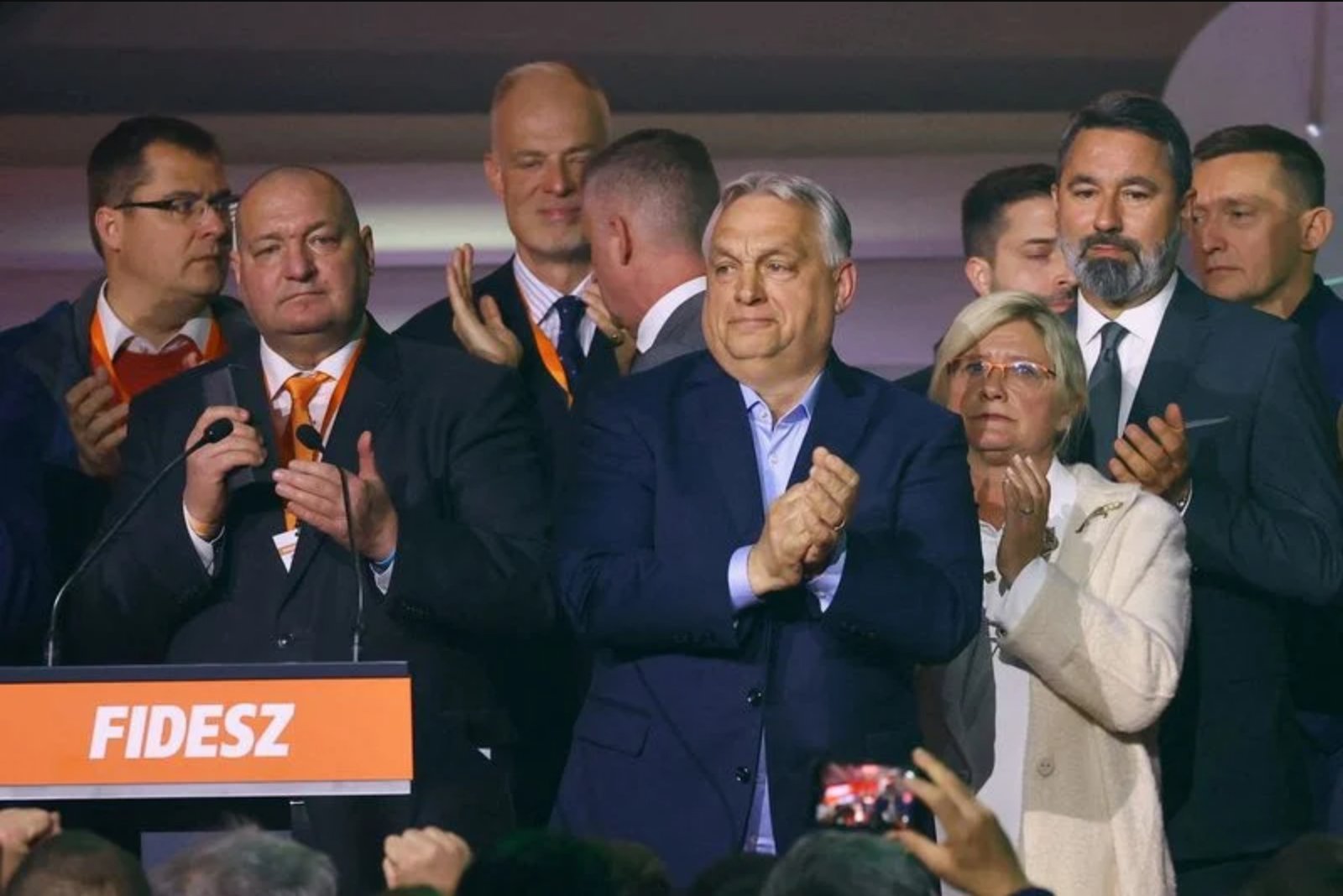
Viktor Orban was re-elected as leader of Hungary's Fidesz party for a further year by an almost unanimous delegate vote, despite the party's loss of power in the April 12 election to the centre-right Tisza party. Orban, 62, who coined an 'illiberal' model of governance and has influenced right-wing movements abroad, faced internal pressure to step aside after the defeat but secured 729 of 737 delegate votes at the party congress. Opinion polling since the election shows a continued advantage for Tisza and a marked drop in public backing for Fidesz.

Orban Reaffirmed as Fidesz Leader for Another Year Despite April Election Defeat
Summarize with
ChatGPT Perplexity Claude Grok Gemini

Key Points

  • Viktor Orban was re-elected Fidesz leader with 729 of 737 delegate votes and faced no challengers at the party congress - impacts party leadership and internal stability.
  • The April 12 election gave Prime Minister Peter Magyar's Tisza party a two-thirds parliamentary majority, enabling the reversal of constitutional changes enacted during the Orban era - impacts governance and constitutional law.
  • Opinion polling in May from the Publicus Institute shows Tisza increasing support to 55% while Fidesz support fell to 17% from 39% at the election - impacts electoral prospects and political positioning.

Viktor Orban was re-elected on Saturday as leader of Hungary's main opposition party, Fidesz, in a vote that sustained his control of the movement despite the party's recent loss of government. At the party congress, 729 of 737 delegates cast ballots in favour of Orban, with no challengers on the ballot, state news agency MTI reported.

The vote follows Fidesz's defeat in the April 12 parliamentary election, which saw the centre-right Tisza party, led by Prime Minister Peter Magyar, secure a commanding two-thirds majority in the legislature. That level of parliamentary support is sufficient to reverse the constitutional changes enacted while Orban and Fidesz were in government.

Orban, 62, has been a prominent figure for nationalist and conservative currents in Europe and the United States, advocating what he termed an "illiberal" model of democracy. His political standing was questioned in the wake of the election loss, and he had faced public calls from some former loyalists to withdraw from frontline politics - a form of criticism that the article says had not been openly directed at him since his rise to power in 2010.

Addressing the congress before the vote, Orban said he would not step down. In a remark he repeated for emphasis, he declared:

"I do not give up, I never, never, never, never, never give up."

He also reiterated that he accepted full responsibility for the party's performance in the election.

In assessing Fidesz's recent history, Orban described the party as having been a "fantastic governing party" over 16 years, but he added that it would have to adapt to serve as an effective opposition that could be prepared to govern again in the future. The comments framed the re-election as both a reaffirmation of leadership and a call for internal change.

Public opinion data cited after the election indicate a shift in voter preferences away from Fidesz. A May survey by the Publicus Institute put support for Tisza at 55% - an increase from the 53% the party received in the April vote - while backing for Fidesz fell to 17%, down from 39% at the election itself. These figures point to a continued erosion of popular support for Fidesz since the electoral defeat.

The party congress outcome secures Orban's role at the head of Fidesz for at least another year, even as the parliamentary balance gives the new government the legal scope to alter or reverse constitutional measures enacted under the previous administration.

Risks

  • Internal pressure and previously unseen public criticism of Orban within his party could signal potential fractures in party cohesion - this primarily affects political stability and Fidesz's organisational capacity.
  • A sustained decline in public support for Fidesz, as reflected in the May Publicus Institute poll, raises uncertainty about the party's future electoral competitiveness - this affects political markets and election-related forecasting.
  • With Tisza holding a two-thirds parliamentary majority, there is a clear possibility of reversing constitutional changes made by the previous government, creating legal and institutional uncertainty - this impacts governance and the rule of law.

More from World

From Parking Lots to Pricey Rooms: World Cup Demand Falls Short in New Jersey Jun 13, 2026 Albanian villagers contest luxury resort development tied to international investors Jun 13, 2026 Balogun Brace Propels U.S. to 4-1 Group D Win Over Paraguay Jun 12, 2026 Deal Nears as Drones Attack Strait of Hormuz; Energy and Security Stakes Remain High Jun 12, 2026 Allegheny County Medical Examiner Labels Death of Haitian Woman Released from ICE Custody a Homicide Jun 12, 2026