
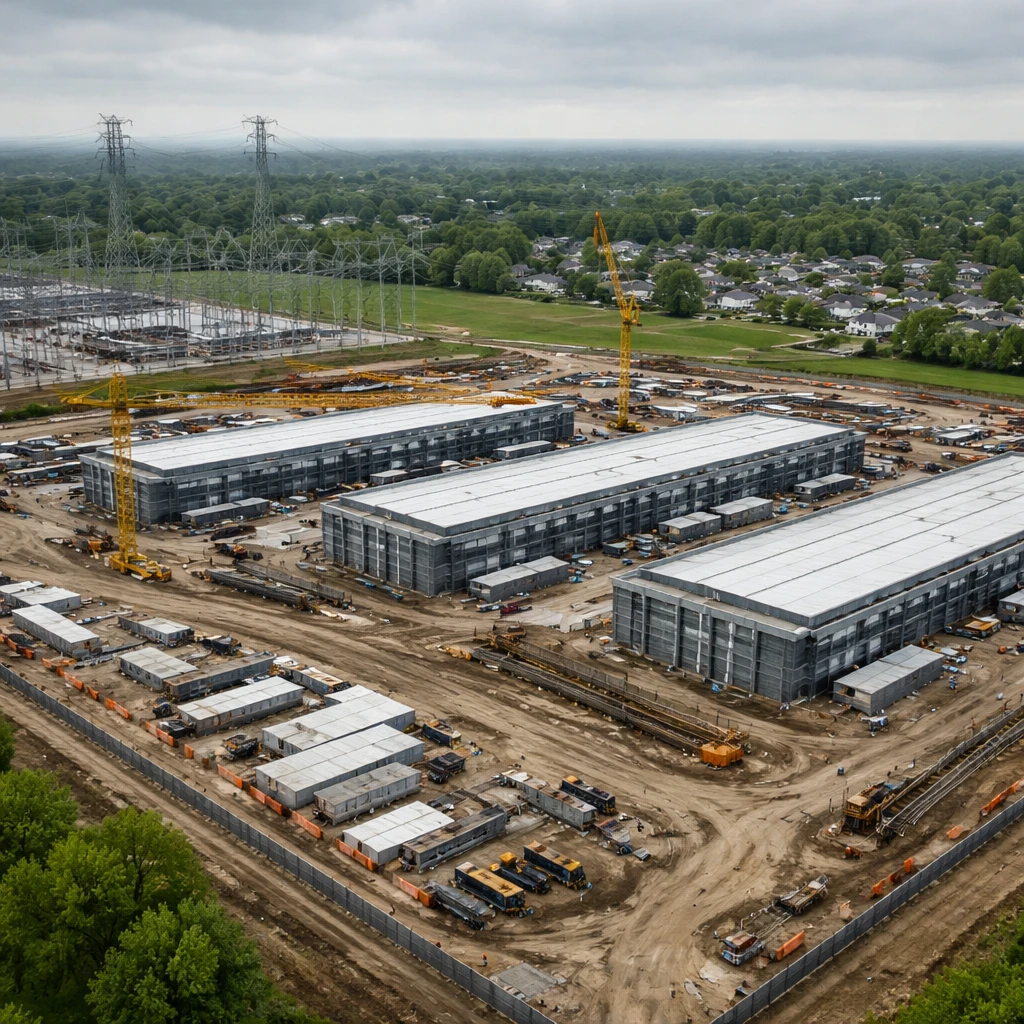
New York state has imposed a one-year moratorium on the construction of sizeable data centers, becoming the first U.S. state to take such a step amid rising concern over the strain these facilities can place on utilities and local resources. The restriction applies to data centers that use 50 megawatts or more of electric power.
Under the directive, the state Department of Environmental Conservation will withhold discretionary permits for qualifying projects unless those permit applications have already been deemed complete. The governor's office said the pause is intended to give regulators time to evaluate the implications of continued large-scale data center buildout and the potential consequences for residents.
Governor Kathy Hochul framed the action as a response to several interrelated risks for New Yorkers, citing threats of higher utility bills, depletion of natural resources and a lack of certainty for households facing the indirect effects of rapid data center expansion. In addition to the permit moratorium, the governor announced an intention to seek legislative repeal of sales tax exemptions that currently apply to large data center projects.
The decision positions New York at the center of a broader policy debate over how to manage infrastructure supporting the growth of artificial intelligence and other heavy computing needs. Technology companies have continued to add new data centers, while state lawmakers and regulators in multiple jurisdictions have evaluated measures to limit pressure on electricity grids, household utility bills and local communities.
New York lawmakers recently passed a bill aimed at establishing guardrails for data center development, but that legislation has not yet been presented to the governor for signature. Officials in the governor's office characterized the bill as complex and indicated additional time will be needed to work through its provisions with the state legislature.
Expansion of data centers across the United States has been associated with rising power demand and, in some locations, higher electricity bills, prompting opposition at the local and political levels. New York's one-year pause seeks to create space for state agencies and legislators to address these concerns before additional large-scale projects move forward.