
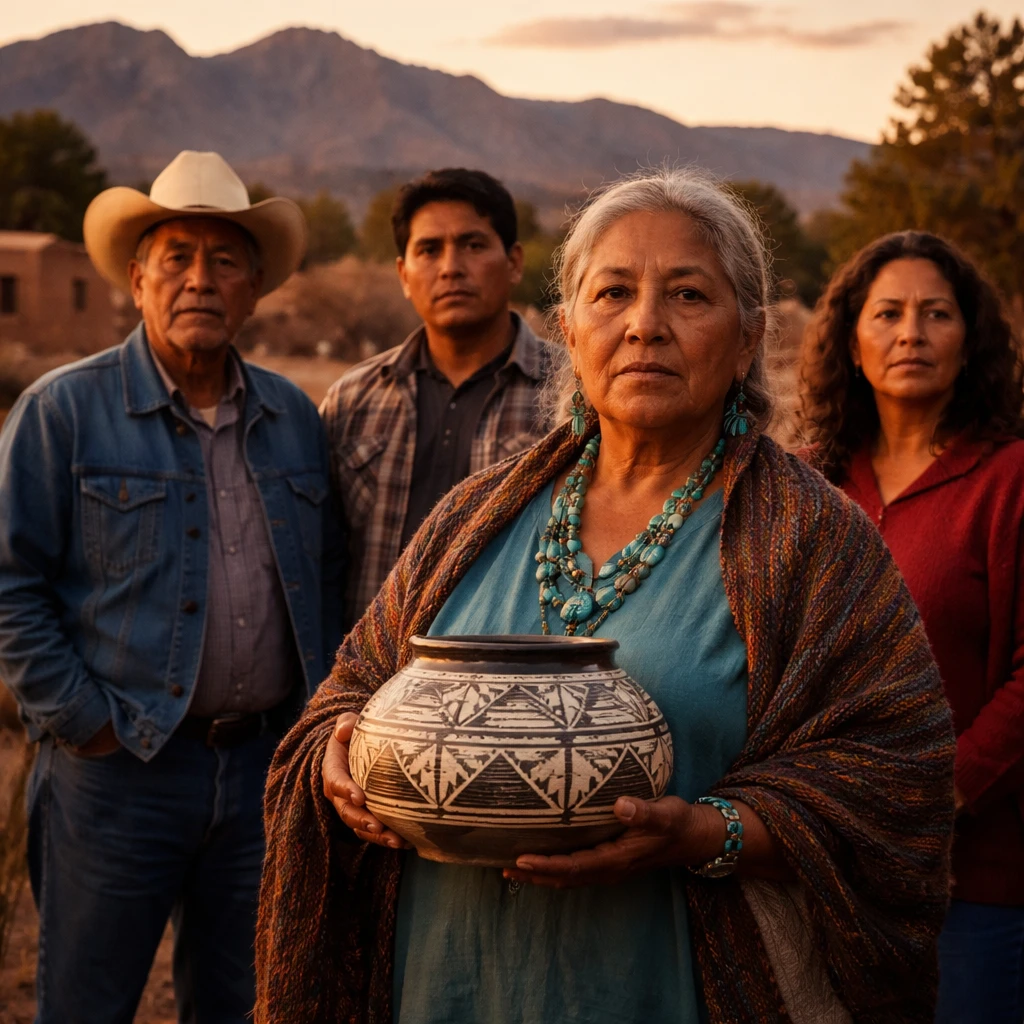
TAOS, New Mexico - President Donald Trump’s recent suggestion that the Democratic-led state of New Mexico be rechristened "New America" has prompted widespread condemnation from residents who say the proposal threatens to erase the state’s long-established history and cultural identity.
New Mexico - a land of deserts, mountains and high plains that has been central to Indigenous stories, Spanish literature and the imagery of the American West - has carried the name New Mexico for more than 450 years. The proposal emerged as trade negotiations with Mexico intensified.
The president previously suggested other geographic renamings during trade disputes. In August, he reportedly changed the name of Lake Ontario to Lake America after trade negotiations with Canada broke down, and last year he renamed the Gulf of Mexico the Gulf of America, citing a desire to restore what he called "American Greatness." Those earlier moves were referenced by residents who spoke to Reuters about the latest proposal.
More than a dozen New Mexicans interviewed described the idea of renaming the state as tone-deaf and insulting. The reaction crossed political lines, with both Republican and Democratic state politicians opposing the concept.
"Trump you are crazy, you will not take nothing from us," said Ethel Yazza, 67, a potter and a member of the Santa Clara and Picuris Indigenous communities who lives at Picuris Pueblo, roughly 40 miles (64 km) northeast of Santa Fe. Yazza pointed to her Puebloan people’s deep roots in the region, which were highlighted by state historian Rob Martinez.
Martinez explained that the Puebloan people were the first inhabitants of the area named La Nueva Mexico in the 1560s by Spanish explorers. Those explorers had hoped the territory would yield similar riches and sources of labor as the lands around what is now Mexico City, Martinez said. The state historian, who traces Spanish, Mexican and Indigenous ancestry across generations in northern New Mexico, added: "New Mexico is a beautiful name, it’s historic, it sounds beautiful, and New America does not."
The region’s political history is complex. After centuries under Spanish control, the territory became part of Mexico in 1821. The United States invaded and occupied New Mexico roughly three decades later.
For many Mexican Americans in the state, the suggested renaming felt like a direct affront to their heritage. Jesus Trevizo Martinez, a painter and roofer, said the proposal was an attack on people of Mexican ancestry. New Mexico currently has the highest proportion of Hispanic and Latino residents of any U.S. state, at about 49 percent of its population, a demographic detail cited by people interviewed.
Other residents asked why the president was not proposing similar name changes for states such as New York or New Jersey. Larry Cruz, 65, a U.S. Air Force legal administrator originally from Taos County who said he voted for Trump in 2024, described the proposal as frightening because of its apparent intent to erase local history.
The White House had not issued a public response to the criticism at the time of reporting and did not immediately reply to a request for comment.
Contextual note: The renaming suggestion came in the midst of heightened trade negotiations with Mexico, and follows earlier renaming moves tied to trade disputes with Canada and broader statements about national identity.