
Context and purpose of the trip
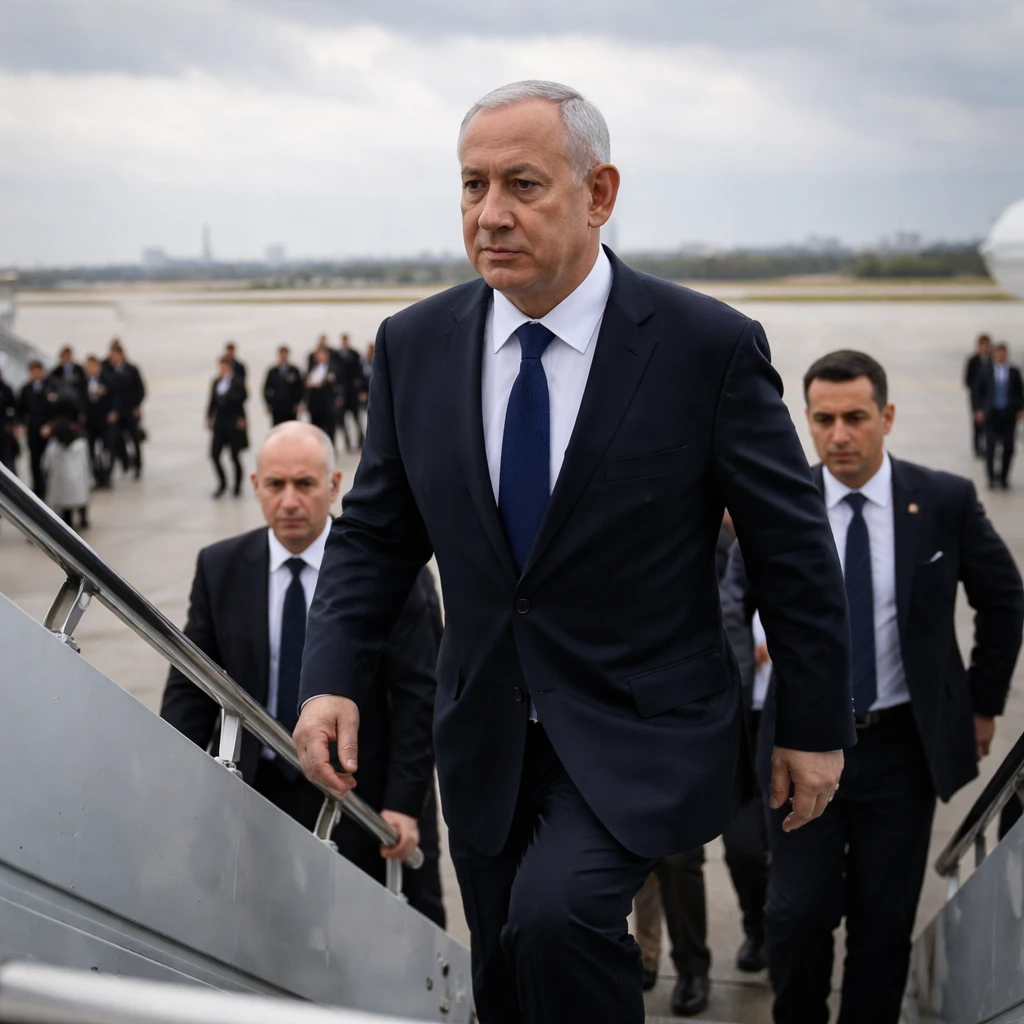
Israeli Prime Minister Benjamin Netanyahu departed for Washington on Monday to meet U.S. President Donald Trump. The leaders will hold their first in-person meeting since tensions escalated between their countries and Iran. Netanyahu said he and Trump will address the full range of items on the agenda, singling out Iran as the primary focus.
Comments at departure
In a video statement released as he left, Netanyahu said: "In these complex times, you need to act with both great determination and great wisdom. We will discuss all the issues on the agenda, primarily Iran. Of course, our goal is to protect our security and also to expand the circle of peace around us."
Record of meetings and recent military actions
The Washington visit marks Netanyahu's eighth meeting with President Trump since Trump returned to office and their first face-to-face encounter since February, prior to a joint aerial campaign launched by Israel and the United States against Iran earlier this year. Israel did not participate in a two-week U.S. bombing campaign this month that was followed by Iranian strikes on U.S. bases in response.
President Trump moved to halt that U.S. bombing campaign over the weekend. Following the pause, Iran said it would suspend its own attacks for as long as the U.S. pause endures. Israeli officials have warned Tehran that any attack would prompt a forceful response from Israel.
Political dynamics between the leaders
Netanyahu has publicly acknowledged differences with President Trump in recent weeks, reflecting apparent divergences in Israeli and U.S. regional priorities. A contentious phone call in June, during which the president reportedly called the prime minister "fucking crazy," was first leaked to the media and later confirmed by Trump, highlighting strains that have appeared in the relationship at times.
Recent Israeli moves tied to U.S. diplomacy
In a step observers described as a signal to the White House, Israel said on Sunday it would permit a multinational security force to enter Gaza as outlined under President Trump's peace plan for the enclave. On July 21, Israel announced it had redeployed some of its forces in southern Lebanon as part of U.S.-backed agreements reached with Lebanese authorities in recent weeks.
Domestic implications for Netanyahu
Beyond the bilateral and regional agenda, the meeting arrives as Netanyahu faces domestic political pressure. He is contending with an October 27 election and lagging poll numbers at home. A prominent, highly visible meeting with President Trump could offer political benefits for Netanyahu domestically. The visit also occurs amid reports that public support for Israel in the United States has been falling.
Summary of facts
- Netanyahu traveled to Washington to meet Trump, with Iran as the primary item on the agenda.
- This is their eighth meeting since Trump returned to office and the first since February prior to a joint aerial campaign against Iran.
- Recent military moves include a halted two-week U.S. bombing campaign this month, Iranian strikes on U.S. bases in response, and Israeli redeployments in southern Lebanon and a decision to allow a multinational force into Gaza.