
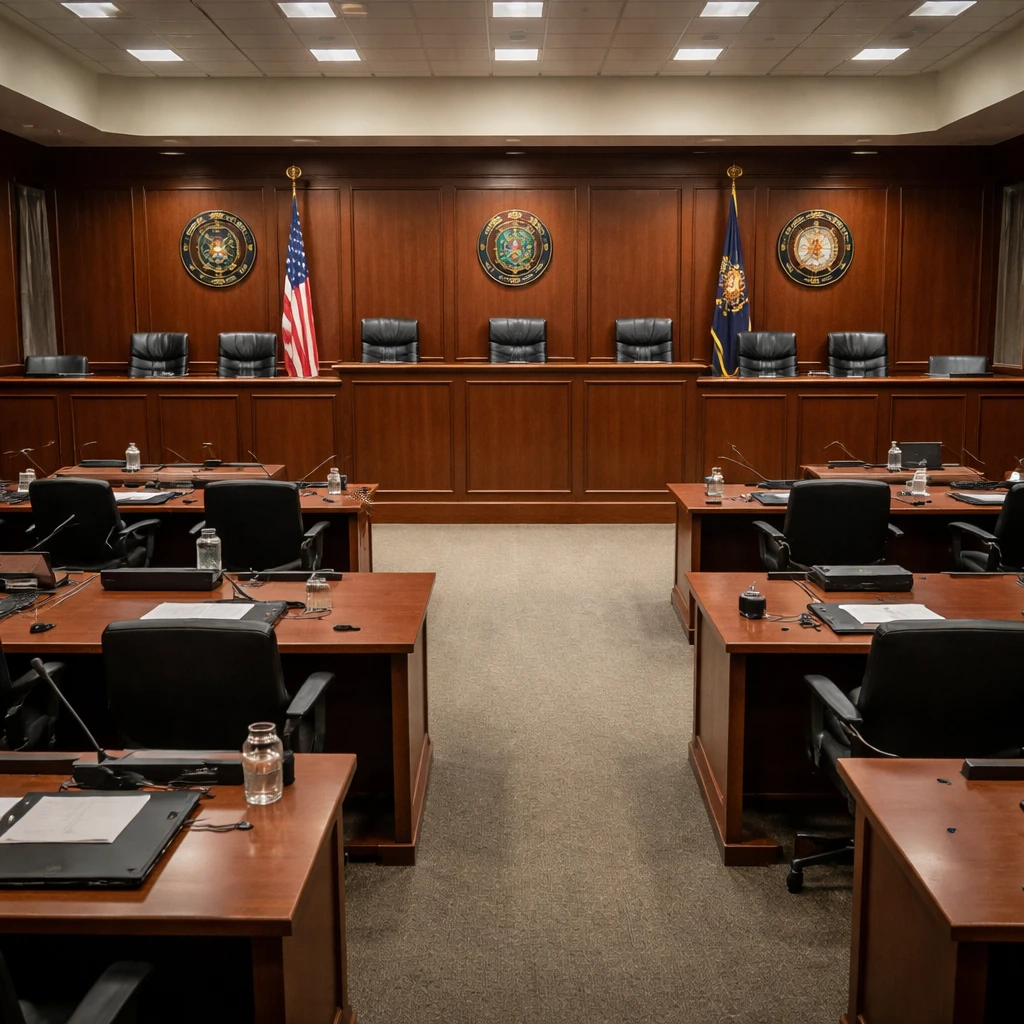
A U.S. Air Force judge has directed that Khalid Sheikh Mohammed, long accused of masterminding the September 11, 2001 attacks, and three co-defendants will be tried by a military commission starting June 5, 2028. The order, entered by Air Force Lieutenant Colonel Michael Schrama, lays out a multi-stage timeline for pretrial procedures, trial presentation and sentencing.
Schrama’s directive, contained in an 11-page document, formalizes the date and the sequence of courtroom steps after years of legal gridlock involving the four Guantanamo Bay detainees. The judge declined prosecutors’ earlier suggestion to convene the tribunal in January 2027, concluding that such a start would not allow sufficient time for the "resolution of pretrial evidentiary and compliance motions."
The defendants named to stand trial are Khalid Sheikh Mohammed and three others: Walid Muhammad Salih Mubarak bin 'Atash, Mustafa Ahmed Adam al Hawsawi, and Ali Abdul Aziz Ali. Under the schedule, the proceedings will begin with selection of a panel composed entirely of service members who will serve as the tribunal’s fact-finding body under military justice rules.
Following panel selection, opening statements are to begin 30 calendar days later. The prosecution will then present its evidence. After the prosecution rests, the defendants will have the opportunity to file motions seeking findings of not guilty; the order provides for both sides to present arguments on those motions and to offer rebuttals, and it permits the government to reopen its case if necessary.
Once the prosecution’s case is concluded and any motions are addressed, the defense will present its principal evidence beginning 60 calendar days later. The process culminates in a sentencing phase should the defendants be found guilty.
The scheduling order follows a sequence of judicial and administrative moves that have complicated the path to trial. Last year, a U.S. appeals court rejected a plan that would have allowed Mohammed and two co-defendants to enter guilty pleas under agreements that would have removed the possibility of the death penalty. That appellate panel reversed prior rulings by a military judge and the U.S. Court of Military Commission Review that had supported the plea arrangements.
The plea deal in question had been offered and accepted in 2024 by the official responsible for overseeing the Pentagon’s Guantanamo war court, but then-Defense Secretary Lloyd Austin revoked the agreement in August 2024 following criticism from Republican lawmakers. Those developments left the case on an extended procedural footing and contributed to the scheduling debates addressed in Schrama’s order.
Khalid Sheikh Mohammed remains the most widely known detainee held at the Guantanamo detention facility established in 2002 to house foreign militant suspects following the September 11 attacks. He is accused of orchestrating the plot to use hijacked passenger airliners against the World Trade Center in New York City and the Pentagon. The attacks on September 11, 2001, resulted in the deaths of nearly 3,000 people.
This trial scheduling marks a significant procedural milestone in an effort to resolve a case that has been subject to two decades of litigation, appellate review and administrative reversals. The order sets a clear, phased timetable for evidence presentation, motion practice and potential sentencing under the military commission framework.