
World August 4, 2026 12:23 PM

Italy to Put All 27 Major Cities on Top Heat Alert as Fourth Summer Heatwave Intensifies

Health ministry raises maximum warning for remaining southern cities as temperatures top 40C in parts of the country

By Jordan Park
Share
Twitter Reddit Facebook LinkedIn

Italy's health ministry announced that all 27 major cities will be under the highest level of heat alert on Thursday as the country contends with its fourth heatwave of the season. Two southern cities, Messina and Reggio Calabria, will join 25 others already at red alert. Authorities warned of a potential health emergency, advising residents to avoid sun exposure during peak hours, stay indoors when possible and keep hydrated. Forecasters say the North African anticyclone driving the event is expected to linger through the week with little relief before the weekend.

Italy to Put All 27 Major Cities on Top Heat Alert as Fourth Summer Heatwave Intensifies
Summarize with
ChatGPT Perplexity Claude Grok Gemini

Key Points

  • All 27 major Italian cities will be under the maximum heat alert on Thursday, with Messina and Reggio Calabria joining 25 others already at red alert.
  • The red alert denotes a potential health emergency where prolonged high temperatures pose a serious risk even to young and healthy individuals - impacting public health systems and emergency services.
  • Temperatures have reached around 40 degrees Celsius in some regions and the heatwave, driven by a North African anticyclone over the Mediterranean, is expected to persist with little relief before the weekend - affecting sectors such as healthcare, utilities, and outdoor labor markets.

Italy's health ministry confirmed on Tuesday that all 27 of the nation's largest cities will be classified under the highest heat alert level on Thursday as the country faces its fourth major heatwave of the summer.

As of Tuesday and Wednesday, 25 cities were already placed on red alert. The two cities not yet at that threshold - Messina and Reggio Calabria, located in the far south of the country - are scheduled to be upgraded to the maximum alert category on Thursday, the ministry said.

What the red alert means

Officials describe a red alert as an indication of a possible health emergency when prolonged high temperatures create a serious risk to health across the population, affecting not only vulnerable groups but also young and otherwise healthy people. Local authorities have issued clear guidance to residents in affected areas: avoid direct heat exposure and sunlight during the hottest hours between 11:00 a.m. and 6:00 p.m., remain indoors whenever feasible, and maintain adequate fluid intake.

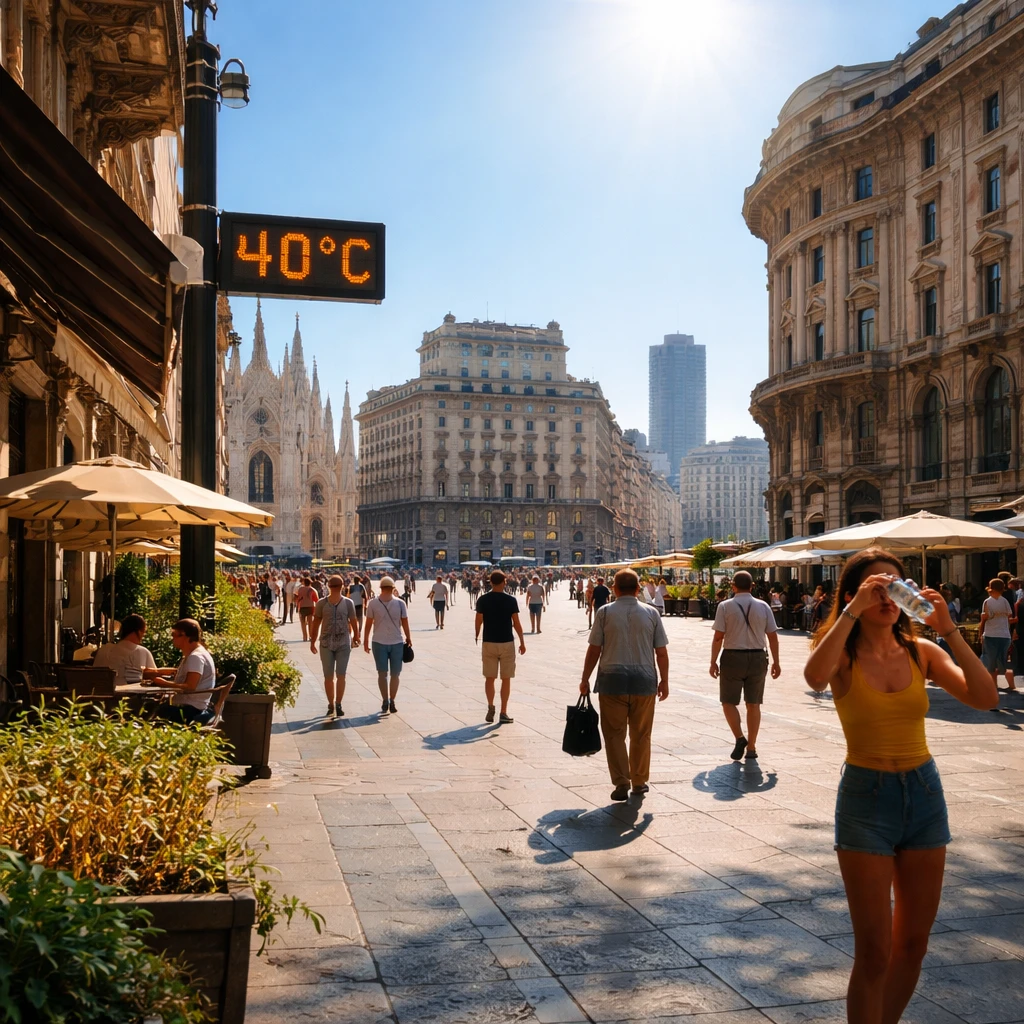
Temperatures have reached approximately 40 degrees Celsius (104 degrees Fahrenheit) in some areas, underscoring the intensity of the current event. Meteorologists attribute the heatwave to a North African anticyclone that has strengthened over the Mediterranean and expanded across much of Europe.

Forecasters reported that little respite is expected before the weekend, leaving communities under prolonged stress from elevated temperatures.

Practical implications

The nationwide elevation to the top alert level is intended to coordinate public health messaging and local responses, including advisories on outdoor activity and hydration. Authorities emphasized that the risk extends beyond traditionally vulnerable groups, signaling that broader public health measures may be warranted while the heatwave persists.


Note: Information in this report reflects the statements and forecasts provided by the health ministry and meteorological sources as cited in the official announcement.

Risks

  • Elevated risk of heat-related illnesses across the population could increase demand on healthcare services and emergency response systems - impacting hospitals and urgent care providers.
  • Sustained high temperatures may place strain on energy and water utilities due to higher cooling demand and hydration needs - posing operational and market pressures for utility sectors.
  • Continued adverse weather with little immediate relief increases the likelihood of reduced outdoor economic activity, affecting construction, agriculture, and other sectors reliant on outdoor labor.

More from World

Gaza Clan Buried After Recovery of 112 Decomposed Bodies from Sabra Rubble Aug 4, 2026 Mass Prison Break and Heavy Clashes Rock Towns West of Tripoli Aug 4, 2026 Crisis at FIFA Deepens as Key Figures Break Ranks After Infantino’s World Cup Stake Plan Is Abandoned Aug 4, 2026 Man Arrested on Arson Charge as Three Wildfires Devastate Spokane Region Aug 4, 2026 Indonesian Ferry Fire: 233 Rescued, Five Confirmed Dead as Agency Wraps Up Operation Aug 4, 2026