
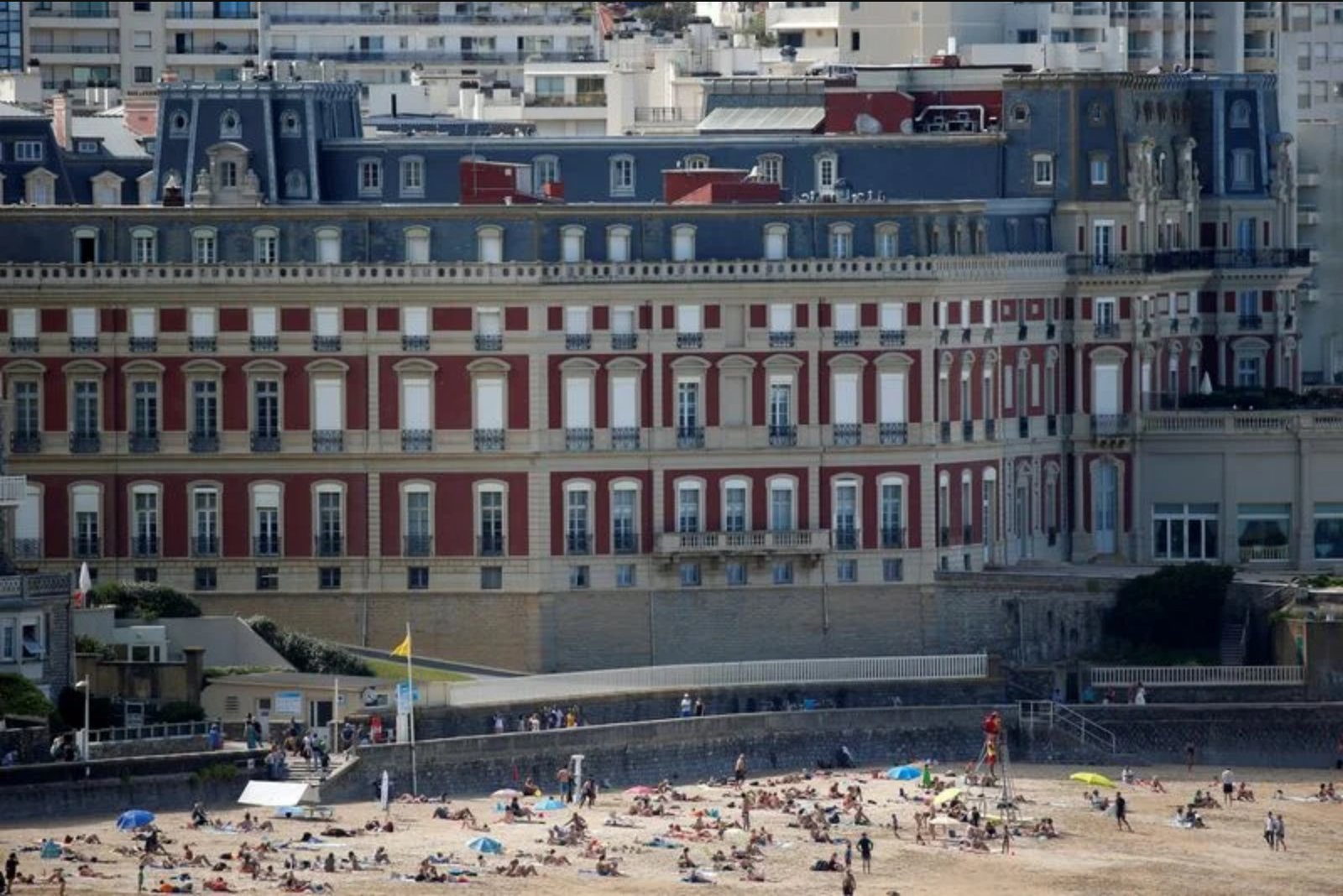
As the Group of Seven prepares to convene in Evian-les-Bains from June 15 to 17, the summit’s agenda is expected to be driven by two running conflicts - the Middle East confrontation involving Iran and the ongoing war in Ukraine. France, as host, has structured the meeting with an emphasis on crisis management and cohesion, while lowering expectations for major breakthroughs.
The leaders attending include France, Britain, Canada, Germany, Italy, Japan and the United States, together with representation from the European Union. With President Donald Trump perceived by some diplomats as increasingly impatient in his efforts to secure an end to the hostilities that have unsettled global markets, the summit is being positioned as a forum to steady diplomatic channels rather than to deliver sweeping new agreements.
French officials have deliberately kept the goals modest. The presidency has signalled that success will be measured by unity and the avoidance of sharp public divisions, not by landmark communiques or large-scale packages. In practical terms that has meant narrowing the list of cross-cutting deliverables and tailoring the agenda to issues that might appeal to Washington.
Summit logistics and the Trump variable
Paris moved summit timing in part to accommodate President Trump’s personal schedule, including arrangements related to a public birthday event that involves cage fighting on the White House lawn. That accommodation follows a pattern among recent hosts seeking to ensure U.S. engagement. French officials and some diplomats have openly set the bar low - suggesting the summit will be a diplomatic success if the U.S. president remains for the full duration after leaving early from the 2025 meeting.
"Macron has gone out of his way to have an agenda that is designed to appeal to the sort of things President Trump wants,"
That assessment comes from Josh Lipsky, chair of international economics at the Atlantic Council, and frames the Paris approach: build an agenda where the chances of public discord are reduced and the incentives for Washington to participate are enhanced.
Iran talks could set the summit’s tone
Diplomats say the pace and tenor of the summit may well be set by developments in the Middle East. A fragile ceasefire between the U.S. and Iran is reported to be under stress. Negotiators have struggled to secure even an interim agreement that would defer negotiations over the more contentious matter of Iran’s nuclear programme.
The U.S. priority in the talks includes reopening the Strait of Hormuz, the narrow maritime corridor essential to global crude oil and gas shipments. Tehran, by contrast, has pressed for an end to what it describes as a U.S. blockade on Iranian ports, the release of frozen Iranian assets, and demands that Israel halt its operations against the Hezbollah militia in Lebanon. Diplomats say the mood of the U.S. president heading into Evian may depend on whether an accord can be concluded before leaders arrive.
In private exchanges in recent months, Mr. Trump has publicly criticised some NATO allies for not supporting his Gulf campaign with the level of engagement he sought. A senior diplomat from a G7 member suggested that a deal in the Middle East could allow the group to move past months of tense interactions with Washington.
Reflecting France’s effort to broaden the regional conversation, Paris has invited several states directly affected by the conflict to attend the summit as guests - Saudi Arabia, the United Arab Emirates and Qatar - together with Egypt, which has been active in mediation efforts.
Ukraine seeks renewed focus and European leadership
Ukrainian President Volodymyr Zelenskiy has also been invited. The stalled negotiations to end Russia’s war in Ukraine are of acute concern to Kyiv, which is seeking a renewed diplomatic push and more visible European leadership. Ukrainian officials worry that the Iran crisis has diverted U.S. attention at a critical moment.
On the battlefield the dynamics have evolved, with Ukrainian drone operations reaching deeper into Russian-held territory in efforts to cut supply corridors and strike at energy infrastructure. European diplomats view the Evian meeting as an opportunity to persuade Washington that certain U.S. proposals have been unduly concessive toward Moscow. At the same time, many European capitals say they are prepared to continue engaging Russia diplomatically while tightening sanctions and increasing military support to Ukraine - framing the impasse as driven by Moscow rather than Kyiv.
"What we are increasingly seeing is Europeans beginning to think about a life with less America,"
That comment comes from Victor Cha, head of geopolitics and foreign policy at the Center for Strategic and International Studies, reflecting a broader reassessment in Europe of transatlantic security dependencies.
Economic focus narrows: critical minerals and macro imbalances
On economic issues France has abandoned plans for a single sweeping final communique, instead opting for a series of more narrowly targeted joint statements - on topics such as critical minerals, migration and drug trafficking. The shift reflects both the complexity of the global issues involved and the fractured consensus within the club.
Paris has pressed for action on global macroeconomic imbalances, a longstanding item on U.S. policy agendas, noting the sequencing of international leadership roles this year with Washington set to chair the G20 and later the G7. France has framed the imbalance challenge bluntly - arguing that China produces too much, the United States consumes too much and Europe underinvests. Leaders from Brazil, India, Kenya and South Korea have been invited to the G7 discussions, and President Emmanuel Macron has publicly urged China to boost its domestic consumption.
On critical minerals, attendees will confront supply-chain vulnerabilities and consider measures to reduce dependence on single-source providers. Asuka Tatebayashi, senior analyst at Mizuho Bank in Tokyo, highlighted Japan’s preparations: over more than a decade Tokyo and its major companies built stockpiles of critical minerals and demonstrated an ability to withstand supply shocks.
"It’s one of the few fields that the U.S. actually comes to Japan for advice on,"
Tatebayashi urged the G7 to pursue a substantive agenda on critical minerals - proposals she mentioned included minimum pricing, the sharing of stockpiles or joint development projects - while warning that significant differences among members remain.
Observers point out that, although these topics are important for long-term resilience in energy and industrial supply chains, the fractured political environment and the pressing security crises make comprehensive agreements unlikely at Evian.
Outlook and constraints
French officials have set modest goals and narrowed deliverables in recognition of political realities. One commentator reiterated the limits of current discussions: "None of that solves the problem, but the first step is recognising that you have one," said Josh Lipsky, noting that the macroeconomic themes have been talked about for years but not collectively addressed within the G7.
With the meeting designed to manage crises, uphold sanctions, and show coordination on critical supply issues, expect public statements to be limited in scope and to emphasize unity over concrete commitments. The presence of invited regional actors and Ukraine underlines Paris’s aim to use Evian as a diplomatic staging ground - one where the immediate objective is damage control and preserving the prospects for future negotiation rather than definitive resolutions.
Key points
- Planned discussion will be dominated by the Iran-U.S. ceasefire strains and stalled negotiations over Russia’s war in Ukraine - with direct implications for energy routes and security commitments.
- France has narrowed the summit’s deliverables, focusing on targeted joint statements such as critical minerals, migration and drug trafficking rather than a single sweeping communique.
- Invited guests include regional Gulf states and Ukraine, reflecting an emphasis on mediation and crisis de-escalation; economic topics will include global macroeconomic imbalances and critical mineral stockpiles.
Risks and uncertainties
- Failure to secure a durable interim accord with Iran could escalate tensions that threaten oil and gas shipment routes - a direct risk to energy markets and commodity-sensitive sectors.
- U.S. attention being diverted by the Iran conflict raises uncertainty over continued American focus on Ukraine, which may affect defense procurement, military support flows and European strategic planning.
- Differences among G7 members on critical minerals and macroeconomic remedies may limit practical measures to shore up supply chains, leaving technology, manufacturing and battery sectors exposed to further shocks.