
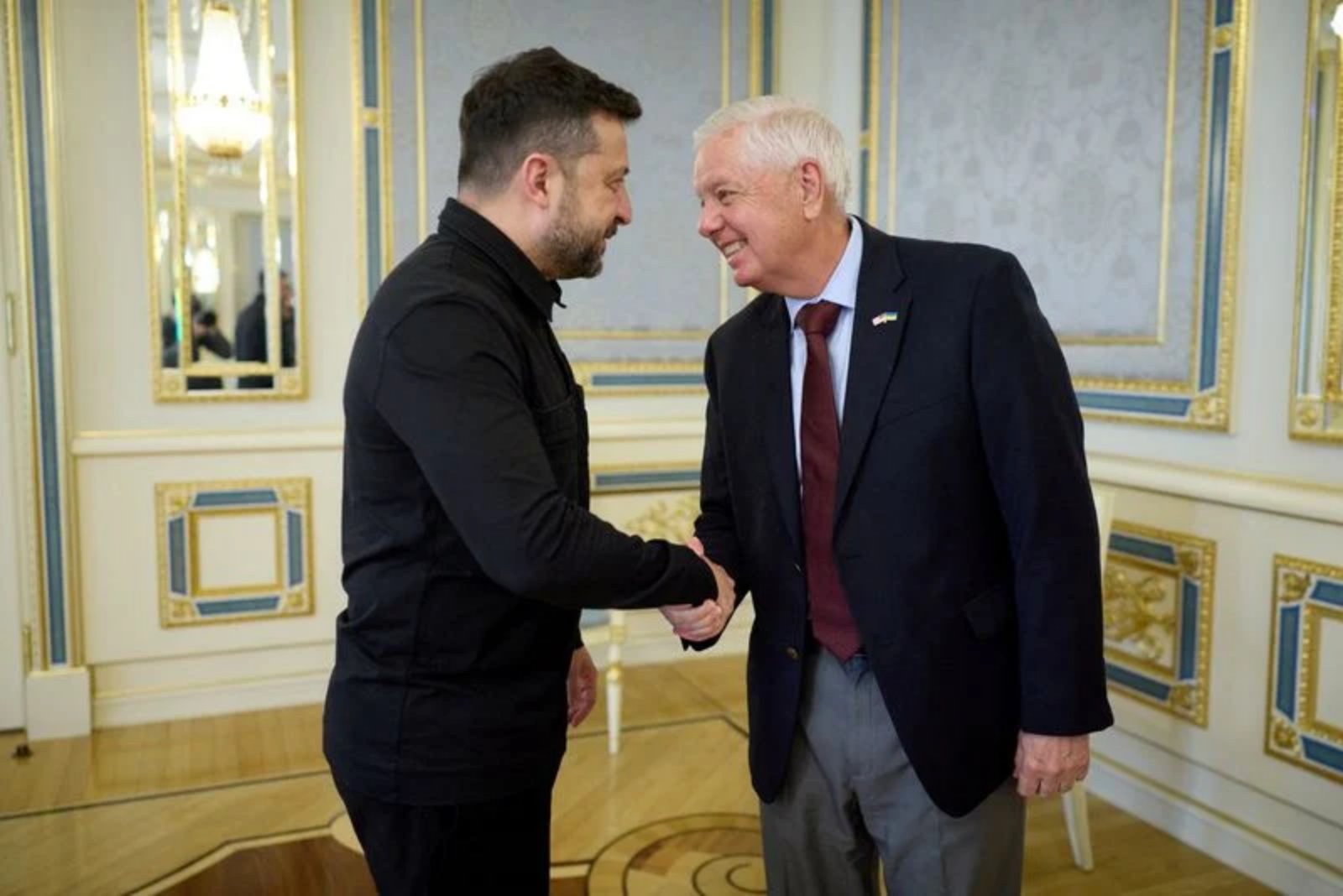
KYIV - U.S. Senator Lindsey Graham said on Friday that China could exert crucial pressure on Russia to bring it to the negotiating table and help end the war in Ukraine, and that the coming months represent a potential diplomatic window to pursue that outcome.
Graham, who has visited Ukraine several times since the conflict began, held talks in Kyiv with President Volodymyr Zelenskiy where they addressed Ukraine’s immediate air defence needs and a proposed Russian sanctions bill, Zelenskiy said.
China’s potential role
Speaking to reporters at Mykhailivska Square in central Kyiv, Graham argued that Beijing carries more sway over the trajectory of the war than any of the other capitals directly involved in the crisis. "The road to ending this war, the road to peace, passes through Beijing more than it does (through) Washington, Kyiv, or Moscow. China has an oversized influence. I’d like them to use their influence for the good of the world," he said.
Graham added that he did not believe Russian President Vladimir Putin had yet committed to negotiating, but suggested that relatively modest pressure might be sufficient to change his stance. "I don’t believe (Russian President Vladimir) Putin is there yet, but it wouldn’t take much to get him there. And the sooner we can have a dialogue about peace, the quicker this war is over," he said.
Military aid, sanctions and a diplomatic push
Graham outlined a two-pronged approach he said could compel Moscow to engage in talks: strengthening Ukraine’s military capabilities and synchronizing sanctions with a diplomatic push that leverages international partners, including China. He framed this combination as a time-sensitive opportunity.
On the sanctions front, Graham said that the team surrounding former U.S. President Donald Trump is now aligned with a Russia sanctions bill that has been under development for months. The legislation is intended to cut off financing sources that underpin much of Russia’s military activities. "We have a magic moment in time here," Graham said. "In the coming months, if we do this right, increase Ukraine’s lethality, get people to help us with Putin rather than propping him up, we can end this war."
Combat and civilian toll
The conflict remains intense across a broad front. Fighting continues along more than 1,200 km of front line, while Russia continues to launch missiles and drones against Ukrainian cities that lie far from active battlefields. The United Nations reported that June was one of the deadliest months of the war, with Russian strikes killing at least 265 civilians in Ukraine.
Ukrainian strikes inside Russia and diplomatic contacts
Kyiv has stepped up drone strikes inside Russia, targeting oil facilities and weapons production sites in an effort to degrade Moscow’s economic capacity to sustain the war. Zelenskiy, who met with Trump earlier in the week at the NATO summit in Ankara, said he discussed China’s potential role in ending the war with the U.S. president and several European leaders.
The situation, as described by Graham and Ukrainian officials, reflects an interplay of military support, economic pressure and international diplomacy, with Beijing’s influence highlighted as a potential pivot point for moving the parties toward negotiations.