
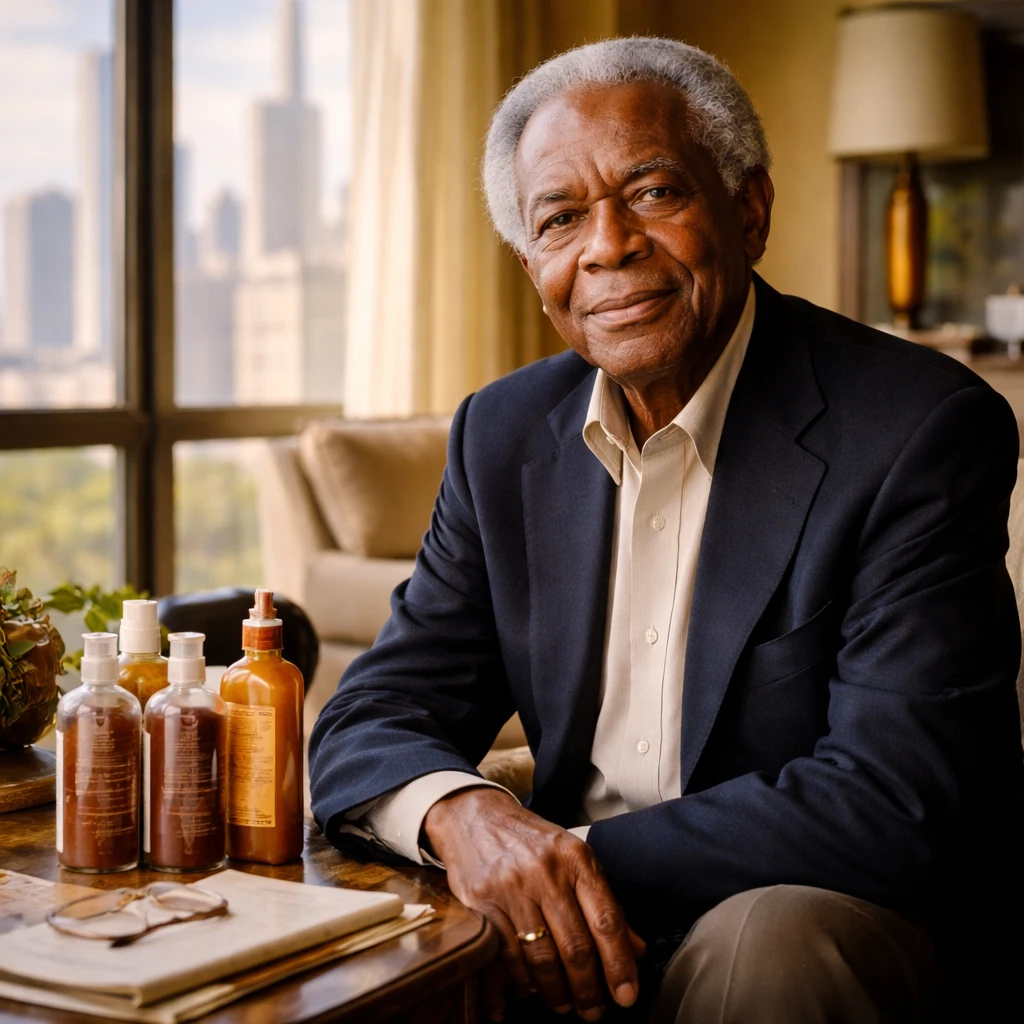
George E. Johnson, the entrepreneur whose Johnson Products Company reshaped haircare for African American consumers across the United States, has died at 99. Reporting on his death attributes different causes: the Chicago Sun-Times, citing his son John Edward Johnson, said he died of natural causes at his downtown Chicago condominium; the New York Times, citing his second wife Madeline Murphy Rabb, said he died of a respiratory illness.
Johnson's life and business trajectory captured both the barriers facing minority entrepreneurs in mid-20th century America and the commercial opportunities created by changing cultural tastes. Born in a sharecropper's shack in Mississippi, he relocated to Chicago with his mother when he was two years old. After leaving high school, he worked as a door-to-door cosmetics salesman before founding his own company in 1954 with his first wife, Joan Johnson, who later died in 2019.
What began as a small, resource-constrained venture grew rapidly. With brands including Afro Sheen, Ultra Wave and Classy Curl, Johnson Products Company targeted an underserved market at a time when mainstream U.S. firms and advertisers paid little attention to Black consumers. By 1960 the business controlled nearly 80 percent of the Black haircare market, according to reports. In 1971 the company made history by becoming the first Black-owned firm to be listed on the American Stock Exchange, now known as NYSE American.
Johnson's marketing and sponsorship choices reflected and helped shape cultural currents of the era. The company adopted campaigns that echoed the slogans and imagery of the Black Pride and Black Power movements then gaining traction. It also became the exclusive sponsor of the television music show Soul Train, helping to lift the Chicago-based weekly program from a local broadcast to national syndication.
Johnson's early product lineup was built around hair-relaxing formulations aimed at consumers seeking straight and wavy styles popular in the 1950s and early 1960s. Ultra Wave for men and Ultra Sheen for women were among the initial offerings designed for at-home use. As cultural attitudes toward natural texture evolved in the late 1960s, Johnson Products adapted by introducing the Afro Sheen Blow Out kit, aligning products with a growing preference among many African Americans for hairstyles that reflected natural hair textures.
Another prominent product, Classy Curl, enabled consumers to achieve the perm style commonly known as the Jheri curl, a technique first popularized by hairdresser-chemist Jheri Redding. Over time, however, Johnson's company confronted a shifting competitive landscape as larger cosmetics and haircare conglomerates such as Revlon moved to capture share in the increasingly lucrative African American hairstyling market. That entry by national players contributed to commercial pressures on the family-founded enterprise.
Johnson's path to business ownership underlined the limited access to traditional financing options for Black entrepreneurs in his era. After an initial bank refused a business loan application, he obtained a $250 loan from a different bank by telling a white loan officer the money was for a family vacation - a strategy Johnson described in his memoir Afro Sheen, published in 2025. He later said he understood how the framing of his request would avoid challenging prevailing racial stereotypes and would not unsettle the loan officer's assumptions.
Following the Johnsons' divorce, the company passed through several ownership changes. Eventually, a majority African American investment firm acquired the business in 2009 from Procter & Gamble. The company's fortunes thus moved from a founder-led, family-owned enterprise to multiple hands and corporate owners over subsequent decades.
George E. Johnson's death marks the passing of a figure who combined entrepreneurial resourcefulness with an ability to read and respond to rapid cultural shifts in fashion and hair aesthetics. His company's rise and subsequent commercial struggles illuminate both the opportunities and limits faced by independent consumer brands as the beauty industry consolidated in the latter part of the 20th century.