
France and Morocco face each other in a World Cup quarter-final being staged in Boston, a match notable not only for what unfolds on the pitch but for the deep historical and personal connections that link the two nations. Those ties run from colonial-era history to present-day football pathways, where players, supporters and communities overlap across borders.
The diplomatic and social legacy of a French protectorate over Morocco from 1912 to 1956 informs much of the contemporary relationship between the countries. That legacy is reflected in ongoing exchanges in education, business and migration, and it is especially visible in football. A significant portion of Morocco's national squad has roots in France - six squad members were born there - and additional players developed in Ligue 1 or passed through French youth systems before electing to play for Morocco.
These entwined routes are exemplified by teenager Ayyoub Bouaddi. Born in France and developed in Lille's academy, Bouaddi represented France at youth level before choosing to switch his international allegiance to Morocco. His trajectory typifies the dual footballing identities that give this match a layered meaning beyond the scoreline.
On sporting credentials, France enter as one of world football's established powers, carrying the pedigree of a 2018 World Cup title and the type of tournament experience and attacking firepower expected of a side chasing another global crown. Morocco, meanwhile, come with a record of upsetting expectations. Four years after becoming the first African country to reach a World Cup semi-final, they have reinforced their status with organization, player development and confidence that enable them to challenge traditional powers.
The two teams last met in Qatar in 2022, when France won 2-0 in a match marked by palpable emotion and an atmosphere of mutual recognition. Morocco's unexpected run in that tournament captured attention well beyond its borders, while the composition of France's squad highlighted the multicultural influences long present in its national side.
This quarter-final carries an intriguing sense of familiarity in its Boston setting. The city's Moroccan community, while not as large or visible as those found in many French cities, has established itself across the metropolitan area through networks of families, students, professionals and businesses. That presence creates spaces where supporters from both countries often mingle rather than stand strictly apart.
"Some live in the same building and French and Moroccans will watch the game together and shake hands at the end," said Mohammed Saadi, a 57-year-old taxi driver. "There is no tension here. Soccer is a family thing and France v Morocco will be no different. Quite the opposite, even."
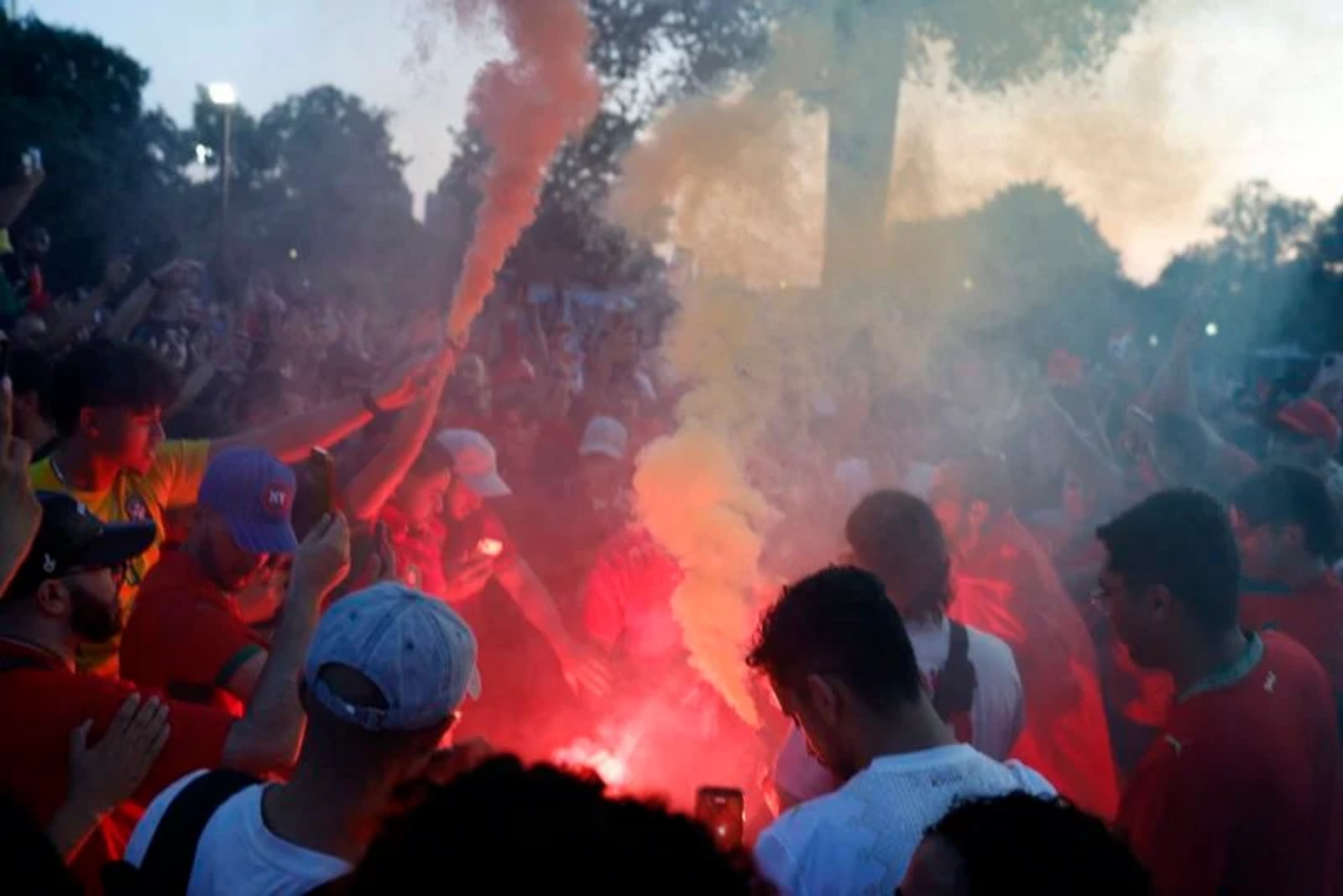
In Boston Common more than 1,000 fans gathered to sing Dima l-Maghrib - Always Morocco - and wave flags in a peaceful assembly ahead of the match. Among them was Youssef Bennani, a 36-year-old software engineer who said he traveled from Finland to follow Morocco's matches. "I’ve been to all of Morocco’s games and here it’s the best place. I met a lot of Moroccans, also some French and it’s going to be a big party tomorrow," he said.
For supporters in Boston, allegiance to either side will not always produce clear divisions. The shared languages, family links and migration patterns that connect many people to both countries can create viewing environments in which fans watch together and socialize after the final whistle.
From a sporting perspective, both teams bring distinct strengths. France reached the last eight by defeating Paraguay and have fielded one of the tournament's most potent attacks. Morocco demonstrated pace, discipline and ambition en route to the quarter-finals, including a 3-0 victory over Canada that underlined the qualities that have returned them to the latter stages.
Beyond the contest itself, the backdrop to the match includes heightened security measures in France around the build-up, match and aftermath. That environment contrasts with the more familiar and convivial atmosphere reported in Boston, where a diaspora community has created a hospitable stage for supporters to come together.
The fixture therefore operates on several levels: as a high-stakes sporting encounter, as a reflection of historical and social intertwining, and as a display of how diasporas and cross-border player development shape modern international football.