
Temperatures in France and Spain were forecast to climb again on Wednesday as both countries entered a fourth heatwave of the summer, elevating the risk that existing wildfires will spread further and prompting continued large-scale evacuations.
Spain’s meteorological agency AEMET warned that at least six regions were on orange alert, the second-highest level, with daytime readings expected to reach 40 degrees Celsius (104 degrees Fahrenheit) in parts of the country. In southwestern France, where some of the most destructive blazes have been concentrated, Meteo France predicted a rise from roughly 33 C on Tuesday to a peak of 42 C, with dry winds shifting from the southwest in the morning to the west in the afternoon - conditions likely to feed existing flames.
French crews reported overnight progress on a major fire west of Bordeaux, keeping the blaze stable, though officials stressed the danger was far from over.
"As we speak, the situation is stable but the fire is still not under control," firefighter commander Matthieu Jomain told reporters. "We remain vigilant of course today, considering the forecast weather conditions, with a new rise in temperatures and higher wind speeds in the afternoon."
Devastation to countryside and wildlife
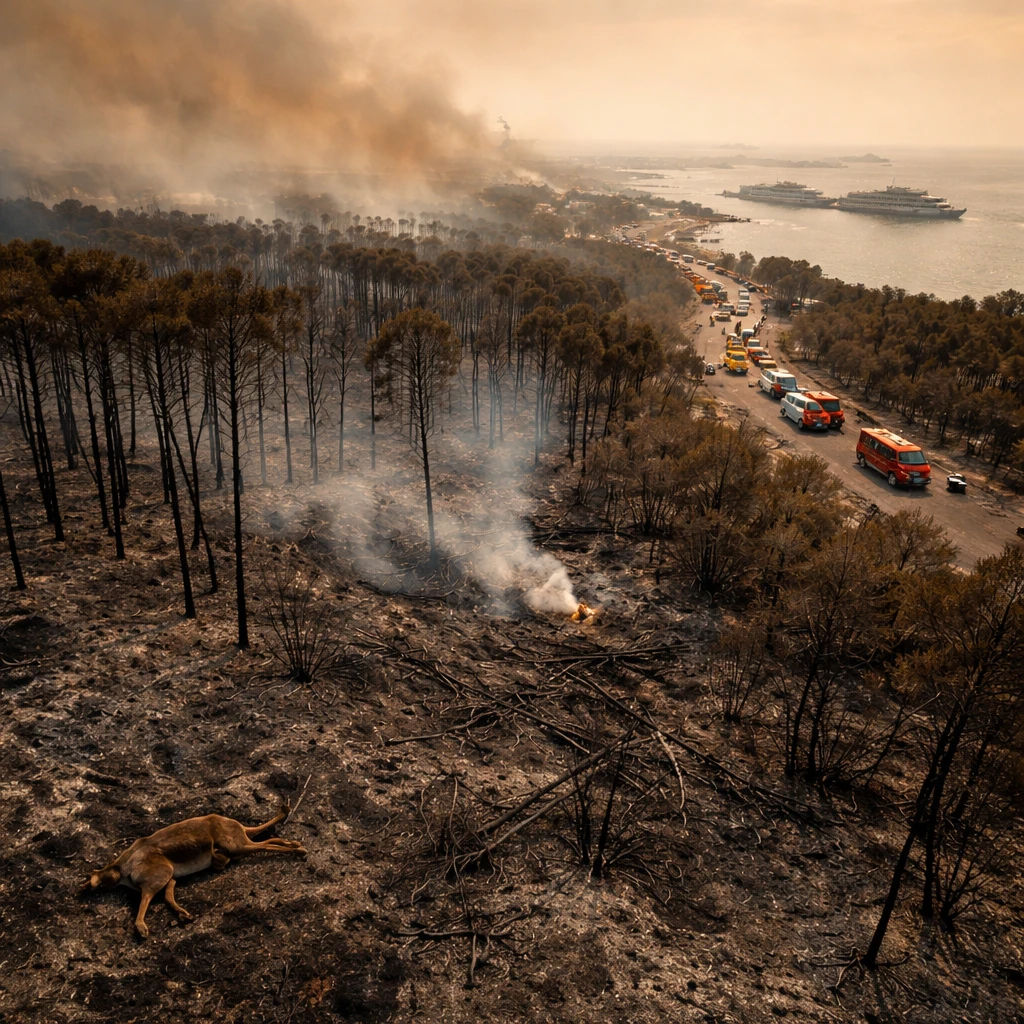
Drone footage from El Tiemblo in Spain’s Avila province near Madrid showed the toll on local fauna, with charred deer carcasses visible in a forest reduced to ash. A Madrid resident who identified herself as Cintia described the scene with dismay, saying she had frequently visited the area and brought food for wildlife there.
"We love this, the wildlife, everything around us. We used to bring food up for the animals because they’re from here. They belong to this land," she said. "And look where it is today."
The human and ecological impacts have been extensive. In the Landes area west of Bordeaux, a fire has ravaged 42,000 hectares (104,000 acres) of predominantly pine forest. Authorities ordered the evacuation of about 220,000 people, including holidaymakers and residents, as flames threatened the Cap Ferret peninsula on the Atlantic coast - an area reachable by only one road. Hundreds of evacuees were transported away on specially chartered ferries.
On the outskirts of Bordeaux, several companies temporarily suspended operations as the fire approached to within approximately 15 km (9 miles) of the metropolitan area.
Local responses and community efforts
In the southwestern town of Lanton, volunteers have been attempting to defend their village with limited resources, carrying buckets of water to aid efforts. Local pastry chef Jonathan Segalas-Talous, 29, described the strain on community volunteers.
"It’s hard, really, very hard, because we don’t have many resources. We try to help people however we can, with the little we have," he said. "We’ve lived here for years, and we want to stay. So, we do everything we can, whatever means we have to help, we use. We help."
Meteo France indicated that conditions in southwestern France could ease from Thursday as thunderstorms, lower temperatures and increased humidity are expected to reduce danger levels.
Situation in Spain: mixed progress and an ongoing blaze in Castellon
Across Spain, officials reported improvement in the central provinces of Avila and Madrid, though a significant fire in the eastern province of Castellon remained out of control after burning more than 10,000 hectares and producing multiple flare-ups driven by weather. Authorities said around 10,000 residents evacuated from Castellon were still not able to return to their homes. The perimeter of that fire was estimated at 75.5 km (47 miles) as it entered its fifth day on Wednesday.
Madrid’s emergency services reported on social media that the wildfire in the capital region did not spread overnight, while crews continued work to consolidate the perimeter and extinguish hot spots to avoid re-ignition. Interior Minister Fernando Grande-Marlaska said late on Tuesday that evacuees from 15 towns in Madrid and Avila were beginning to return to their homes.
Wider context and impacts
The outbreaks come amid an exceptionally hot year for Europe, which experts say is the world’s fastest-warming continent. Human-driven climate change is intensifying heat and drought conditions that create a more favorable environment for wildfires to ignite and spread. The more frequent and intense heatwaves are associated with thousands of excess deaths and growing disruptions to daily life, including delayed road and rail travel and impeded river shipping.
Authorities in both countries are balancing efforts to protect lives and property while monitoring shifting weather that could either exacerbate or, in the case of incoming thunderstorms in France, help suppress the fires. As crews and communities contend with limited resources and volatile conditions, the situation remains fluid with significant human, ecological and economic consequences unfolding.