
World June 12, 2026 12:41 PM

Congolese Security Forces Break Up Sit-In Near Parliament as Opposition Protests Constitutional Change

Demonstrators oppose a bill to send constitutional amendments to referendum amid reports of injuries and use of force

By Nina Shah
Share
Twitter Reddit Facebook LinkedIn

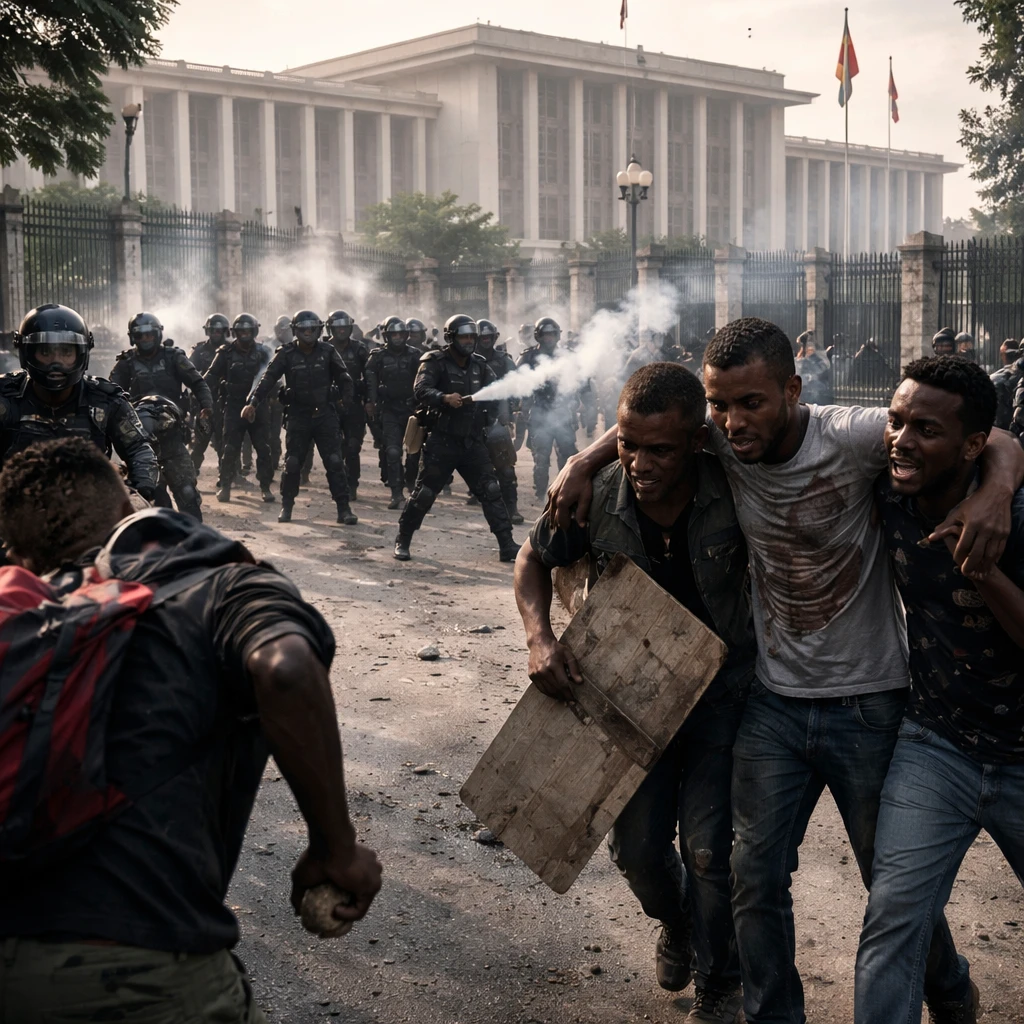
Security personnel dispersed a crowd of demonstrators gathered outside the parliament in Kinshasa on June 12 as part of a sit-in organized by Coalition Article 64. Witnesses and opposition figures said police and other forces used tear gas and live ammunition to break up the protest against a bill that would allow constitutional changes to be decided by referendum, a step critics say could enable President Felix Tshisekedi to seek a third consecutive term.

Congolese Security Forces Break Up Sit-In Near Parliament as Opposition Protests Constitutional Change
Summarize with
ChatGPT Perplexity Claude Grok Gemini

Key Points

  • Coalition Article 64 organized a sit-in outside parliament in Kinshasa to oppose constitutional changes; the coalition includes Martin Fayulu and Moise Katumbi.
  • Security personnel used tear gas and were accused by witnesses of firing live ammunition as demonstrators threw rocks; opposition members reported several injuries, including a reported gunshot wound to Delly Sesanga.
  • The National Assembly approved a bill to allow proposed constitutional amendments to be decided by public referendum, which opponents say could enable the removal of presidential term limits and allow President Felix Tshisekedi to seek a third term.

DAKAR, June 12 - Security forces pushed back a demonstration outside the National Assembly in Kinshasa on Friday, witnesses and opposition leaders reported, as hundreds of people gathered to oppose proposed changes to the constitution that critics say could clear the way for President Felix Tshisekedi to seek a third term.

The sit-in had been organized by Coalition Article 64, commonly abbreviated as C64, a broad opposition alliance that includes former presidential contenders Martin Fayulu and Moise Katumbi. Organizers and bystanders said the demonstration escalated when security personnel deployed tear gas and, they alleged, fired live rounds to disperse protesters who responded by throwing stones.

Jean-Baptiste Kasekwa, a member of Martin Fayulu's political party, told reporters that several demonstrators had been wounded, including some prominent political figures. He said that police, army units and militants aligned with President Tshisekedi's party had been positioned outside the parliament building from dawn in an effort to prevent the sit-in.

Opposition figure Delly Sesanga's communications team posted on X that he had been shot in the leg during the clashes. Authorities did not immediately respond to requests for clarification on whether live ammunition was used by security forces. A police official present at the scene told journalists that officers had acted to restore order.

The protest occurred three days after the country's National Assembly approved legislation that would permit constitutional amendments to be referred to a public referendum. Opposition leaders say the move is intended to provide a route for eliminating presidential term limits and therefore allow President Tshisekedi to run again.

Under the current Congolese constitution, a president may not stand for re-election after serving two terms. Felix Tshisekedi was first elected in 2018 and won a second term in 2023. Last month he suggested the possibility of running for a third term, saying he would do so if asked by the Congolese people.


Context and immediate developments

  • The demonstration was led by Coalition Article 64, which includes figures such as Martin Fayulu and Moise Katumbi.
  • Witnesses and opposition members reported the use of tear gas and alleged live fire; the government had not immediately commented on live ammunition use.
  • The National Assembly recently passed a bill to allow constitutional changes to be put to a referendum, a step opposition leaders say could be used to remove term limits.

This account is based on statements from witnesses, opposition politicians and a police official at the scene. Details about the use of live rounds and the full extent of injuries were not immediately confirmed by government sources.

Risks

  • Uncertainty over the use of live ammunition - government officials had not confirmed whether live rounds were used, creating ambiguity around the scale of force deployed; this raises immediate political stability concerns that could affect investor sentiment and markets.
  • Potential escalation of political confrontation - the passage of legislation to enable a referendum on constitutional changes has increased tensions between the opposition and authorities, posing a risk of further unrest that could disrupt public institutions and economic activity.
  • Unclear extent of injuries and deployment of aligned militants - reports that police, army and militants aligned with the president's party were deployed create uncertainty about security dynamics and the potential for continued clashes, with implications for governance and public confidence.

More from World

U.S. and Iran Said to Be Close to a Memorandum to End Standoff Jun 12, 2026 Trump Repeatedly Signals an Imminent End to the Iran War; Deal Not Finalized, He Says Jun 12, 2026 Peru Vote Review Underway as Contested Ballots Could Decide Tight Runoff Jun 12, 2026 British Man Sentenced Over Role in US Teen's Death Linked to Discord Video Call Jun 12, 2026 Iranian Pro-Democracy Activist Flown From U.S. to Central African Republic, Lawyer Says Jun 12, 2026