
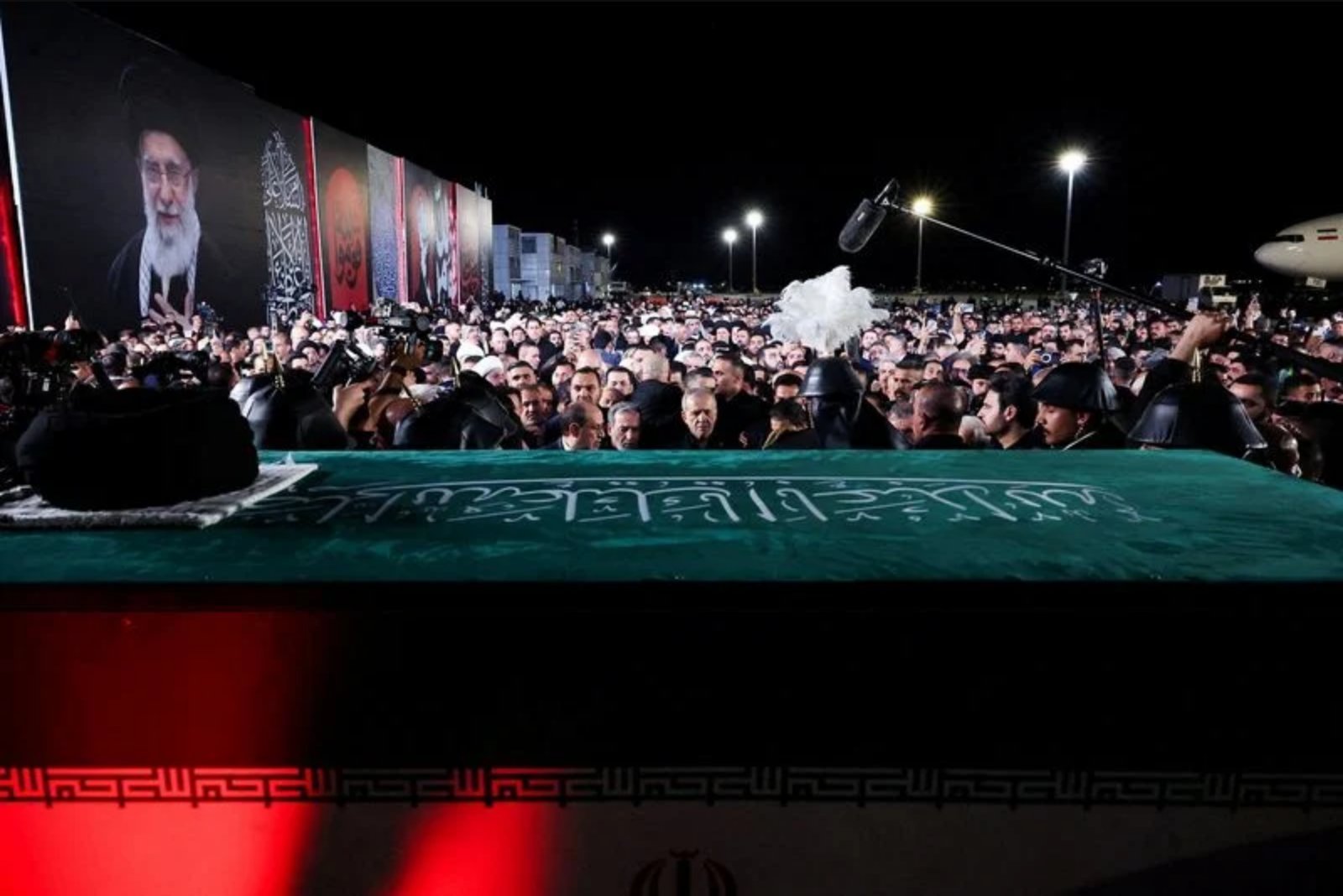
The coffin of Iran's slain Supreme Leader, Ayatollah Ali Khamenei, arrived in the Iraqi holy city of Najaf on Tuesday, state television reported, concluding a multi-day procession that followed funeral ceremonies in Iran. The leader was killed in a February 28 U.S.-Israeli strike, according to the accounts provided with the arrival.
Iraqi Prime Minister Ali al-Zaidi, along with senior Iraqi officials, received the coffin at Najaf International Airport ahead of planned funeral rites and a large public procession. Iranian President Masoud Pezeshkian also flew into Najaf to take part in the ceremonies, the state broadcaster said.
Official reception and public mourning
The airport reception included Iraqi political leaders and Shi'ite religious figures. After the formal welcome, the coffin was set to be carried through the streets of Najaf in a series of public mourning events that authorities said would draw large crowds on Wednesday.
Najaf is regarded as one of Shi'ite Islam's most sacred sites because it is the burial place of Imam Ali, the cousin and son-in-law of the Prophet Mohammad. The city's religious significance framed the procession as both a spiritual observance and part of a broader series of state-organized ceremonies.
Sequence of the procession and state messaging
The state-organized funeral events began on Friday in Iran and were described by officials as serving dual purposes - religious commemoration and a demonstration of continuity by the Islamic Republic following the death of a leader who governed Iran for nearly four decades. From Tehran, the procession moved to the Shi'ite seminary city of Qom before crossing the border into Iraq.
Security and regional movement
Iraqi authorities tightened security around Najaf ahead of the arrival as large numbers of mourners travelled from across Iraq and neighboring countries to take part. After the planned events in Najaf, the procession is scheduled to continue to the Iraqi shrine city of Karbala. Officials indicated the coffin will then be returned to Iran for burial in Mashhad later this week.
Context limitations
The accounts above reflect the details released via state media about the movement of the coffin, the officials who received it, the cities included in the procession, and the security measures reported by Iraqi authorities. No additional operational details, timelines beyond "later this week," or further logistical specifics were provided in those reports.