
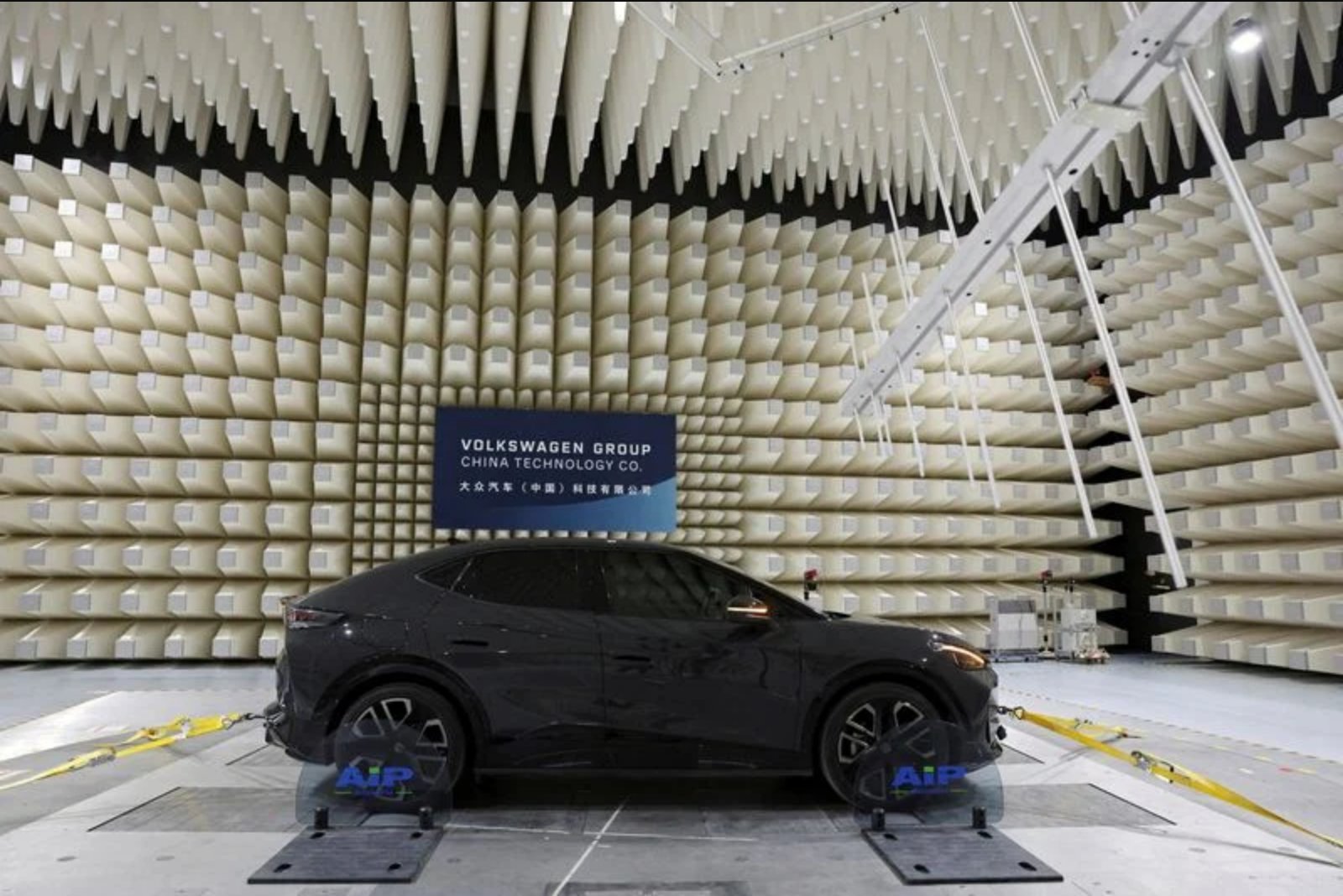
SHANGHAI, July 8 - Global carmakers that once treated China primarily as a low-cost assembly base are increasingly entrusting their Chinese engineering centres with product development and technology leadership. That shift is visible in new models and platforms designed in China that are now being considered for export and adoption in non-Chinese markets.
In May, General Motors achieved an uncommon milestone for a foreign brand in China when it sold more than 10,000 units of the Buick Electra E7 in its first month on sale. While the Buick nameplate is rooted in the United States, the Electra E7 itself was developed entirely at the Pan Asia Technical Automotive Centre (PATAC) - the joint GM-SAIC technical centre in Shanghai.
Engineers at PATAC devised the Xiao Yao platform that underpins the Electra. SAIC-GM describes Xiao Yao - a name drawn from a Daoist phrase meaning "freedom from burdens" - as featuring a 900-volt supercharging system together with a plug-in hybrid powertrain, delivering fuel efficiency that SAIC-GM characterises as market-leading. According to a person with direct knowledge of GM's plans, the company intends to export the Electra to South Korea and to deploy the China-developed platform in the next iteration of the Cadillac Optiq. The person spoke on condition of anonymity; GM declined to comment on potential exports or future market plans but said it focuses on creating vehicles and technologies that resonate with customers both in China and beyond.
The Xiao Yao platform and its technical features are not present on models developed in Detroit, and the source said using Xiao Yao in the next Optiq would replace the Ultium platform that had been developed at GM's Detroit operations and used in earlier Optiq models. The shift follows a pattern in which products developed in China are increasingly being adapted for use outside the local market, rather than remaining China-only offerings.
GM's Xiao Yao-based Electra has been received strongly in China, while models built on the Ultium architecture have experienced softer sales there. That performance contrast has encouraged traditional automakers to bolster their technology capabilities by relocating more development work to China.
"Legacy automakers are manufacturing companies trying to adapt to a world of tech," said Pedro Pacheco, vice president of research at Gartner. "They went to the place - China, where they know they're going to find tech talents." The observation underlines a strategic reorientation: rather than simply producing cars designed overseas, global groups are leveraging China-based engineering teams to advance electric powertrains, battery systems and vehicle software.
Renault's Shanghai research centre is an example of China-led development intended for markets beyond China. The centre developed the Twingo E-Tech compact, which is produced and sold in Europe. Similarly, Audi's separate initiative has seen plans for an R&D centre with full autonomy over development for a new Chinese brand, AUDI, a move Audi's SAIC joint venture described as prompted by early success of the AUDI E5 Sportback.
The AUDI E5 Sportback, developed with China-based input, introduced features such as an "intelligent air suspension" system that uses sensors to anticipate vertical motion and smooth the ride. According to the material provided, that feature is present in the E5 but not in the Mercedes CLA EV competitor, which was developed on a global platform led from Germany and adapted for China. Since its late 2025 launch, the E5 has reportedly averaged 910 monthly sales in China compared with 296 for the CLA, according to data cited from an automotive consultancy.
Audi stated it has no plans to export the E5 from China, although social media commentary from European enthusiasts noted the car's unavailability in their market. Mercedes described its CLA EV strategy as positioning the model as a niche offering rather than a core volume product and said it was strengthening efforts on "100% China-fit products".
Executives and analysts cited in the material argue that global headquarters often lack the speed and local insight required to address specific Chinese market dynamics. Chang Yan, founder of an EV blog, commented that overseas headquarters "don’t respond quickly enough to the pain points of the Chinese market." The German Chamber of Commerce in China reported that the share of R&D performed in China for both domestic and global markets rose to 33% from 12% over a two-year span in Germany's auto sector, implying a rapid rebalancing of engineering activity toward China.
Delegating development authority to China can create tensions relating to brand identity and internal alignment. For brands historically associated with particular engineering pedigrees, such as German engineering, handing too much development control to China risks blurring those brand distinctions. Audi has sought to manage this by establishing a dual-brand approach in China: the autonomous R&D centre will supply technology to the new four-letter AUDI brand, while the traditional four-ring Audi marque will continue to rely on German-developed technology. Audi said this separation clarifies positioning, customer targets and the technological solutions appropriate to each brand.
Other concerns voiced by analysts include potential harm to automakers' home-country supplier ecosystems and the political optics of large transfers of engineering capacity abroad. Gartner's Pacheco warned that concentrating brainpower in China could be seen as a strategic loss in home markets and may affect local suppliers.
Renault's Twingo E-Tech project illustrates potential cultural and quality-control frictions that can arise when headquarters delegate development overseas. Renault's Shanghai centre completed the Twingo E-Tech in 21 months, a speed the company’s chief technology officer described as "remarkable." Yet headquarters initially expressed reservations about quality standards and raised concerns about the long hours reported among local engineers. To address those issues, Renault began rotating French engineers to China so they could gain direct exposure to the development environment and then return to France with that experience, a move Renault's CTO said improved mutual understanding.
Those practical measures highlight another consequence of shifting R&D: knowledge exchange is becoming bilateral rather than one-directional. Oliver Oehms, executive director for North China at the German Chamber of Commerce in China, summarised the change by saying knowledge flow is no longer a one-way street.
The evolving arrangement - in which China-based teams lead on platforms, powertrain innovation and software development - is reshaping how legacy carmakers approach engineering, product definition and market strategy. But the reallocation also poses managerial, supplier and reputational challenges that firms are confronting through dual-brand strategies, staff rotations and selective technology rollouts.
Key points
- Several legacy automakers are shifting product development to China, where local teams design platforms and powertrains now being considered for export and global use.
- China-developed platforms such as SAIC-GM's Xiao Yao underpin successful models like the Buick Electra E7; that platform features a 900-volt supercharger and a plug-in hybrid system and is credited with strong fuel efficiency.
- The trend affects multiple sectors: automotive R&D and engineering, electric powertrain and battery technology, and global supplier networks and brand strategy.
Risks and uncertainties
- Brand positioning risks - handing development to China can create tensions for brands associated with particular engineering heritages, potentially affecting market perception in home markets (automotive and marketing sectors).
- Supply-chain and home-ecosystem impacts - moving R&D offshore could reduce demand for suppliers in headquarters’ home countries and alter supplier relationships (auto suppliers and industrial sectors).
- Internal culture and quality concerns - fast-paced China-led projects may trigger skepticism over standards and working practices, prompting rotational deployments of overseas engineers to manage integration (human resources and product quality management).
Image prompt: A high-resolution photograph of a modern automotive research and development lab in Shanghai: a group of multinational engineers in safety vests and smart casual attire gathered around a sleek electric sedan on a raised platform. Visible behind them are engineering workstations with large monitors displaying vehicle software schematics and battery management graphs, prototype components such as an electric motor and a compact 900-volt charging module on a nearby bench, and a wall-sized glass window showing a city skyline with contemporary skyscrapers at dusk. The scene conveys focused collaboration, advanced technology and urban scale without any visible text or logos.