
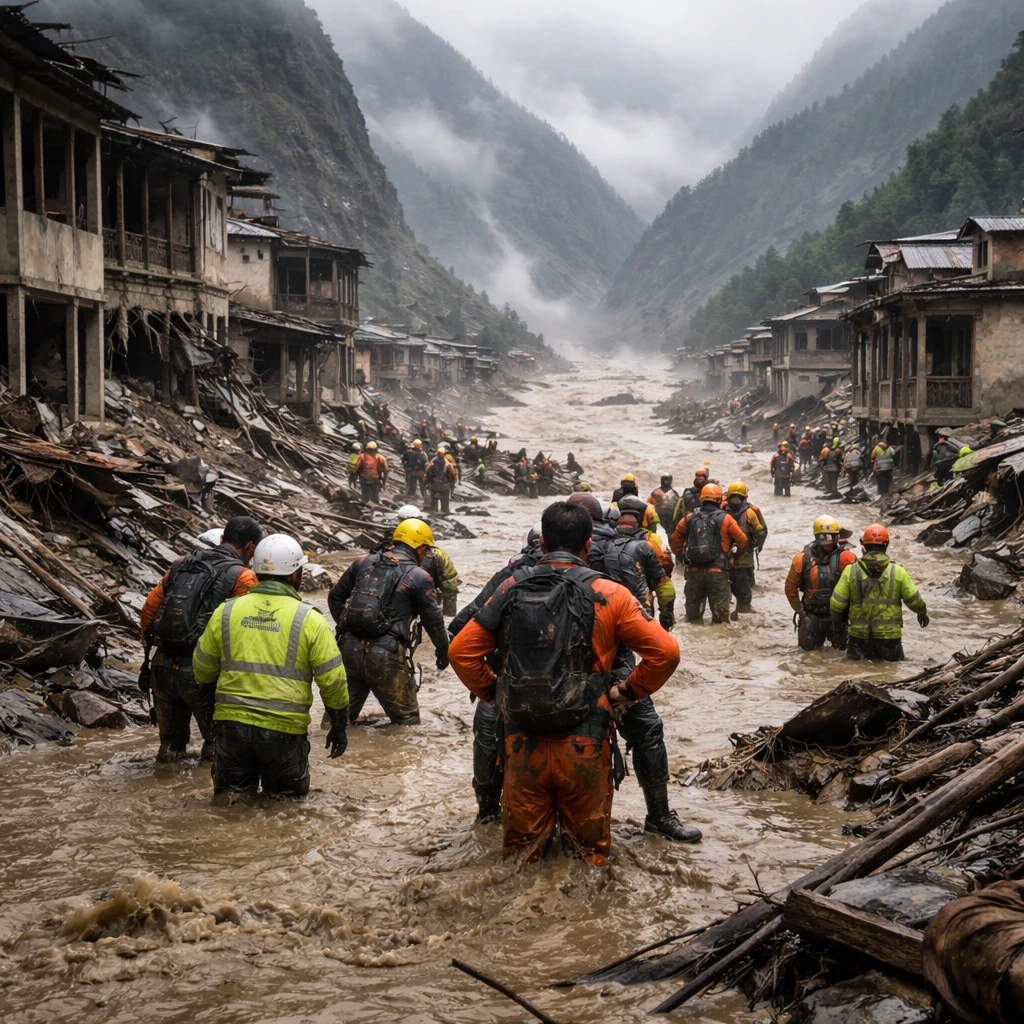
Chinese authorities announced on Sunday that 261 foreign nationals from 23 countries are missing on the Tibetan side of a key border crossing with Nepal following a glacier collapse that sent a torrent of ice, rock, mud and debris down Himalayan waterways. Officials from the Tibet Autonomous Region provided the nationality breakdown at a press briefing and said Nepalese citizens comprised the largest single group among those unaccounted for.
The officials reported that 104 of the missing foreigners were from Nepal. Additional counts included 49 Indian citizens, 33 Latvian, 18 American and 15 British nationals. Authorities said Beijing has notified the relevant foreign missions about the missing people. This release marked the first detailed nationality breakdown from the Chinese side since the glacier failure on Wednesday.
On the Tibetan side, local authorities said 16 people had died in Gyirong County as of Saturday evening and that 546 people were missing. Across the border in Nepal, the disaster authority provided far higher casualty figures: at least 675 people killed, 2,498 reported missing and 7,514 rescued on Nepalese territory.
Local police described an ongoing risk of secondary flooding, saying residents and rescue teams have moved to higher ground after water in the nearby Trishuli River rose over the past few hours. The elevated water level highlights the possibility of further inundation even as search and rescue operations proceed.
Chinese state broadcaster CCTV reported that authorities attribute the event to glacier instability linked to long-term effects of global warming, calling it a "new and prominent feature of cryosphere disasters" on the Tibetan plateau. CCTV cited Chinese scientists in saying it took six to seven minutes for the mudslide that began on the Nepalese side to reach the Gyirong border crossing. Surveillance footage from the crossing showed surging water and debris sweeping through the area as people tried to escape.
China's foreign ministry engaged with Nepali counterparts by telephone. Wang Yi, the Chinese foreign minister, told his Nepalese counterpart that the mudslide represented their most severe cross-border disaster in recent years and that rescue operations faced unprecedented complexity and difficulty, according to CCTV.
Beijing has mobilized more than 2,100 emergency rescue personnel and allocated at least 220 million yuan in funding to support relief efforts. In addition to cash aid, authorities said they are supplying disaster relief materials, satellite and hydrological data and tunnel rescue experts to Nepal to assist operations.
International cooperation is underway to identify missing citizens and foreign nationals, and officials said countries are strengthening collaboration on disaster prevention, mitigation and climate-change response. The Red Cross estimated that more than 90,000 people are likely to have been affected by the disaster.
The situation remains fluid on both sides of the border as rescue teams continue operations, authorities tally casualties and missing-person reports, and hydrological conditions are monitored for signs of further flooding.