
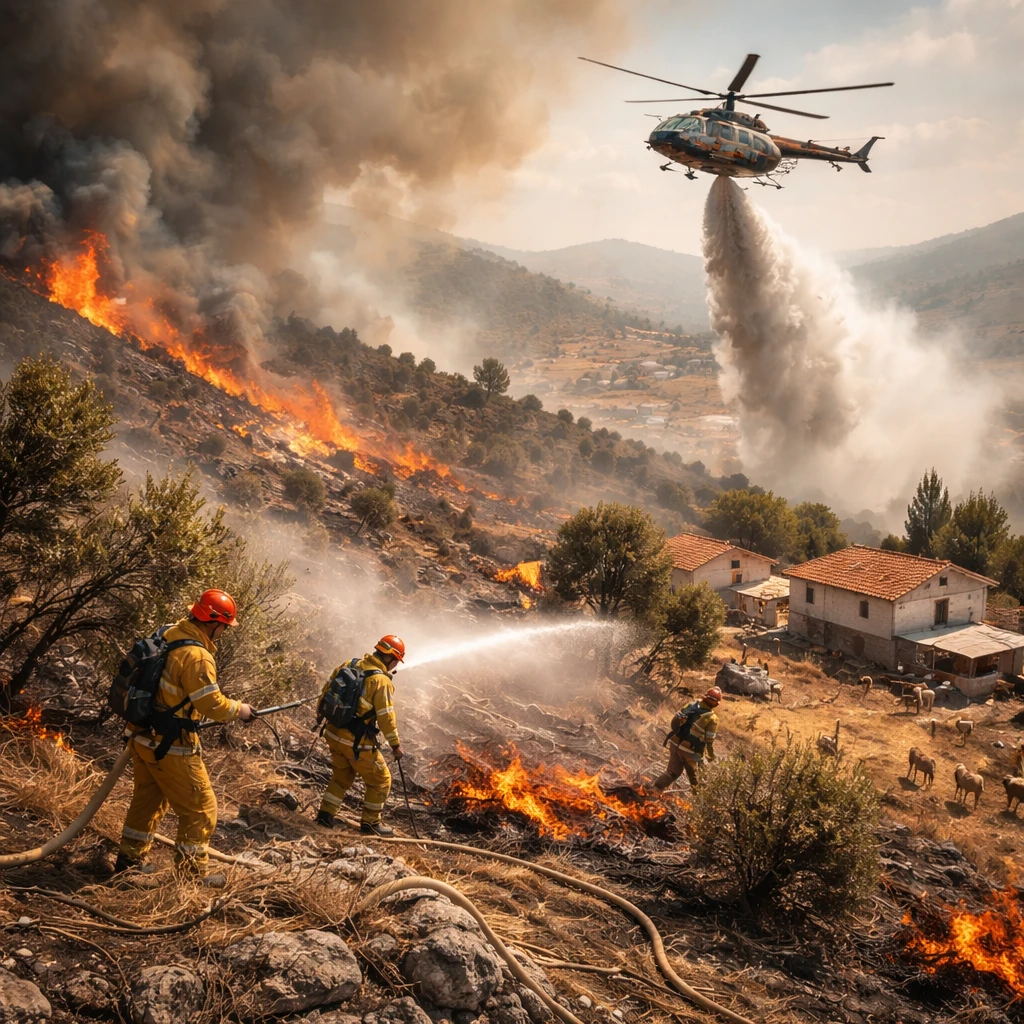
Tirana, Aug 5 - Firefighters in Albania were working on Wednesday to control a wildfire in the southern Mallakaster region, an inferno that forced around 15 families to evacuate with their livestock and pets as an intense heatwave continued to affect wide swaths of southern and eastern Europe.
The continent, described in reporting as the fastest warming globally, has seen record temperatures and damaging wildfires this summer. France and Spain have been among the countries most severely affected. In recent days the centre of the heat has shifted, with Italian authorities issuing red heat alerts for most of the country’s major cities as temperatures reached roughly 40 degrees Celsius (104 degrees Fahrenheit) in some locations.
Hungary has faced its own challenges during the hot, dry spell. Following a government appeal to reduce electricity usage amid a severe drought, both companies and households have cut consumption to help ease pressure on the grid. The Hungarian capital, Budapest, was expected to reach the peak of the heatwave on Wednesday and Thursday, with forecasts anticipating temperatures between 40 C and 42 C (104 F to 108 F).
In Albania, emergency services reported that both ground crews and aerial units were deployed near the village of Riban to keep fires from advancing on residential areas as high temperatures persisted. Firefighters were also engaged in bringing under control a separate wildfire likely ignited by lightning on rocky, mountainous terrain south of the city of Gjirokaster.
Across the border in Greece, a separate blaze - possibly sparked by vibrating electricity conductors and driven by gale-force summer winds - devastated homes, triggered emergency evacuations and consumed thousands of hectares of farmland near a popular holiday destination northwest of Athens. While officials said the Greek fire appeared largely contained on Wednesday, hundreds of firefighters remained on the scene and six helicopters continued to douse scattered smoking areas to prevent flare-ups.
The prolonged hot, dry conditions are exacting a notable toll on agriculture. An analysis published on Wednesday indicated Britain’s cereal harvest is on track to be the worst since comparable records began in 1984, with crops suffering after one of the driest and hottest spring-summer periods on record.
Overview
- Wildfires forced evacuations and required combined ground and aerial firefighting efforts in Albania and Greece.
- Heat alerts and high temperatures affected large parts of southern and eastern Europe, including Italy and Hungary.
- Severe drought and extreme heat are impacting electricity demand and agricultural output.