
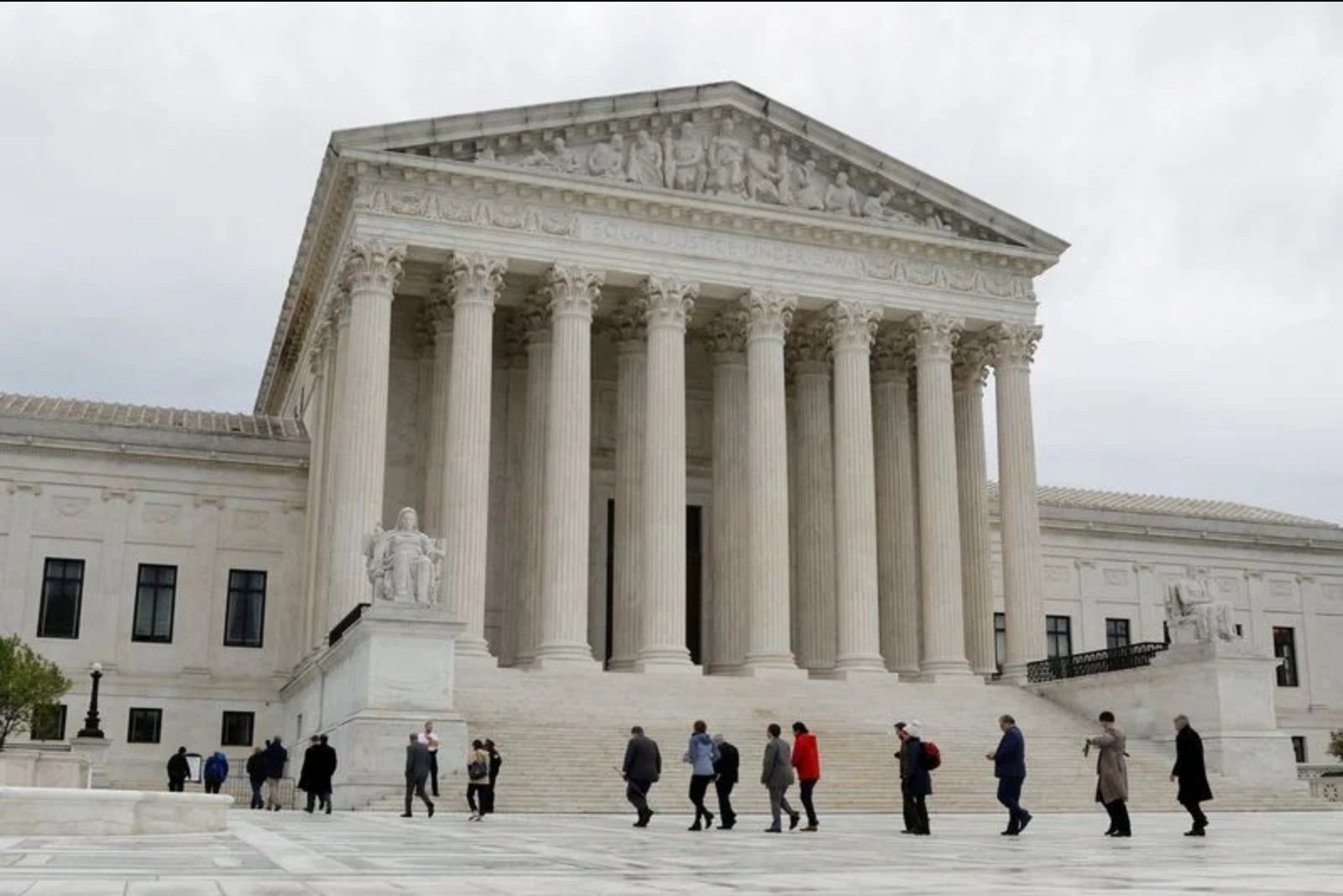
The U.S. Supreme Court, coming off a term that featured numerous high-profile decisions, has set a packed agenda for its next session starting in October. The roster of cases includes major constitutional questions on guns, voting, LGBT protections and an immigration detention policy used by the Trump administration, along with several disputes involving large corporations.
Justices finalized the rulings in the previous term last Monday and Tuesday, a period marked by numerous cases tied to the former president and his policies. Additional Trump-related litigation that remains active in lower courts is expected to reach the high court during the upcoming term.
Second Amendment and assault-style weapon bans
At the center of the gun-law docket is a set of appeals that could determine whether state restrictions on assault-style rifles such as AR-15s survive constitutional scrutiny. The court - which has a 6-3 conservative majority and has steered American constitutional law to the right this decade - has taken an expansive interpretation of the Second Amendment right to "keep and bear arms." In recent months the justices issued two rulings that further broadened gun rights.
The new appeals arise after lower courts upheld bans on these types of weapons in Connecticut and in Cook County, Illinois, which includes Chicago. Gun rights advocates argue that Supreme Court precedents protect these semiautomatic rifles because they are in "common use." State and local officials contest that characterization, describing the weapons as instruments of war and the firearms of choice for criminals and terrorists.
The court in 2022 reshaped the legal framework for gun regulation by holding that modern restrictions must be "consistent with this nation’s historical tradition of firearm regulation" to comply with the Second Amendment. Since that decision, four U.S. appellate courts have nonetheless upheld state-level bans on assault-style weapons.
Vanderbilt University law professor Brian Fitzpatrick observed of the coming litigation: "I think it’s going to be hard for them to kind of sort out what the original understanding is for these kinds of new types of weapons." He added that the justices will have to address not only whether the bans fit within historical regulatory traditions but even the more basic question of whether these semiautomatic rifles qualify as "arms" within the meaning of the Second Amendment, noting that some appeals courts have held they do not because of their predominant utility for military service and limited suitability for self-defense.
Voting rules challenge in Arizona
The court will also take up a voting rights dispute that challenges Arizona provisions aimed at tightening proof-of-citizenship requirements for voter registrants and expanding the removal of alleged non-U.S. citizens from state voter rolls. That effort is described in the petition as a Republican-led bid supported by the Trump administration.
Provisions of the Arizona law were halted by a lower court in response to a lawsuit from the Latino-focused voting advocacy group Mi Familia Vota, which found the measures violated a federal voting registration statute. Critics, including Democrats, have labeled the proposals as voter suppression designed to reduce turnout among groups that tend to favor Democrats, while supporters contend the steps are necessary to protect election security.
Hector Sanchez Barba, head of Mi Familia Vota, criticized the Justice Department’s position in a statement, saying: "Much like with its mass-deportation agenda, the Department of Justice is asking for something unprecedented: the power to remove voters from the rolls based solely on suspicion that they are not citizens."
Detention policy for convicted immigrants
The court will hear an appeal challenging a detention policy used by the Trump administration concerning certain non-U.S. citizens convicted of crimes and facing deportation. The administration seeks review of a lower court’s ruling that the constitutional right to due process bars "unreasonably prolonged" detention without a bond hearing for such individuals. That lower-court decision concluded that long periods of detention without an opportunity to seek release on bail are constitutionally problematic for non-citizens in deportation proceedings after criminal convictions.
The Supreme Court has previously sided with the administration in a number of immigration-related cases, though it ruled against the attempt to limit birthright citizenship. The upcoming argument will ask the justices to weigh the legality of extended detention without bond hearings in this specific context.
LGBT and religious rights clash
Another set of cases from Colorado will place the court again at the intersection of LGBT protections and religious freedom. The justices earlier in March struck down a Colorado law that prohibited psychotherapists from using so-called "conversion" therapy on LGBT minors on free-speech grounds. Now the court will consider a separate Colorado dispute in which the Archdiocese of Denver and affiliated Catholic entities seek an exemption from a preschool funding program’s nondiscrimination requirement.
A lower court had found that Colorado’s funding program did not violate the religious rights of the Catholic plaintiffs, and the high court’s review will determine how religious freedom claims interact with nondiscrimination conditions tied to public funds.
Corporate and commercial litigation on the docket
The justices will also hear several business-related matters. Officials in Boulder, Colorado, are pursuing a climate-related lawsuit that ExxonMobil and Suncor Energy have asked the court to dismiss. An antitrust-related battle tied to Epic Games’ suit against Apple is scheduled for argument, and a trademark dispute involving PepsiCo is also set for the next term.
Together, these corporate cases ensure that the court’s upcoming term will reach beyond constitutional questions to consider significant legal claims affecting energy companies, technology firms and consumer brands.
The breadth of the upcoming docket - ranging from core constitutional doctrines to complex corporate litigation - underscores the Supreme Court’s central role in shaping legal rules with wide public and commercial consequences. With multiple high-profile items flagged for argument, the term beginning in October is poised to generate further consequential rulings.