
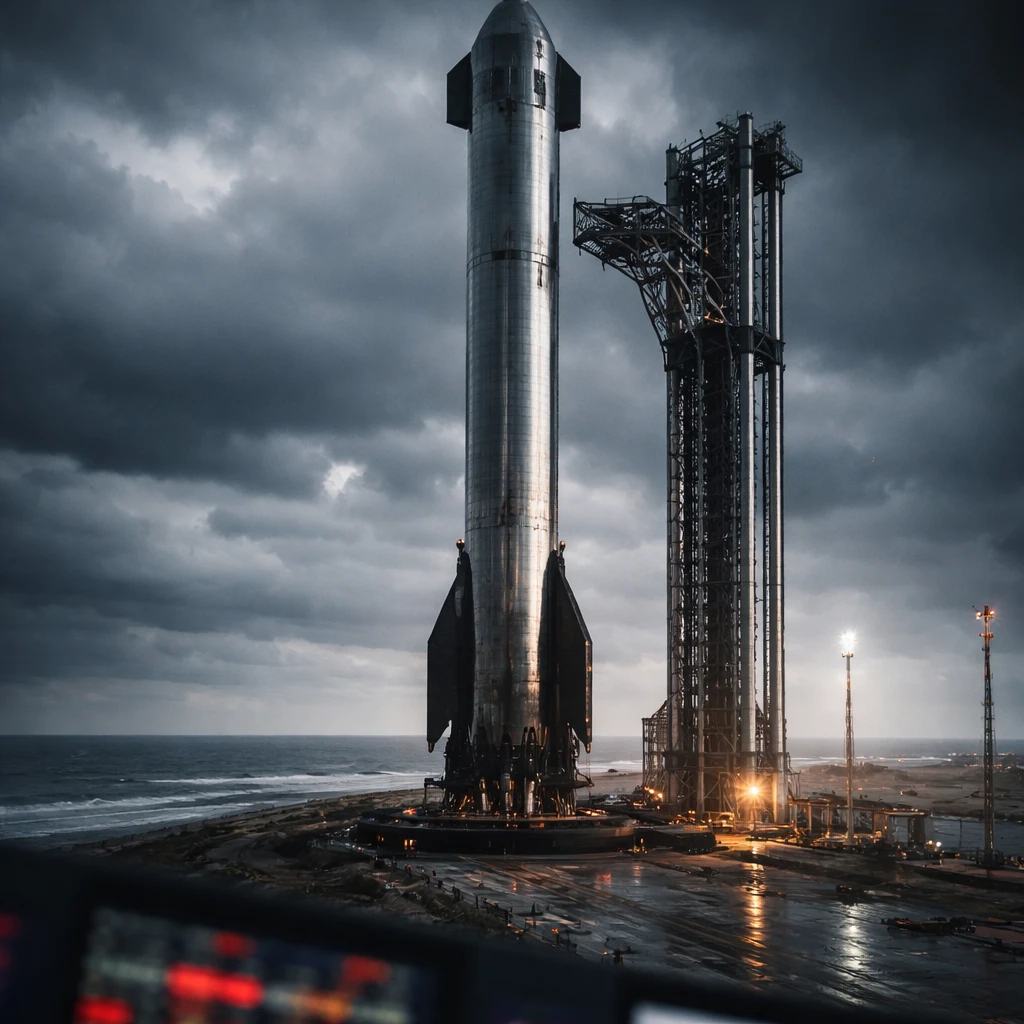
Space Exploration Technologies Corp stock dropped nearly 4.8% in morning trading to $138.35, moving close to its 52-week low and its IPO reference price of $135. The decline unfolded from an opening print of $144.51 as a cluster of valuation concerns, a potential insider supply wave and a risk-off mood across technology names weighed on the equity.
The most immediate catalyst carrying into the session was a high-profile critique from veteran investor George Noble, who posted publicly that he regards SpaceX as the most extreme large-cap valuation bubble of his career and placed what he called fair value at $30 per share. That assessment sits in stark contrast to the stock’s trading level and appears to have amplified bearish sentiment heading into the week.
Adding to structural investor worries, Morgan Stanley highlighted China’s successful recovery of the Long March 10B orbital-class rocket booster as a significant long-term competitive development. That milestone now places China alongside SpaceX and Blue Origin as entities that have recovered orbital-class boosters, and Morgan Stanley characterized the accomplishment as the biggest long-term competitive threat to SpaceX’s launch dominance.
Analyst coverage provided a mixed backdrop. Bernstein SocGen maintained an Outperform rating and a $239 price target on the stock, offering support from the sell-side, but market participants said the looming supply overhang from insider lockup expirations remains a dominant concern. The first major insider sell window is scheduled to open with Q2 earnings in late July, at which point roughly 20% of currently locked shares could become eligible to trade. Depending on how eligibility and subsequent selling unfold, that tranche could more than double the company’s public float.
Regulatory news offered a narrow positive note: the Federal Aviation Administration completed its investigation into a May Starship booster return failure today and cleared the company for a potential next test flight as early as this week. While that clearance removes a near-term regulatory uncertainty, it did not fully stem the selling pressure driven by the other factors affecting investor risk appetite.
Macro and market conditions intensified the move lower. A global semiconductor selloff that began in Asia established a pronounced risk-off tone across technology businesses. SK Hynix registered its largest single-day decline on record in Seoul, which pulled South Korea’s Kospi index down sharply and transmitted losses across European and U.S. semiconductor names.
Concurrently, escalating U.S.-Iran military tensions contributed to investor caution. The session featured reports of strikes on Iranian targets followed by Iranian missile responses and accounts that the Strait of Hormuz had been closed, developments which pushed investors away from high-beta growth equities. Market breadth reflected that concentrated weakness: the Nasdaq fell 0.9% for the session, the S&P 500 slipped 0.2%, and the Dow posted a modest gain.
Taken together, the confluence of Noble’s critical valuation assessment, the competitive signal from China’s booster recovery, the impending insider lockup supply wave, and a technology sector under pressure from a semiconductor rout have driven SPCX back to levels just above its IPO price of $135. The move represents a sharp reversal from the stock’s post-IPO peak of $225.64, which was reached less than a month ago.
Summary
SPCX fell nearly 4.8% to $138.35 amid a mix of a stark valuation critique, concerns about a substantial insider lockup expiration in late July, competitive developments from China’s Long March 10B booster recovery, and a broader technology and chip-sector selloff. FAA clearance for a possible imminent Starship test flight provided limited relief.
Key points
- Shares dropped to $138.35 from an open of $144.51, approaching the IPO price of $135.
- George Noble publicly called SpaceX a severe valuation bubble and estimated fair value at $30 per share, intensifying bearish sentiment.
- Competitive pressure flagged by Morgan Stanley after China recovered its Long March 10B booster, joining SpaceX and Blue Origin in that technical milestone.
- Bernstein SocGen reiterated an Outperform rating with a $239 target, providing analyst-level support amid market stress.
- Macro headwinds included a global semiconductor selloff led by SK Hynix’s record single-day decline and rising U.S.-Iran tensions, which hit high-beta tech stocks.
Risks and uncertainties
- Insider lockup expirations - About 20% of locked shares could become trade-eligible with Q2 earnings in late July, potentially more than doubling the public float and increasing supply pressure on the stock. (Impacts: equity markets, aerospace sector)
- Competitive trajectory - China’s Long March 10B booster recovery raises longer-term competitive uncertainty for SpaceX’s launch business. (Impacts: aerospace, defense, commercial launch services)
- Market and geopolitical volatility - Semiconductor sector turmoil and escalating U.S.-Iran tensions are depressing demand for high-beta technology names and could continue to weigh on SPCX. (Impacts: technology and semiconductor sectors, broader equity market sentiment)