
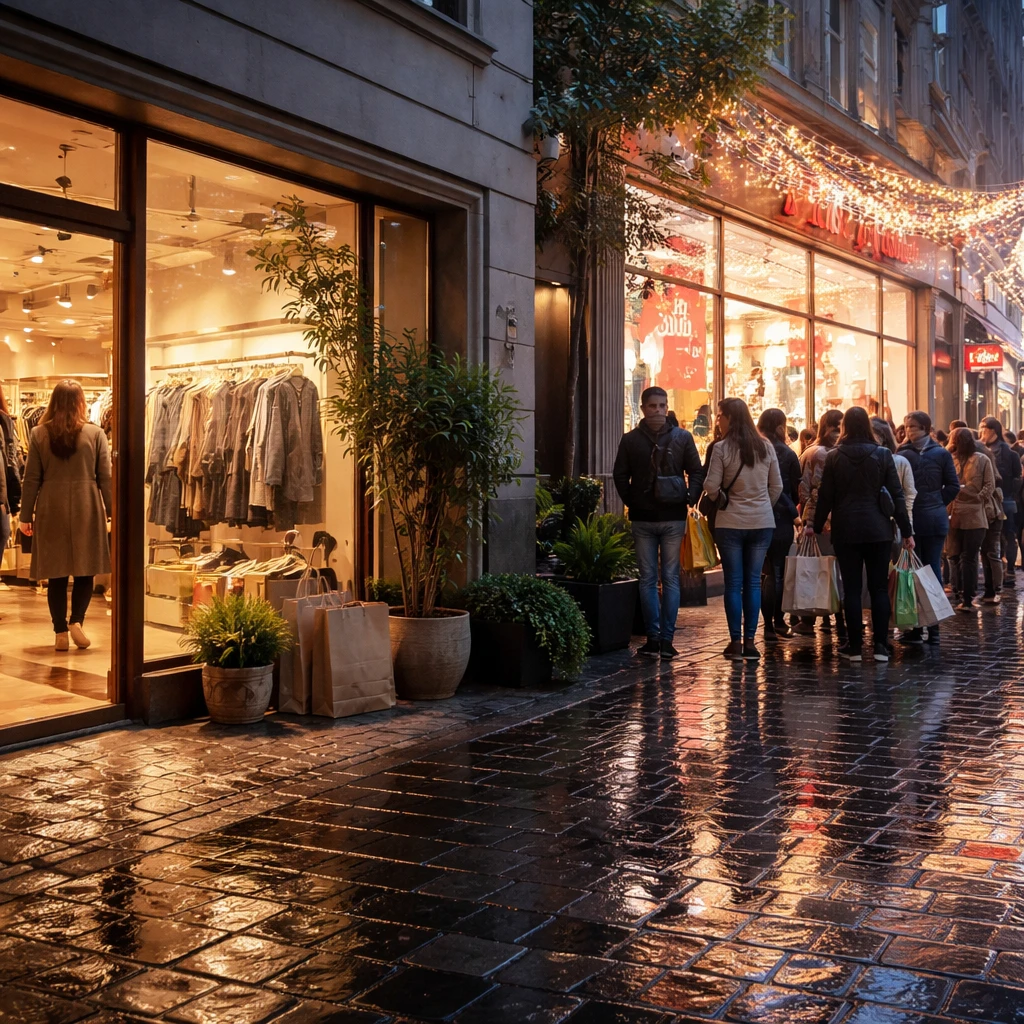
As Black Friday approaches, some fashion and consumer-goods companies are deliberately staying off the discount bandwagon, arguing that large-scale sales events damage margins, erode customer trust and run counter to sustainability goals.
Italian fashion house Pinko, for example, has decided for the first time not to take part in Black Friday promotions. Pietro Negra, the company's chairman, described discounting as capable of becoming "a vicious cycle," pointing to a proliferation of sales initiatives - from "family & friends" offers to private sales - that he says encourage an ongoing pattern of price reductions.
"By not taking part in Black Friday, we’re trying to cut off one small head of a dragon that has another thousand," Negra said, naming the additional promotional events that he sees as part of the same discounting ecosystem. He argued that fostering those kinds of transactional relationships with customers is not the route Pinko wants to follow, nor is it a condition he believes will ensure the sector's future.
Retailers around the world have faced a difficult environment this year, the article notes, as the Iran war has contributed to renewed inflationary pressure and left many consumers with less disposable cash. That squeeze has made sizeable discounts an important lever to persuade buyers to spend. Large retailers such as Amazon can cut prices while still drawing most of the Black Friday traffic - an ability that is less available to smaller brands where heavy discounting can both reduce profitability and make customers less willing to pay full price at other times.
Negra estimated that Pinko's decision to sit out Black Friday will reduce revenue by roughly c2 million ($2.19 million). He added that the proportional effect on profit is much smaller than the revenue hit, and said margin preservation is his priority.
Analysts and consultants who study pricing and promotions say consumers have grown more skeptical of discount claims after several years of elevated inflation. "After five years of persistently high inflation, shoppers are increasingly skeptical of retailers’ pricing strategies and less likely to believe that advertised discounts reflect real savings," said Shikha Jain, a partner at the Simon-Kucher consultancy in Boston.
Jain acknowledged that rejecting Black Friday carries its own risk, since competition for consumer dollars is intense. Still, she suggested that opting out can bring a different kind of visibility and help brands cultivate trust, particularly among shoppers who are less driven by price. "There has been a serious erosion of trust," Jain said, observing what she called an "increasing pullback, and major fatigue against inflation and the challenging environment that many Americans find themselves in."
Some companies are using the decision to avoid Black Friday as a way to deliver a clear message or demonstrate corporate values even if it does not immediately boost sales. British outerwear label Buffalo Systems, for instance, says it does not take part in Black Friday because it is a small business manufacturing in the UK. U.S. outdoor retailer REI closes its stores on Black Friday and gives employees the day off to spend outdoors. The Ordinary, the skincare brand owned by beauty group Este9e Lauder, also closes its stores on the day and instead organizes blood-donation drives in New York and Toronto.
Amy Bi, senior vice president of global brand at The Ordinary, explained that impulse buying during Black Friday often results in consumers purchasing products that are unsuitable for their skin or unnecessary. Suspending sales on that day, she said, is a way to encourage customers to "slow down."
Other smaller companies have sought a middle ground. UpCircle, a British beauty firm that manufactures creams and scrubs from coffee grounds, oat husks and other food-industry byproducts, runs Black Friday discounts while using social-media posts to highlight its anti-waste stance and to criticize overproduction and overconsumption. The founder, Anna Brightman, described Black Friday as "the antithesis of everything we stand for when it comes to the associations with waste, with mass consumption."
Nevertheless, Brightman said the brand's critical stance on excess can attract attention in a crowded market, and a 25% discount across its range helps convince first-time customers to try products. UpCircle reported that in the roughly three-week period around Black Friday it records about 20% of its annual online sales.
The spread of Black Friday beyond the United States started in the early 2000s, the article notes, with Amazon and other multinational retailers playing a major role in popularizing the event globally.
The companies that decline to participate are betting that foregoing a short-term sales bump can protect margins, reinforce sustainability claims or strengthen relationships with consumers who increasingly scrutinize price claims. For some smaller brands, however, abandoning Black Friday would likely mean forgoing a meaningful share of expected seasonal revenue.
Conversion: $1 = 0.9136 euros