
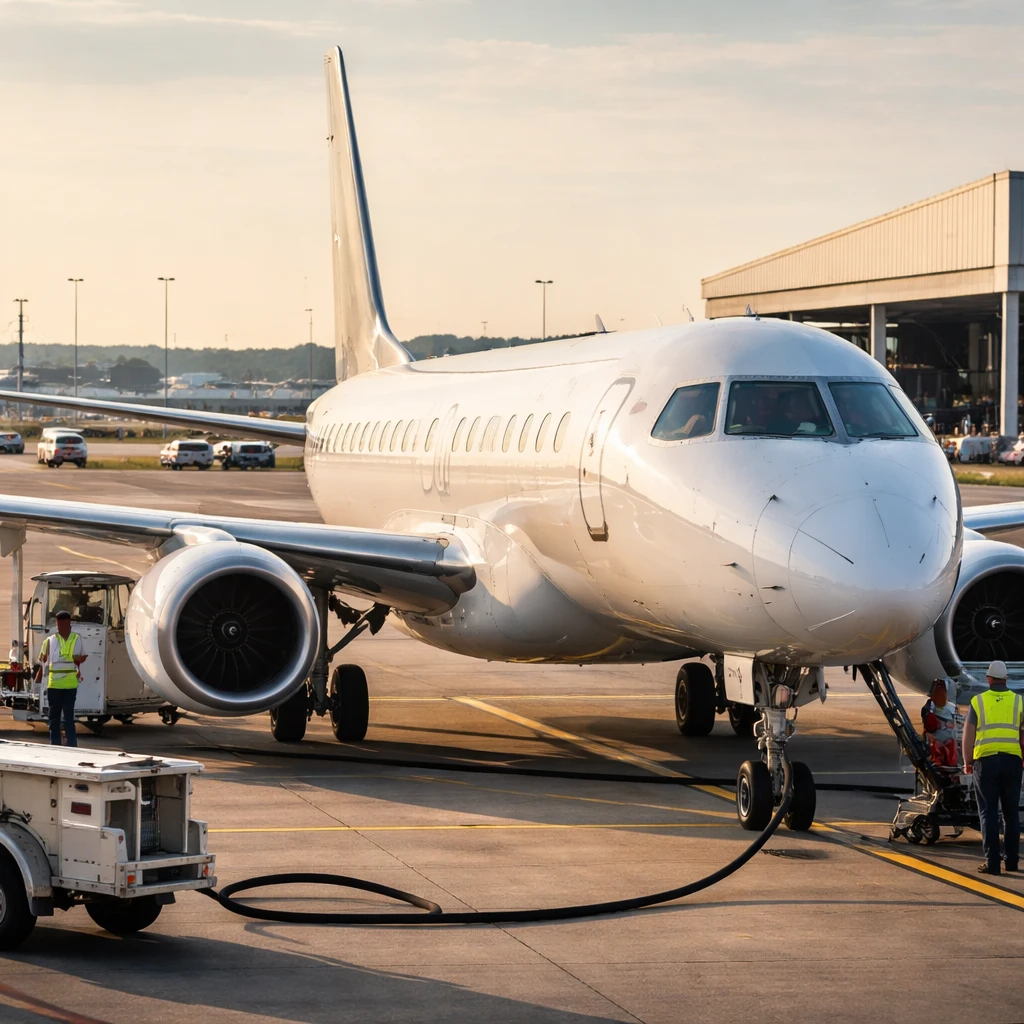
The U.S. administration has proposed a 10% duty on finished Embraer aircraft imported from Brazil, a step that analysts and airline executives say would raise costs for U.S. carriers that have no domestic alternative to the Brazilian maker. Officials presented the potential tariffs on commercial jets and other products from Brazil as part of a wider sweep of proposed duties affecting more than a dozen trading partners.
Aerospace, which represents a significant export sector for the United States, largely avoided the wave of tariffs earlier imposed on other industries such as autos, steel and aluminum. The latest proposal signals the administration's willingness to use the commercial jet market as a lever in trade negotiations.
Industry observers said the proposed levies, which could take effect as early as January, would directly increase the price that U.S. carriers must pay for Embraer's jets. That would come at a time when airlines are already under pressure from a sharp rise in jet fuel costs tied to the Iran war, compounding operational and financial strain.
Embraer's own disclosures show a backlog of firm orders for E175 jets destined for U.S. carriers. As of the end of the third quarter, the company reported about 160 E175 aircraft on firm order combined for American Airlines, SkyWest Airlines and Republic Airways.
American Airlines' filings indicate the carrier expects five Embraer commercial jet deliveries for its American Eagle regional operations by the end of the year, with another 14 deliveries scheduled for 2027. When asked for comment, the airline directed inquiries to the trade group Airlines for America, which was not immediately available.
Market and industry reaction
Some analysts doubt the administration will ultimately impose the duties. Richard Aboulafia, managing director at AeroDynamic Advisory in Michigan, noted the absence of a U.S. competitor to Embraer jetliners. He suggested political dynamics and Embraer's U.S. footprint could blunt enforcement, saying that pressure from a Democratic-led House and Senate come January and the company's manufacturing presence in Republican-leaning Florida are factors that reduce the likelihood the tariffs will be enacted.
"There is no US competitor to Embraer jetliners," Aboulafia said. "This is every bit as big a threat to Embraer jets as tariff threats were to Bombardier jets. In other words, it will not happen."
Embraer responded by stressing its support for a zero-tariff regime for global aerospace trade. The company also highlighted its U.S. presence, reporting $3.5 billion in assets and more than 2,500 employees across the United States.
Uncertainty over unfinished 'green' jets
Analysts are split on whether the duties would extend to Embraer's Praetor executive jet. The Praetor is shipped to the U.S. as an unfinished, or "green," aircraft without paint or interior work and is completed at Embraer's Florida facility.
A U.S. Trade Representative press release referenced tariffs on "finished aircraft," but the tariff codes listed do not explicitly distinguish between completed aircraft and green aircraft. That ambiguity leaves open the question of whether Praetor deliveries would be subject to the proposed duties.
JPMorgan, in a note to clients, said it did not expect the tariffs to affect the Praetor. JPMorgan noted that the Praetor accounts for roughly 70% of Embraer's business jet sales and characterized a roughly 5% drop in the company's shares in morning trade as "overdone."
By contrast, analysts at UBS said they expected the tariffs would apply to the Praetor, noting that the United States accounts for around 65% of that jet's deliveries.
Implications for carriers and suppliers
If implemented, a 10% duty on finished Embraer aircraft would raise acquisition costs for U.S. regional carriers that rely on those planes and have no U.S.-built replacements available. The proposal adds another element of cost uncertainty for airlines already facing a jump in fuel expenses linked to geopolitical tensions. How the U.S. government ultimately treats green aircraft versus finished aircraft will be key to determining the scope of the tariff's economic impact on Embraer and its U.S. airline customers.