
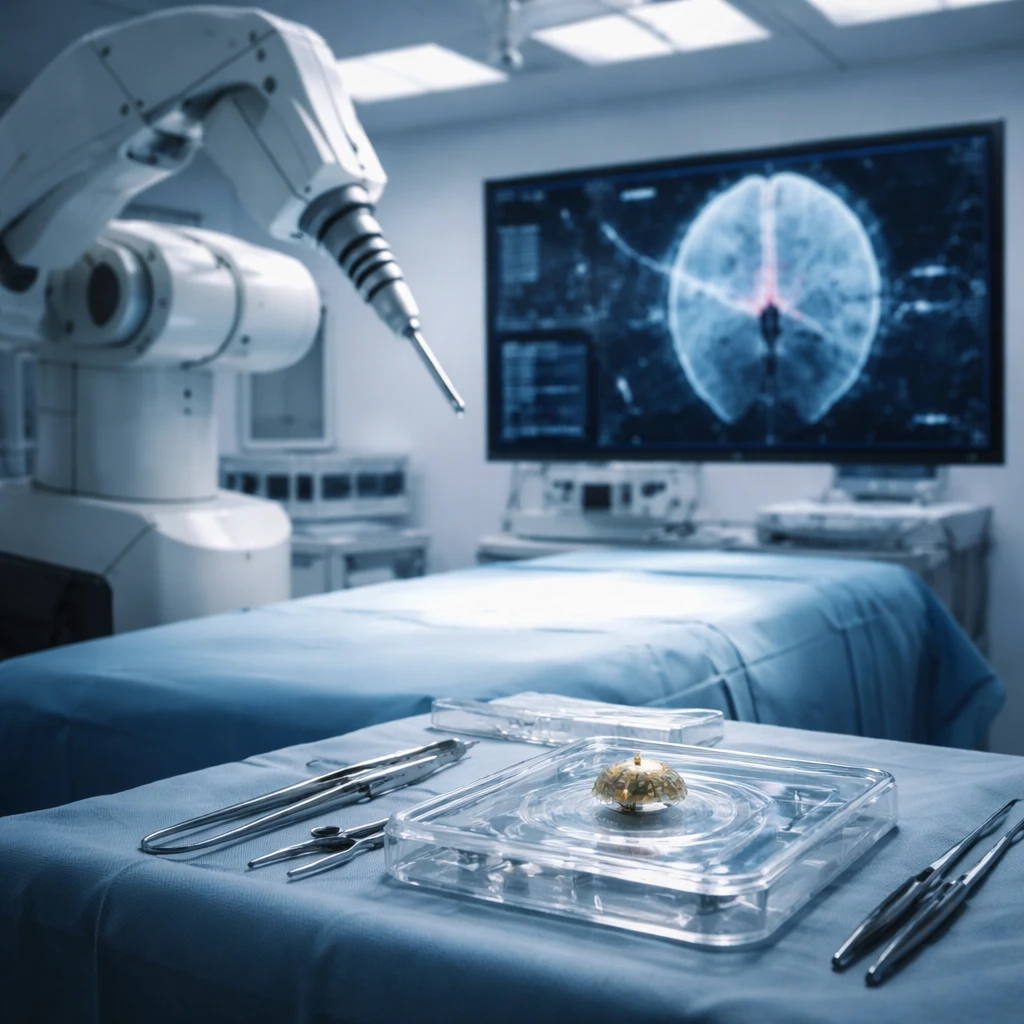
Neuralink, the neurotechnology firm founded by Elon Musk, announced it has received regulatory clearance from the U.S. Food and Drug Administration to proceed with LINK, a pivotal clinical trial that represents the first late-stage U.S. study of an implantable brain-computer interface.
The FDA decision moves the company beyond initial feasibility testing and into a broader clinical evaluation designed to produce the data required for potential future marketing authorization. The upcoming study will concentrate on participants diagnosed with amyotrophic lateral sclerosis, also referred to as ALS.
Neuralink said the trial will build on information already collected from more than 30 people who have used the company’s hardware during earlier work. The aim of the pivotal study is to assess both safety and effectiveness of the company’s lead implant, known as N1, along with the R1 surgical robot responsible for implanting the device.
The N1 system operates by detecting neural activity in the part of the brain associated with hand movement and converting signals tied to imagined motions into digital instructions. After a calibration process, users can employ those signals to perform typical computer mouse operations, including moving a cursor and executing left, right, and middle clicks using thought alone.
By enabling these digital control functions without voluntary motor movement or speech, Neuralink positions the technology as a tool to restore digital independence for people with severe paralysis or loss of speech. The company highlights potential uses that range from basic messaging to complex tasks such as software coding, 3D modeling, and gaming.
Neuralink originally received FDA authorization to conduct human testing in May 2023 and conducted its first implantation under that authorization in January 2024, when Noland Arbaugh became the first human participant in the earlier PRIME Study.
The shift from feasibility testing to a pivotal trial signals growing operational activity within the neurotechnology field, where several firms are competing to bring assistive brain-interface devices to market. Observers in the investment and medical communities are expected to follow trial enrollment and clinical outcome data closely, since successful pivotal results are the principal trigger needed to pursue regulatory marketing clearance.
Summary
Neuralink has secured FDA clearance to begin LINK, the first U.S. pivotal trial for an implantable brain-computer interface, targeting ALS patients to evaluate the N1 implant and R1 surgical robot based on prior use in over 30 individuals.