
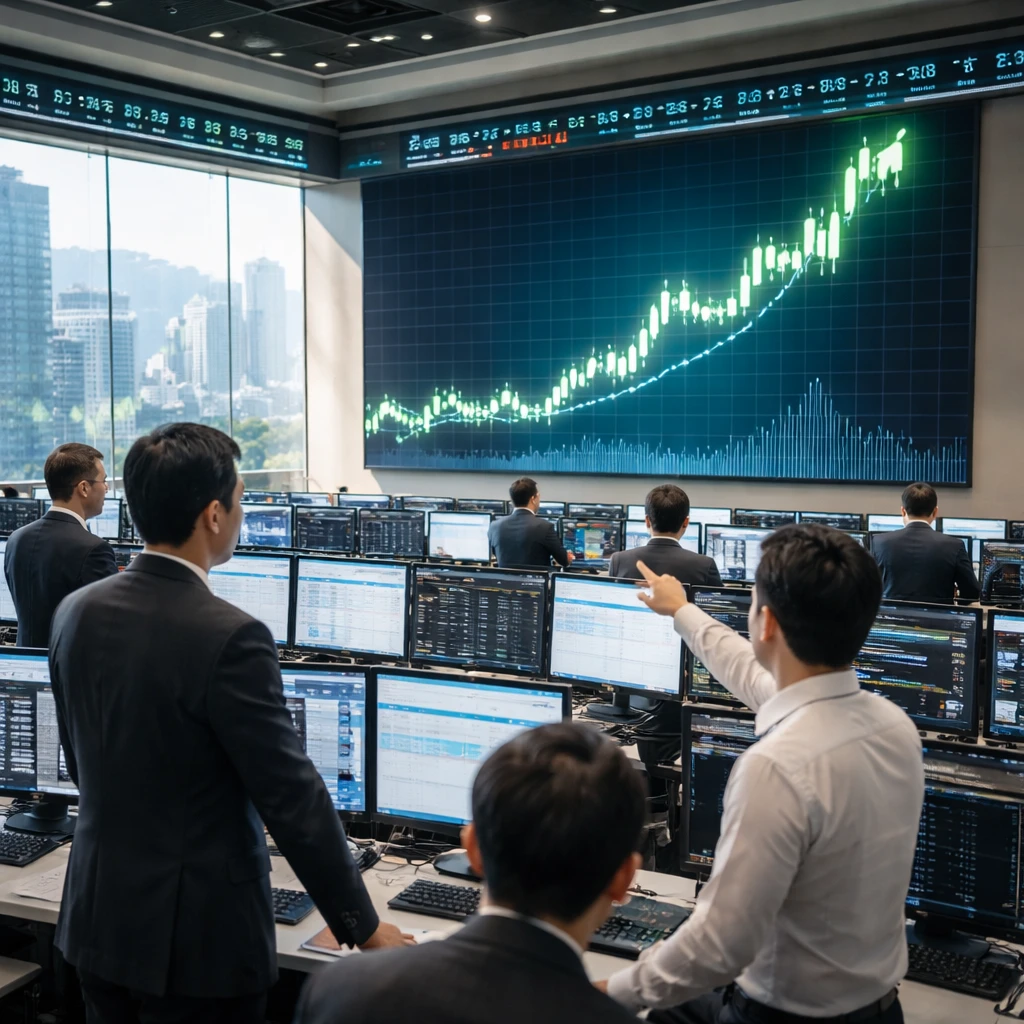
SK Hynix (KS:000660) posted a strong rally in Seoul on Wednesday as investor sentiment improved amid a wider advance in U.S. technology shares and renewed optimism about AI-driven demand for memory chips.
By 04:15 GMT the South Korean memory maker’s stock had surged 13.4% to 2,170,000 won, a move that helped push the benchmark KOSPI about 8% higher.
The jump followed Monday’s record decline, which market participants attributed to profit-taking after the company’s high-profile Nasdaq listing. U.S.-listed American depositary receipts for the company also rebounded, rising roughly 27% on Tuesday after slipping 9.3% in the prior session, as investors moved back into AI-linked semiconductor names during the broader tech rally.
Analyst commentary played a prominent role in the improved tone. Barclays initiated coverage of the U.S.-listed ADRs with an Overweight rating and set a $330 price target. In its coverage note the brokerage highlighted several structural factors it expects to support SK Hynix’s earnings trajectory through 2027.
Barclays argued that worsening industry supply tightness through 2027, combined with what it sees as limited near-term competitive risk from China, and the company’s leading position in high-bandwidth memory (HBM) chips, should underpin meaningful earnings expansion. The broker expects global DRAM demand to outpace supply for several years as AI infrastructure spending supports consumption of memory products.
In addition, Barclays estimated that SK Hynix could generate cash flows equivalent to more than 40% of its current market value by the end of 2027. The brokerage suggested this level of cash generation would create room for sizable share buybacks while the company continues to invest in capacity expansion.
Barclays also noted that HBM pricing is expected to strengthen further in 2027, which it said would help support revenue and earnings growth even if conventional memory pricing moderates.
Observers noted the rebound underscores the sensitivity of SK Hynix’s share price to swings in investor positioning around new listings and to evolving sentiment on AI-related memory demand. The company’s strong ADR recovery and the Barclays initiation of coverage contributed to renewed investor interest across both local and U.S. markets.