
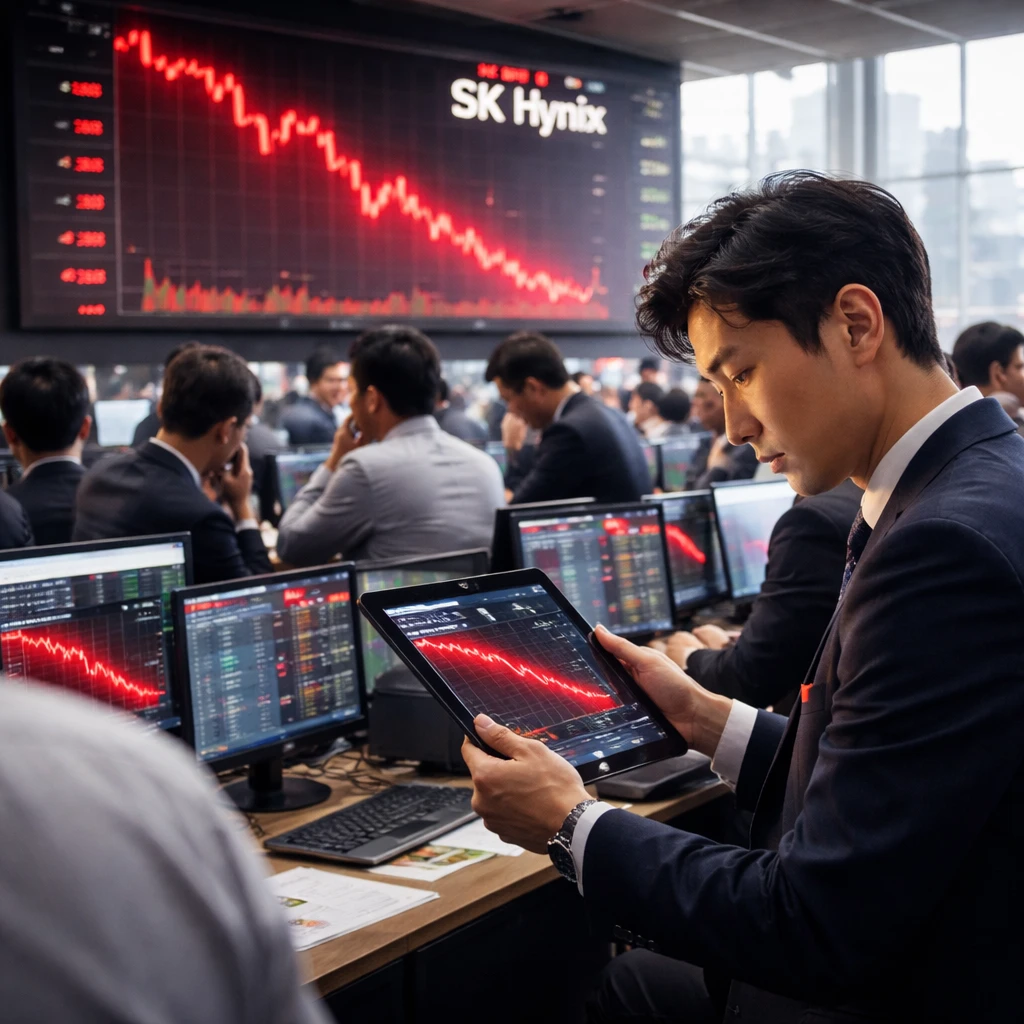
SK Hynix stock fell 8.3% to ₩1,524,000 on Wednesday, anchoring a broader slide in Seoul as the market endured one of its steepest single-session losses in recent months.
The downturn in Korea followed overnight weakness on Wall Street. A jump in U.S. Treasury yields, together with mounting worries about rising inflation and higher interest rates, prompted traders to unwind positions in high-flying technology names. The expiration of a 60-day U.S.-Iran peace deal added to the market’s risk-off tone.
The KOSPI opened more than 4.9% lower on the day and then extended losses to in excess of 6% within the first hour of trading. That early slide led the Korea Exchange to activate a sell-side sidecar - a circuit-breaker measure that is triggered when KOSPI 200 Futures drop 5% or more for at least one minute.
Beyond the broader market pressures, company-specific developments weighed on SK Hynix. Reports that the U.S. was pressuring the company to prioritize fabrication plants located in the United States within its large investment commitments were publicly denied by South Korea’s presidential office. The office also declined to reveal details of ongoing negotiations, leaving investors with unresolved policy uncertainty.
Market structure factors intensified the move lower. Highly leveraged single-stock ETFs linked to SK Hynix mechanically magnified the decline as margin-financed retail positions faced forced liquidations during the sharp intraday fall. These structural dynamics leave the stock vulnerable to outsized swings.
SK Hynix’s strong, AI-fueled rally earlier this year also increased its exposure to pronounced profit-taking during episodes of market stress. The combination of elevated Treasury yields, policy ambiguity and the mechanics of leveraged retail products contributed to the magnitude of Wednesday’s drop.
What happened
- SK Hynix shares declined 8.3% to ₩1,524,000 on Wednesday.
- The KOSPI opened over 4.9% lower and fell more than 6% within the first hour, triggering a sell-side sidecar for KOSPI 200 Futures after a 5% move lasting at least one minute.
- Market drivers included a spike in U.S. Treasury yields, inflation and rate concerns, the lapse of a 60-day U.S.-Iran peace deal, unresolved policy negotiations, and the forced unwinding of leveraged positions.