
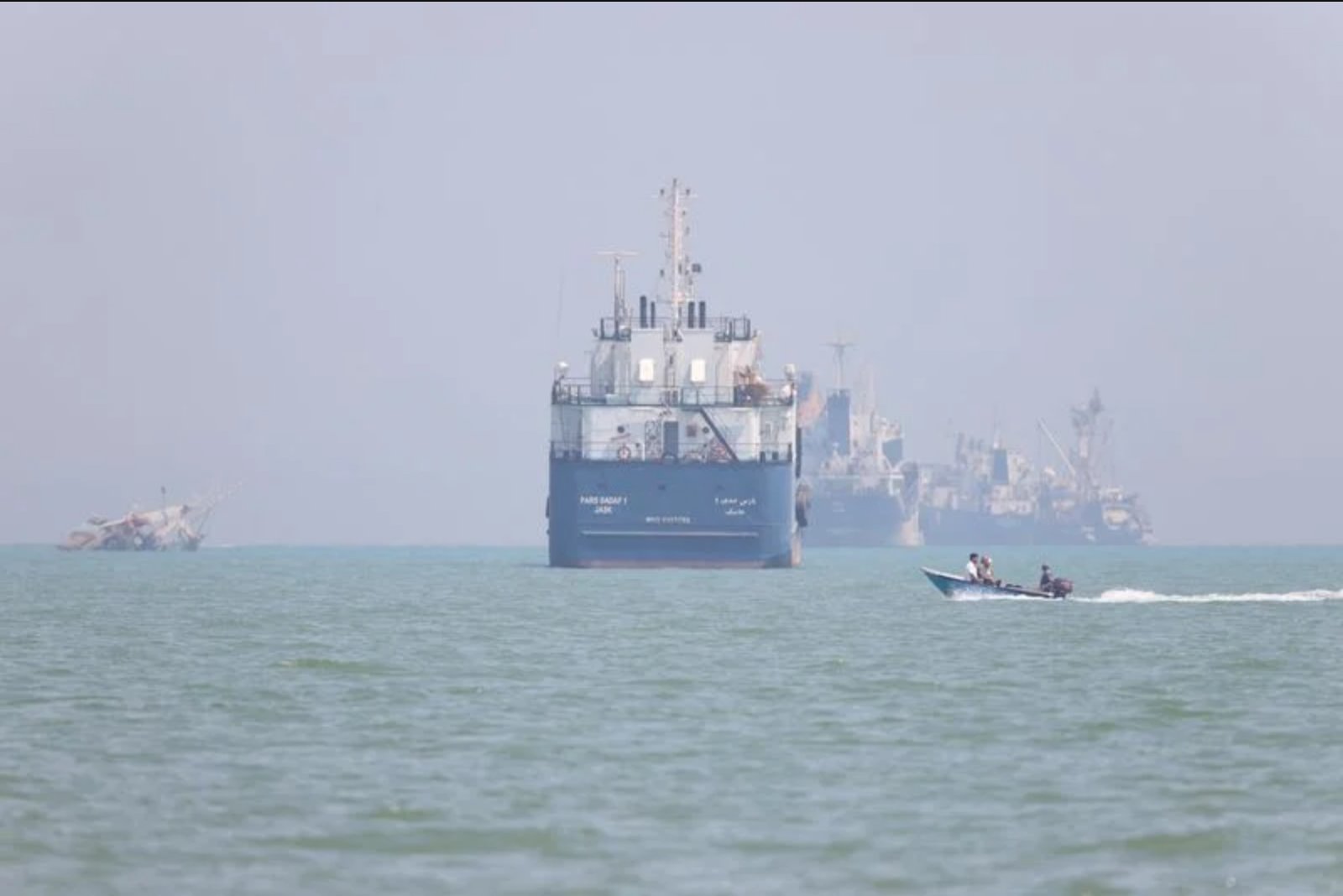
Shippers and maritime organisations across Asia and Europe responded cautiously after U.S. and Iranian officials reached a framework agreement intended to reopen the Strait of Hormuz - one of the world’s most important energy transit routes. While the deal has prompted guarded optimism, multiple industry players said they will wait for explicit assurances of safety before resuming routine navigation through the waterway.
Officials from the two countries are expected to sign a memorandum of understanding on Friday to end the war, halt the U.S. blockade of Iran and reopen the strait. Global oil benchmarks reacted quickly, slipping about 5% on Monday following news of the agreement. Yet industry sources and analysts said the practicalities of restoring transit safely are likely to stretch over weeks.
"Initial reactions in the shipping industry are muted. AIS data shows no wave of ships heading towards Hormuz this morning," Jyske Bank analyst Haider Anjum said in a client note. He added that shipping companies are likely to await evidence the agreement holds, given that the strait has twice before been declared open for only brief periods.
The conflict that began on February 28 involving the U.S., Israel and Iran has largely halted shipping through the strait, which handles roughly a fifth of the world’s oil and liquefied natural gas supply, as well as other critical cargoes such as aluminium and urea.
Despite the overall reduction in traffic, data from Kpler and LSEG showed a single visible transit on Monday: India’s Petronet dispatched the LNG tanker Disha through the strait. According to the tracking information, the vessel had loaded at Qatar’s Ras Laffan on March 1-2, remained west of the strait since then and was destined for the Dahej terminal in India. Petronet did not respond to a request for comment.
Industry bodies emphasised that reopening navigation will depend on removing threats that still exist in the waterway. Shipping association BIMCO said it continues to view transits through the strait as highly risky, citing mines as a primary concern. "The next step is for shipowners to be reassured that transiting the Strait of Hormuz is not only permitted but also safe," said Jakob Larsen, BIMCO’s chief safety and security officer.
Several national shipowner and shipping companies echoed that caution. A spokesperson for the Japanese Shipowners’ Association welcomed the peace agreement but said the group preferred to "wait a little longer for more concrete information," adding that the situation does not allow for an immediate return to transit based on the announcement alone.
Japan’s largest shipper, Nippon Yusen, said it hoped operations would return to normal as soon as possible, while Mitsui O.S.K. Lines stated it would only resume navigation once safety has been fully confirmed. In Germany, the shipowners’ association VDR described itself as "cautiously optimistic" about reopening prospects, and German carrier Hapag-Lloyd expressed hope that vessels would be able to cross the strait this week.
Shiptracking data from Kpler put the number of tankers carrying oil and chemicals in the Middle East Gulf area at an estimated 155 as of June 15, down from 201 tankers at the end of May. An alternative estimate from Oil Brokerage stood at 215 tankers.
Anoop Singh, global head of shipping research at Oil Brokerage, said that if navigation restrictions were lifted without limitation, the existing backlog of vessels on either side of the strait could be cleared in about 8-10 days. But operational realities are more complex than a single clearance window.
While some tankers have been moving barrels covertly along Oman’s coast with U.S. naval support, industry specialists emphasised that meaningful, sustained traffic will require weeks of mine clearance operations and normalization of insurance rates. David Jorbenaze, global oil market leader at ICIS, said de-mining and insurance normalization are necessary steps and estimated that returning to full pre-conflict volumes is realistically a 2027 outcome - but only if the agreement holds without incident and production recovers at pace.
Summary
The announcement of a U.S.-Iran framework to reopen the Strait of Hormuz has reduced immediate market anxiety, reflected in a roughly 5% drop in global oil prices. Nevertheless, shipping companies, trade associations and analysts uniformly said they require concrete safety assurances - notably mine clearance and normalized insurance conditions - before restoring routine transit. Only one transit was visible on Monday, while hundreds of tankers remain clustered in the Gulf.
Key points
- The U.S. and Iran are expected to sign a memorandum of understanding on Friday to end hostilities, lift a U.S. blockade of Iran and reopen the Strait of Hormuz.
- Shipping industry reaction has been cautious; AIS tracking showed no immediate surge of vessels toward the strait, with only the LNG tanker Disha visible in transit on Monday.
- Commercial and logistical recovery depends on de-mining operations and insurance normalization; resolving the backlog of tankers could take days once navigation is unrestricted, but full volume recovery may be much longer.
Risks and uncertainties
- Mine contamination in the strait remains a significant safety risk for vessel transits, affecting tankers, LNG carriers and bulk cargo ships and inhibiting immediate resumption of routine shipping.
- Insurance market conditions must normalize; elevated premiums could deter shipowners and slow the pace at which traffic returns, impacting oil and LNG supply chains.
- The agreement’s durability is uncertain—shipping firms have indicated they will wait for verification that the accord holds before redeploying vessels, creating short-term uncertainty for maritime logistics and energy markets.
Tags
- shipping
- oil
- Hormuz
- tankers
- maritime