
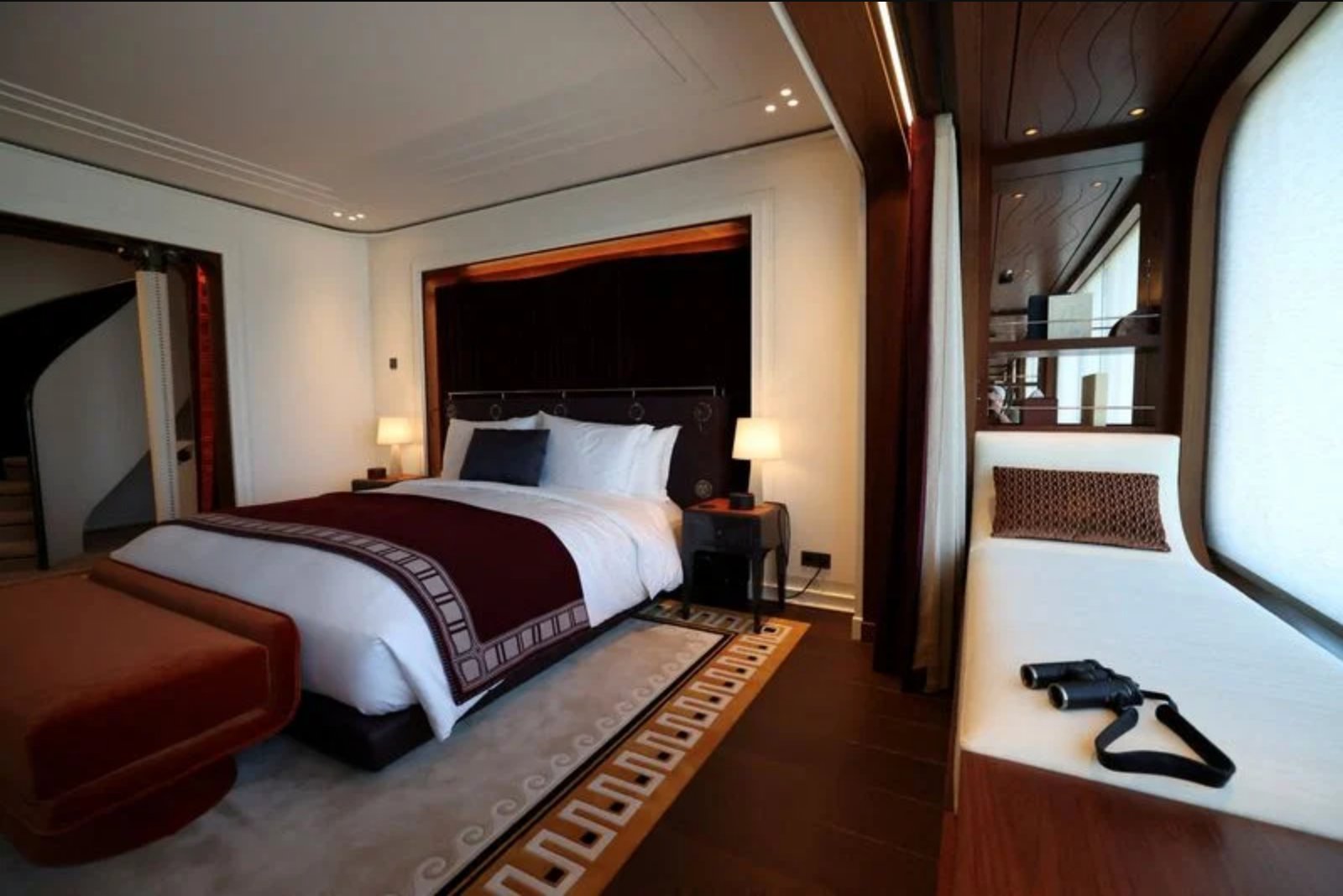
PARIS/CANNES, France, June 27 - Orient Express, the revived travel marque operated as a joint venture between hotel group Accor and luxury conglomerate LVMH, has put its first giant yacht into service on the French and Italian Riviera with the intention of courting a new breed of ultra-high net worth clients.
The yacht is the first of two planned vessels within Orient Express’s expanding portfolio of luxury experiences. The brand, relaunching a 19th century travel name, already encompasses high-end hotels and intends to introduce a historic art deco train in the future. Accor serves as the operational lead for the venture.
Accor’s chief executive, Sebastien Bazin, told reporters that the partnership expects to benefit from a recent tech-driven surge in wealth that is producing new billionaires. In Bazin’s framing, the motivation for many at that level shifts away from accumulating possessions toward seeking recognition and singular experiences: "When you are getting rich, very rich, money hasn’t got the same meaning," he said. "The only thing that has a meaning is recognition. Have you become someone?"
Industry analysis cited by the venture underlines the tilt toward experiences. A Bain study referenced by the partners projects spending on high-end experiences to expand by 9-11% this year, markedly outpacing the 1-4% growth expected for personal luxury goods. The study connects that divergence in part to a technology boom in the United States and elsewhere, which has increased the number of ultra-high net worth individuals who favor private jets, yachts and attendance at mega-events such as Formula One races.
Bazin used a simple illustration of the preference shift: "When people are very rich and they have seven homes, and 12 cars, and 17 watches... they still have a bucket list of things they promised themselves to do before dying. It’s not to have an 18th watch." That bucket-list framing underlines why Orient Express is investing in experiences that signal status in public social settings.
Details about the unit’s financial performance remain undisclosed. Neither Accor nor LVMH has made public the new unit’s operating profit or an enterprise value. Independent estimates within the reporting place the value of Orient Express’s high-end assets at about 1 billion euros ($1.07 billion).
The commercial structure between the two partners includes reciprocal options that allow either Accor or LVMH to acquire the other’s stake in future years. Bazin confirmed the existence of those buyout options, which provide the clearest indication yet of how the two companies have structured long-term control. Observers cited in the reporting suggest that if either side exercises its option, acquisition by LVMH is the more likely outcome, given the group’s scale.
Accor faces pressure from shareholders to lift returns, and its traditional mid-market hotel brands such as Ibis and Novotel have shown flat performance over an extended period. By contrast, LVMH is described as a sprawling luxury conglomerate with more than ten times Accor’s sales and a substantial acquisition war chest, positioning it to assume a larger role in experience-focused luxury should it choose to do so.
Orient Express’s yacht is being deployed strategically around major public spectacles where clients can demonstrate status. The vessel has targeted events such as the Cannes film festival and the Monaco Formula One race as commercial windows during which guests can display social badges. Estelle Dinh, a hospitality professor and industry advisor, describes these environments as spaces where "certain people would have certain badges." Such events create concentrated opportunities for status signaling, which the yacht experience is built to facilitate.
The yacht’s pricing and branding are aligned with that positioning. Suites for a four-day cruise begin at roughly €25,000. The onboard environment amplifies the LVMH connection, featuring branded touchpoints including a Guerlain beauty salon and Hennessy cognac bottles showcased in its most expensive penthouse suites.
As Orient Express scales its presence in premium hospitality and curated travel experiences, the venture is explicitly aiming to convert a growing cohort of tech-generated wealth into demand for its offerings. Its assets and partnership mechanics are positioned to capture that demand, while uncertainty remains around long-term ownership should either partner exercise its purchase option.
Analysis lens - From a product-first perspective, Orient Express is placing premium experiential assets in social environments where recognition and visible signaling matter most. That strategy leans on concentrated, high-visibility events and curated onboard brand experiences to convert a specific type of purchaser whose marginal utility is derived from unique activities rather than additional goods.