
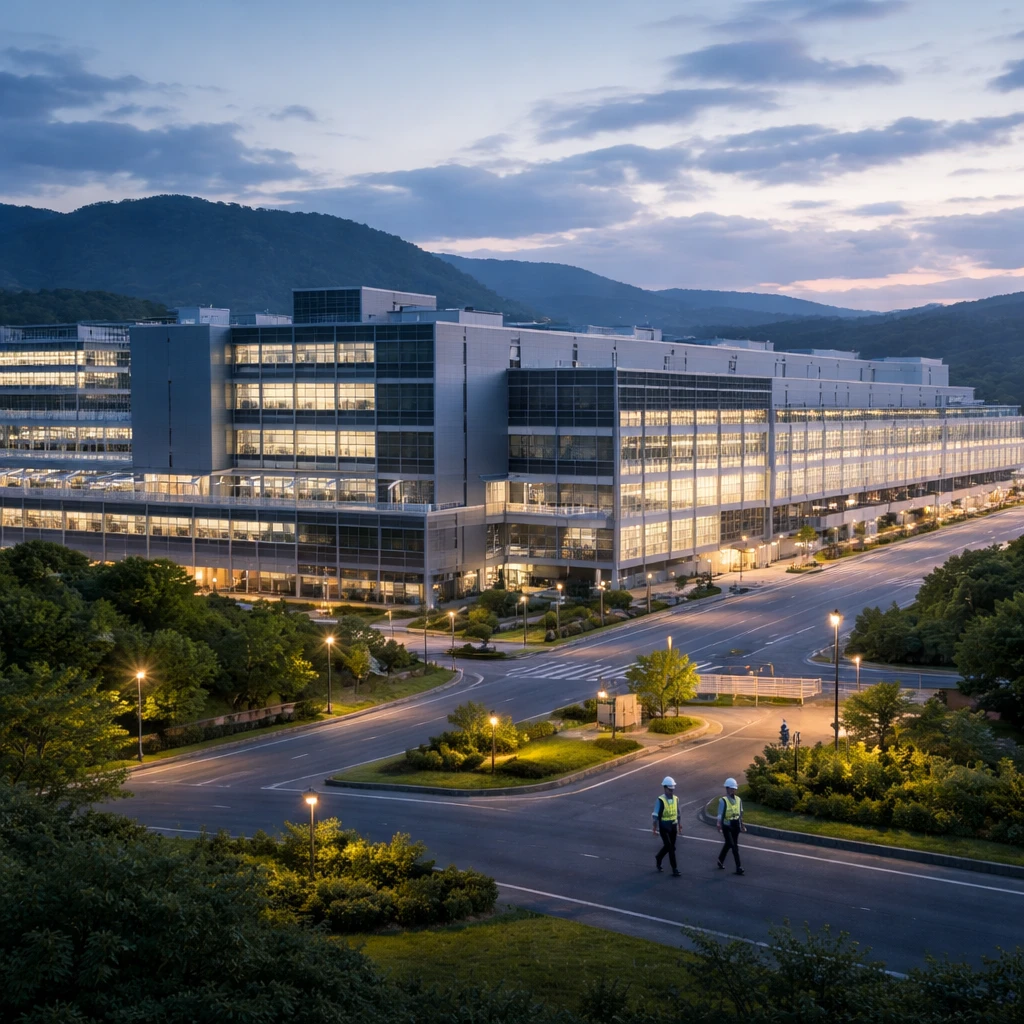
TSMC and Sony said on Tuesday they will establish a joint venture to design and manufacture next-generation image sensors in southern Japan, with total capital contributions equivalent to about $4.69 billion. The new company will be named Advanced Vision Semiconductor Manufacturing Corp and will be located in Kumamoto, the same prefecture where TSMC operates its Japan Advanced Semiconductor Manufacturing (JASM) facility.
The firms disclosed that Sony will be the controlling shareholder and will contribute 465 billion yen, while TSMC will invest 282 billion yen. The combined investment sums to 747 billion yen, which the companies stated is equivalent to roughly $4.69 billion based on the exchange rate of $1 = 159.3300 yen.
Scope and timeline
The joint venture is intended to serve as a central hub for both the development and production of image sensors aimed at smartphone applications, leveraging advanced manufacturing technology. The partners said they expect volume production to commence in 2029.
Funding considerations
Beyond the capital commitments from Sony and TSMC, the companies noted that additional funding required to attain the planned production capacity is under consideration. That evaluation is being conducted on the assumption that support from the Japanese government will be available to help achieve the targeted scale.
Location and strategic placement
The venture will be based in Kumamoto, southern Japan, colocated with TSMC's existing JASM chip plant. The companies described the new entity as a core manufacturing and development hub for image sensors, specifically for smartphone markets, using advanced manufacturing techniques.
Key facts
- The venture name: Advanced Vision Semiconductor Manufacturing Corp.
- Sony investment: 465 billion yen.
- TSMC investment: 282 billion yen.
- Combined investment: 747 billion yen (about $4.69 billion).
- Planned start of volume production: 2029.
- Location: Kumamoto, Japan (site of TSMC's JASM plant).
All financial figures and timeline details above reflect the companies' announcement. The firms also stated that achieving the intended production capacity assumes potential government support for further funding.