
Krispy Kreme (NASDAQ:DNUT) saw its stock rise about 1% in early Monday trading before those gains faded to flat following positive press attention to the company's restructuring initiatives. The coverage highlighted a number of measures management has launched as it seeks to reverse recent quarterly losses and strengthen the company’s balance sheet.
Management has taken multiple steps to conserve cash and lower debt. Those actions include the sale of the company’s stake in Insomnia Cookies, a reduction in corporate headcount through layoffs, and the suspension of the company dividend to preserve liquidity. At the same time, Krispy Kreme is deliberately shifting toward a more franchised store base so that operating expenses and capital spending increasingly reside with franchise partners rather than the corporate entity.
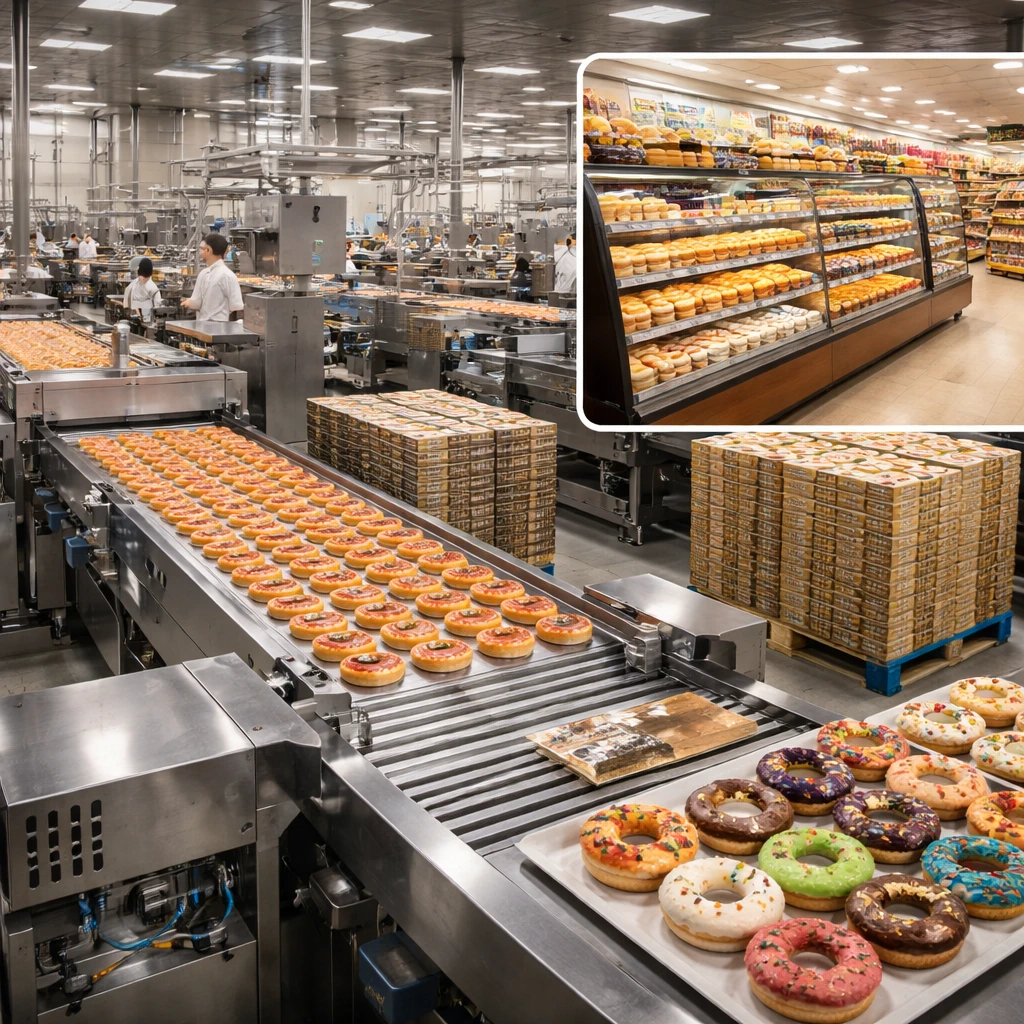
CEO Josh Charlesworth has said the company plans to leverage artificial intelligence and connected technology to improve manufacturing efficiency. Company executives report that existing automated doughnut production lines are currently being utilized at roughly 25% of capacity. Management’s stated objective is to raise output from those lines using software and connectivity rather than committing to large new capital investments.
On distribution, the company has restructured its approach after discontinuing a partnership with McDonald’s that did not generate enough volume to justify the associated manufacturing and delivery expenditures. Krispy Kreme is reallocating resources toward high-traffic grocery partners such as Walmart, Target and Kroger, which the company says have produced stronger margin outcomes.
Krispy Kreme has also moved away from operating its own delivery fleet. The company is outsourcing last-mile logistics to third-party delivery providers, removing the transportation and labor expenses that came with employing its own drivers.
On the product side, management notes the customer base skews young, with roughly half of buyers under age 35 and most customers purchasing doughnuts only two to three times per year. To stimulate intermittent demand spikes, the company relies on limited-edition and themed product runs. While hand-decorated specialty offerings can increase unit costs, company officials say these higher-margin items help lift overall sales volumes. In response to shifting preferences, the company is also introducing smaller-format offerings, including mini-doughnuts.
Addressing concerns about the potential impact of weight-loss medications on indulgent-food demand, management stated the company has not observed an effect to date and emphasized that its products are positioned as occasional treats.
Summary
Krispy Kreme has initiated a series of cost-saving and structural changes - including asset sales, job cuts, dividend suspension, a franchise-heavy growth model, distribution refocusing, logistics outsourcing and operational technology investments - aimed at improving profitability, lowering debt and increasing utilization of existing production capacity.
Key points
- Corporate moves to reduce costs and debt include selling the Insomnia Cookies stake, corporate layoffs and suspending the dividend - impacting the company’s balance-sheet resilience and cash flow management.
- The shift toward franchising and a renewed focus on major grocery partners - Walmart, Target and Kroger - alters revenue channels and operating risk allocation, with implications for retail and foodservice distribution partners.
- Management intends to deploy AI and connected technologies to boost manufacturing output from existing automated lines currently operating at about 25% capacity, avoiding large new capital expenditures.
Risks and uncertainties
- Execution risk tied to the transition toward a more franchised model and the reconfigured distribution strategy could affect near-term revenues and margins - relevant to the retail and foodservice sectors.
- Reliance on limited-edition and specialty product runs to generate demand creates cost and margin variability, particularly given the higher expense of hand-decorated items - impacting product-margin stability in consumer packaged goods and quick-service retail segments.
- Outsourcing logistics to third-party delivery providers transfers operational responsibility but introduces dependency on external carriers and their cost structures, which could influence delivery economics for the company and its retail partners.