
JPMorgan has adjusted its stance on Wärtsilä, upgrading the stock from Underweight to Neutral and increasing its price target to €30.60 from €25. The change reflects a more optimistic medium-term view for the firm's Energy segment, while the bank cautioned that scope for additional valuation gains appears constrained.
Analyst Akash Gupta framed the move around what he described as an Energy supercycle that gives Wärtsilä "above sector growth prospects." JPMorgan now models a 19% compound annual growth rate in the Energy segment's clean operating profit through 2030, using 2025 as the base year. That projection rests on a combination of improved pricing and a planned 65% increase in capacity.
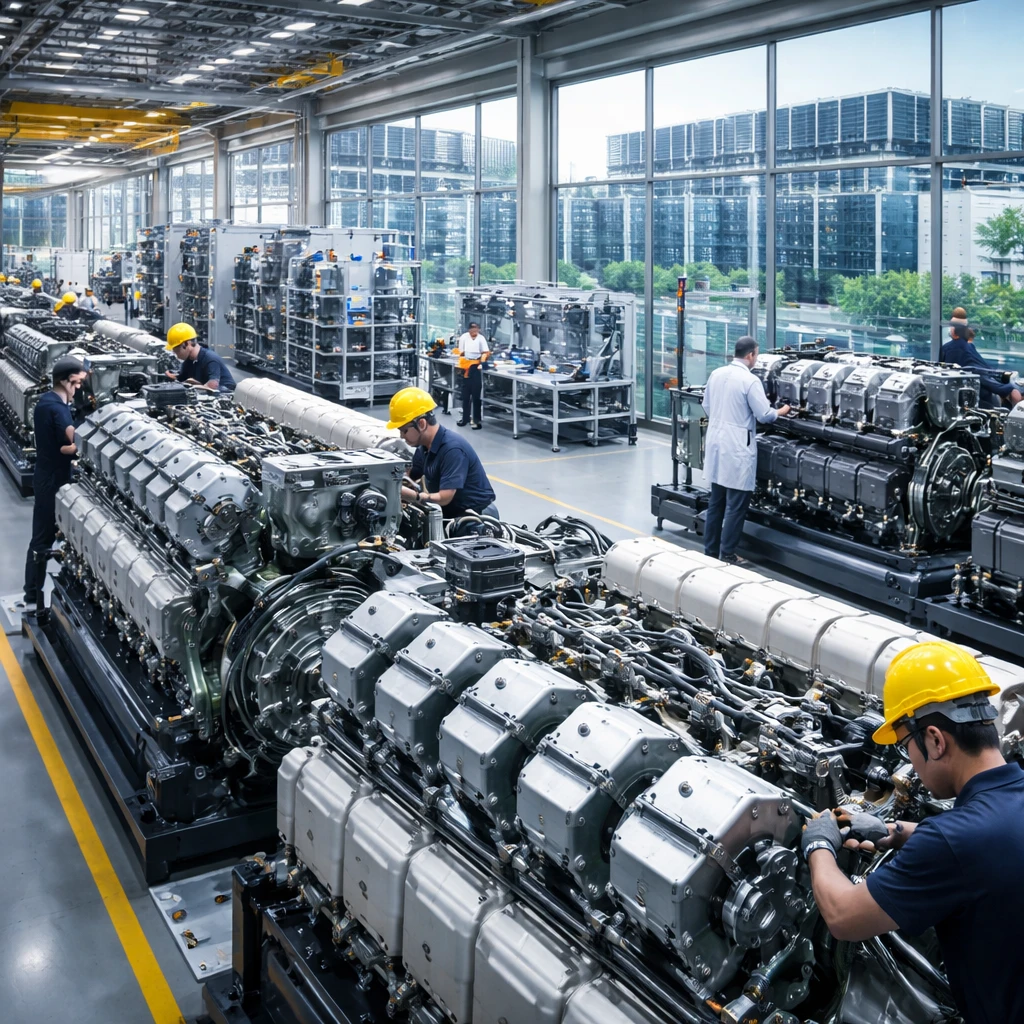
Part of the demand driver for that outlook is an expected boost from data centers. JPMorgan highlighted that data-center operators should be a meaningful source of demand for Wärtsilä's four-stroke engines, which the company produces at its Sustainable Technology Hub in Vaasa, Finland.
Despite the brighter medium-term view, Gupta warned that Wärtsilä's competitive position limits upside. He noted the firm's "low starting point in capacity and lower planned expansion than peers would translate into lower medium term growth potential" when compared with rivals such as Innio, Caterpillar, Rolls-Royce, Siemens Energy and GE Vernova.
JPMorgan's capacity comparisons illustrate the gap: by 2030 the bank expects Innio to target 10GW, Caterpillar 65GW and Cummins 55GW, while it projects Wärtsilä will have roughly 3.5GW available for Energy by 2029. The relatively small footprint, JPMorgan added, is compounded by Wärtsilä's lack of U.S. manufacturing presence, which the analyst said leaves the company more exposed to future U.S. trade policy than peers with American plants.
The bank signaled more conservative near-term expectations for the Energy business: JPMorgan now sees downside to consensus estimates for 2027 and 2028, with its own operating profit forecasts for the Energy segment running about 9% to 11% below consensus for those years.
Gupta also called out production timing and utilization as limiting factors. He wrote that Wärtsilä will experience "largely flat production hours in 2027 vs. 2026," a dynamic that would cap revenue growth. Moreover, the benefit of an approximate 35% capacity expansion is not expected to be fully visible in financial results until after 2028, given the time required for production, testing and shipping of additional units.
Within JPMorgan's coverage of power equipment suppliers, the analyst said he prefers Overweight-rated Siemens Energy and Vestas over Wärtsilä, reflecting relative conviction around those names compared with Wärtsilä's more modest expansion profile.
Key points
- JPMorgan upgraded Wärtsilä to Neutral and raised the price target to €30.60 from €25, driven by stronger Energy segment prospects.
- The bank projects a 19% CAGR in Energy clean operating profit through 2030 versus a 2025 base, supported by pricing and a planned 65% capacity increase; data-center demand should benefit Wärtsilä's four-stroke engines made in Vaasa, Finland.
- Wärtsilä's smaller starting capacity, slower expansion plans and absence of a U.S. manufacturing footprint constrain its medium-term growth potential and valuation upside relative to peers; JPMorgan prefers Siemens Energy and Vestas among covered power equipment suppliers.
Risks and uncertainties
- Capacity gap versus competitors - The company's lower starting point in capacity and more modest expansion plans could limit medium-term growth potential, impacting the Energy equipment and power generation sectors.
- Timing of production and financial recognition - A roughly 35% capacity expansion may not translate into financial results until after 2028 because of production, testing and shipping lead times, creating timing risk for investors in industrial manufacturing and energy equipment markets.
- Geopolitical and trade exposure - The lack of a U.S. manufacturing footprint exposes Wärtsilä to potential shifts in U.S. trade policy, which could affect supply chains and competitiveness in global industrial markets.