
Stock Markets August 20, 2026 09:00 AM

India Weighs Low-Cost Loans to Offset Renewable Producers' Losses from Grid Constraints

Proposal aims to reimburse clean-energy developers hit by transmission bottlenecks that have curtailed large volumes of solar generation

By Derek Hwang
Share
Twitter Reddit Facebook LinkedIn

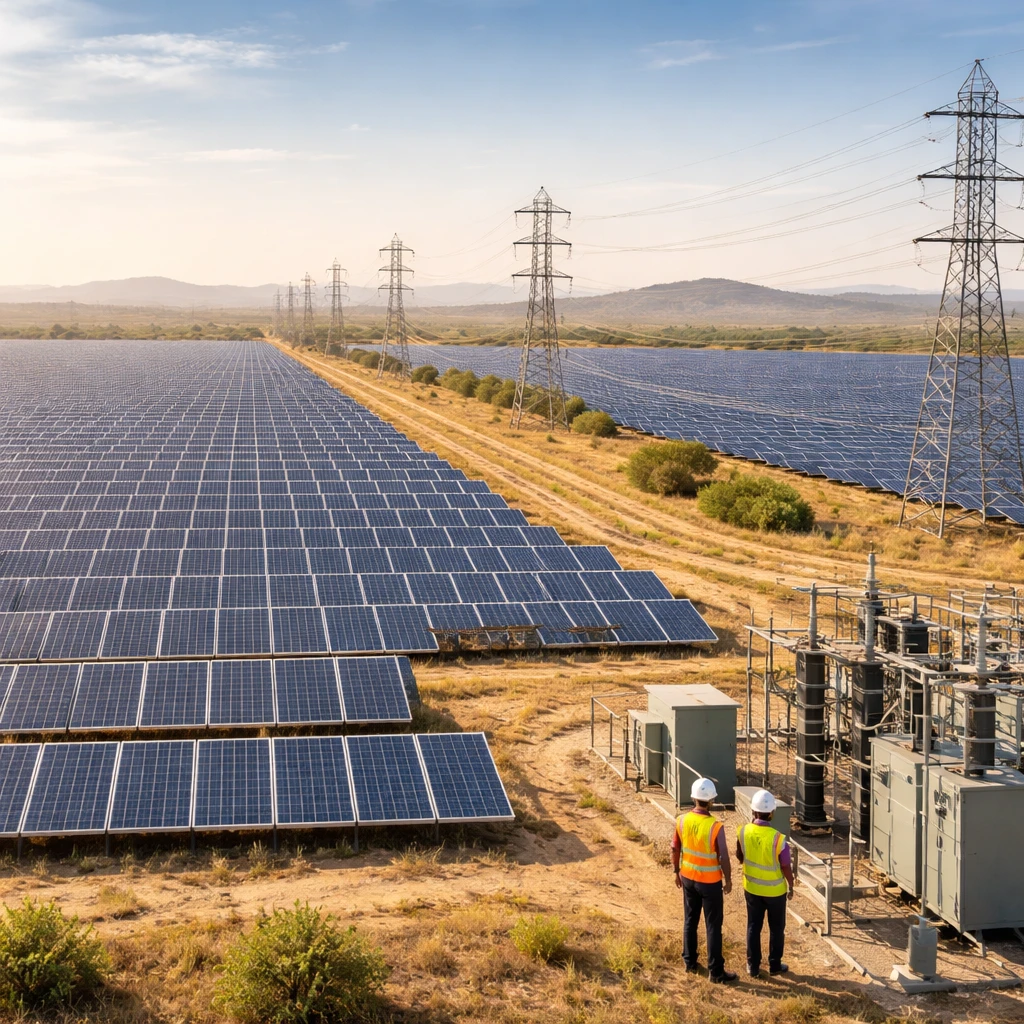
Indian authorities are reportedly exploring a program of low-cost loans to renewable energy producers to cover revenue losses caused by inadequate transmission infrastructure. Rapid solar expansion, concentrated in states such as Rajasthan and Gujarat, has outpaced the national grid’s capacity to absorb generation, resulting in significant curtailment and financial hits for developers.

India Weighs Low-Cost Loans to Offset Renewable Producers' Losses from Grid Constraints
Summarize with
ChatGPT Perplexity Claude Grok Gemini

Key Points

  • India is reportedly considering low-cost loans to compensate renewable-energy producers for losses due to limited transmission capacity.
  • Solar generation in India is about 162 gigawatts, nearly one-third of the country’s power-generation capacity, and curtailment has been significant.
  • Reported developer losses total about 45 billion rupees ($470.21 million) since February 2025; 14% of solar output (8,133 GWh) was curtailed between April and June, affecting energy, utilities, and renewable sectors.

Indian officials are said to be examining a plan to provide low-interest loans to renewable energy producers as a way to make up for income lost when insufficient transmission capacity prevents their power from reaching the national grid.

The transmission network has not kept up with the rapid expansion of renewable generation, particularly solar, which the government figures put at about 162 gigawatts - roughly one-third of India’s total power-generation capacity. That mismatch has left developers unable to deliver large portions of their output to the grid.

Sources cited in the report indicate renewable developers have absorbed roughly 45 billion rupees in losses, equivalent to $470.21 million, since February 2025. These losses stem from constrained infrastructure that has limited the transfer of clean electricity from high-output states such as Rajasthan and Gujarat into the wider national transmission system.

In extreme instances, the report said, as much as 70%-80% of generation from some renewable projects could not be injected into the grid. Government statistics further show that India, which is identified as the world’s third-largest solar-power generator, curtailed about 14% of its solar output - equal to 8,133 gigawatt hours - in the April-to-June period.

The loan proposal is presented as a compensation mechanism for producers who have borne the brunt of curtailment driven by grid limitations. Details on the structure, eligibility, timeline, and whether the loans would be direct grants, credit lines, or otherwise have not been specified in the report.

Any support measure would seek to address the immediate cash-flow impact on renewable developers while broader grid upgrades and transmission expansion remain in progress. The report frames the loan idea as a response to the documented shortfall in transmission capacity and the quantifiable revenue damage developers have experienced.


Context and next steps

  • The consideration of low-cost loans follows government data showing large-scale solar curtailment.
  • The reported financial shortfall for developers is quantified at 45 billion rupees since February 2025.
  • No formal announcement or implementation timeline for the loan program was provided in the report.

Risks

  • Uncertainty over whether the proposed loan program will be implemented - the report indicates the measure is under consideration rather than confirmed, affecting renewable project financial planning.
  • Ongoing transmission bottlenecks could continue to restrict flows from generation hubs such as Rajasthan and Gujarat to the national grid, sustaining curtailment and revenue losses for developers.
  • Continued high levels of curtailment (in some cases 70%-80% of project output) raise operational and financial pressures on the renewable-energy sector and related market participants.

More from Stock Markets

Citi Lowers TJX Rating After Weak Marmaxx Comparable Sales, Cites Competitive Pressures Aug 20, 2026 Super Micro Computer Shares Climb After Independent Probe Clears Current Management Aug 20, 2026 Barclays Sees Re-rating Potential for U.S. Tower REITs, Upgrades American Tower and Crown Castle Aug 20, 2026 Sypris Shares Climb After Win to Produce Satellite Power Units Aug 20, 2026 Amentum Shares Rise After $974 Million NASA Langley Contract Award Aug 20, 2026