
Overview
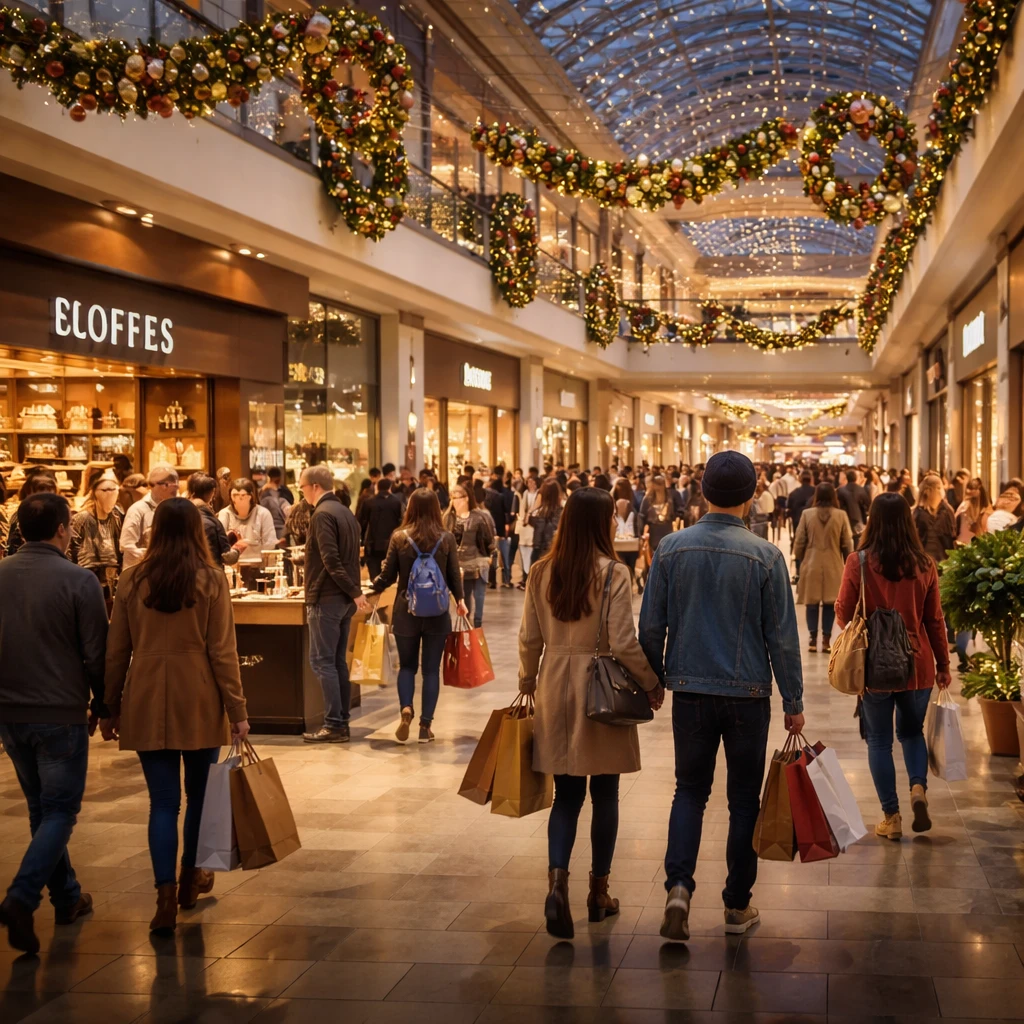
U.S. mall operators and retailers are aiming to pull consumers away from screens and back into physical stores by emphasizing what e-commerce cannot replicate - a festive, social outing. Restaurants, entertainment venues and other shared experiences are being used to make mall visits feel worthwhile, and brands are adjusting product assortments and adding services to support that effort.
Survey signals and consumer behavior
Two recent surveys point to a revival of in-person holiday shopping. The International Council of Shopping Centers found that 84% of Americans who plan to shop over Thanksgiving weekend expect to do so in a brick-and-mortar store - the highest share reported since 2019. A separate consumer survey by real estate investment manager JLL shows about 55% of U.S. holiday shoppers intend to visit an indoor mall this season, up from roughly 50% last year.
Those who plan to shop at malls appear to expect higher overall spending. JLL's survey indicated consumers heading to malls anticipate spending $1,357 per person over the holiday period - about 23% more than the budgeted amount for shoppers who do not plan mall visits. The composition of that spending is shifting as well: planned spending on dining and entertainment is up 17.3%, and planned spending on food and decorations is up 16% versus the prior holiday season. By contrast, planned spending on gifts is up only 3.1%.
Food and beverage purchases are becoming a larger component of the mall visit. JLL reported that roughly 21% of respondents expect to buy a drink or food on every trip this holiday season, up from 12% last year, signaling an increase in non-gift spending tied to the outing itself.
Voices from shoppers and operators
Shoppers like Brian Daniel, 55, of Grand Rapids, Michigan, describe a return to malls after a period of primarily online shopping. "When I go to the mall, I'm not just in and out. I make it an evening. Shopping, dining, and a movie," he said. Daniel noted that holiday decorations, music and the ability to browse add to the appeal during the season.
Industry executives say the experience is central to the renewed interest. "(Shoppers are) gravitating towards malls because of the depth and breadth of opportunities to shop," said Paul Chase, president of lifestyle property management at JLL. "It’s important to customers or shoppers that they’re going to go where they get ... the best experience."
Simon Property Group's chief executive warned that younger consumers are increasingly treating malls as social destinations as well as shopping venues. Simon told a real estate conference in September that younger shoppers are helping drive the shift toward malls as a place to socialize rather than simply shop.
Stephen Yalof, chief executive of Tanger, which owns 42 shopping centers across the U.S. and Canada, said shoppers "want to go where the best restaurants are; they want to go where the entertainment is."
Retailer responses: assortments and services
To capture the foot traffic, retailers are altering what they stock in mall locations and adding on-site services. Coach, for instance, is making its Tabby and New York collection handbags available across its outlet stores for the first time. Previously, customers could only find those bags, which typically cost hundreds of dollars, in Coach's full-price retail locations.
Leigh Manheim Levine, president of Coach North America, said the company is "providing access to these items wherever our customer chooses to shop. That’s new." She added that Gen Z shoppers were sometimes confused when they saw products like the Tabby on social platforms but did not find them in stores.
Coach has also been expanding in-store café concepts. Levine said the company has "fast and furiously" opened coffee shops in North America, doubling the number of Coach Coffee Shops to eight locations in the past two months. Most of these are in outlet malls that have limited existing food and beverage options.
Department store Macy's is also trying to create reasons for customers to linger. Nata Dvir, Macy's chief merchandising officer, said that retailers must keep earning visits by offering things customers cannot get online. Dvir cited on-site activations such as a Levi's tailoring pop-up and a custom Ralph Lauren embroidery station as examples.
Implications for retailers and mall operators
Retailers and mall owners are positioning their venues to profit from changing consumer preferences that favor experiences and convenience. The data in the surveys suggest a greater share of holiday dollars could flow to dining and entertainment within malls, and operators are responding by curating tenant mixes and permitting experiential services that aim to increase visit frequency and duration.
Executives from major mall owners and retailers emphasize that the onus is on the physical retail environment to deliver encounters that are meaningfully different from what consumers can obtain online. The increase in planned spending per mall visitor reported in JLL's survey underscores the potential commercial payoff if operators and retailers can convert intent into actual visits and transactions.
Questions highlighted by respondents and industry leaders
- Which retailers are best positioned to capture renewed mall traffic?
- What earnings indicators would confirm stronger mall visitation during the holidays?
- How will the rise in non-gift spending align with retailers' sales guidance for the season?