
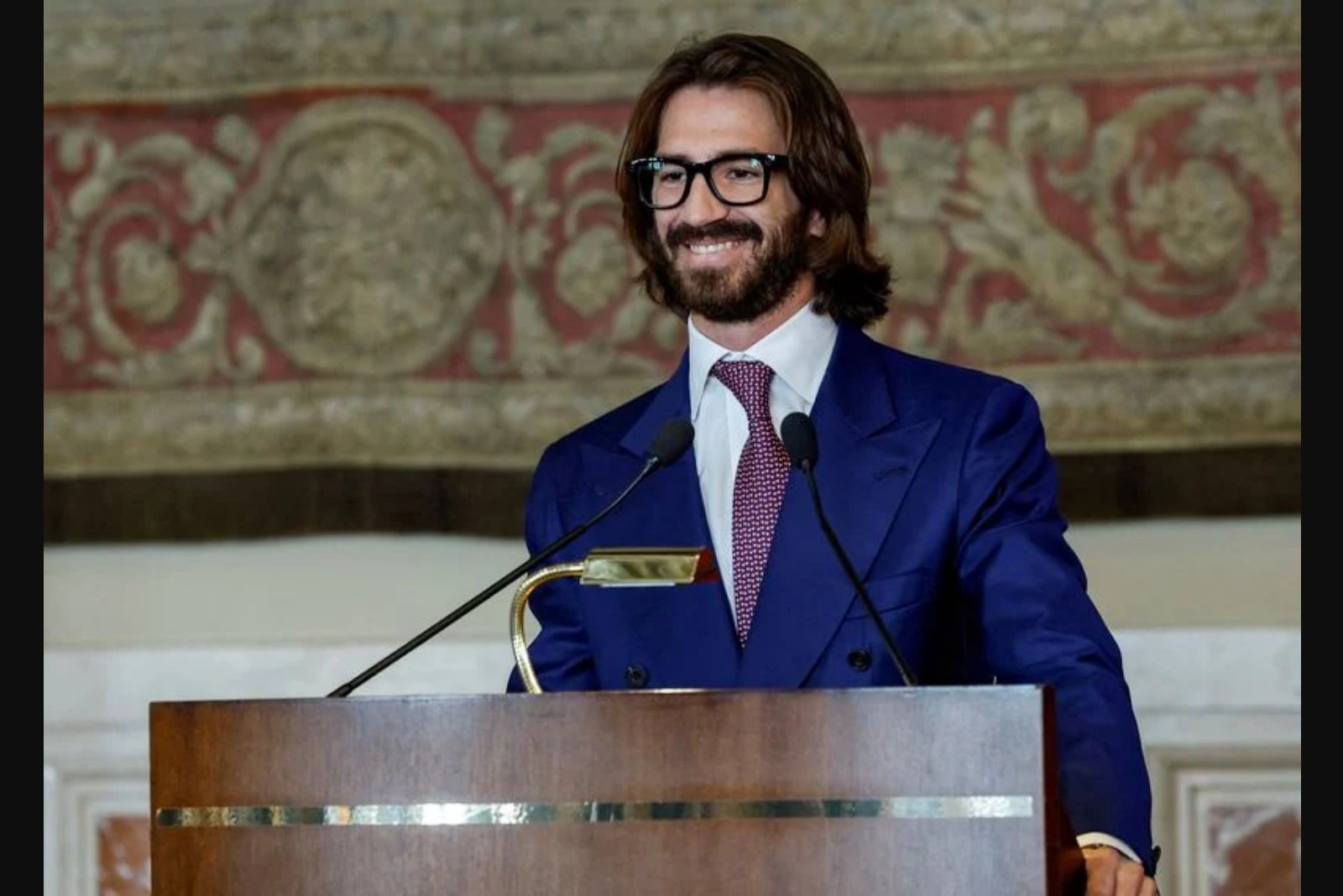
MILAN, June 17 - Leonardo Maria Del Vecchio, a son of the late founder of EssilorLuxottica, is seeking funding to execute a transaction that would make him the largest shareholder in the family holding company Delfin, the primary investor in the €100 billion eyewear group. A source close to him said he is considering private debt among the financing routes to underpin the proposed €10 billion ($11.6 billion) move.
The deal under consideration would increase his stake in the Luxembourg-based holding to 37.5% by buying out the shares of two siblings, according to the information provided. Delfin is notable for its sizable holdings across multiple sectors: it owns 32.4% of EssilorLuxottica, holds 17.5% of Italian lender Monte dei Paschi - which is currently the subject of a €30 billion bid from Intesa Sanpaolo - and keeps significant positions in insurer Assicurazioni Generali at 10.1% and in bank UniCredit at roughly 2.8%.
Leonardo Maria Del Vecchio, 31, has increased his public profile in recent years. He serves as EssilorLuxottica’s chief strategy officer and as president of the Ray-Ban brand. After his father died in 2022, he established a personal investment vehicle, LMDV Capital, and began a series of acquisitions across hospitality, food and beverage, real estate, healthcare and technology sectors.
LMDV’s disclosed assets include mineral water company Acqua Fiuggi and the hospitality brand Twiga, which operates a beach club in Forte dei Marmi. The vehicle also holds restaurants and digital ventures. A company filing shows LMDV reached breakeven in 2024 while carrying €360 million of debt.
His activity in the media space attracted wider attention last year when he made an attempt to acquire la Repubblica, one of Italy’s leading newspapers; that outlet was ultimately sold to Greece’s Antenna. He subsequently continued to expand in publishing, acquiring a 30% stake in conservative daily Il Giornale and taking a controlling interest in Quotidiano Nazionale, the publisher of regional titles including Il Giorno, La Nazione and Il Resto del Carlino. In comments to Corriere della Sera, he stated an aim to construct an Italian media group "untied from political colours."
A bid to break shareholder deadlock
Leonardo Maria Del Vecchio’s proposed purchase is framed as an attempt to alter Delfin’s shareholder structure and to break a long-standing deadlock among heirs. Patriarch Leonardo Del Vecchio had divided Delfin equally among eight heirs, with each heir holding 12.5%. He also granted broad powers to a board chaired by EssilorLuxottica CEO Francesco Milleri and set high voting thresholds for key decisions.
Disagreements among shareholders have complicated governance and decision-making at the holding. One tangible consequence has been Delfin’s inability to distribute more than 10% of the dividends envisioned as a baseline scenario in the company’s bylaws.
Under the terms described, a successful buyout of two siblings’ stakes would lift Leonardo Maria Del Vecchio’s holding to 37.5%, making him the largest single shareholder. However, the company bylaws require supermajority support - either two-thirds or 88% depending on the decision - for crucial resolutions, meaning that key corporate actions would still need backing from other heirs even if he became the largest shareholder. The transaction would also leave him responsible for a substantial debt load to be repaid to lenders.
Background and corporate role
He graduated from Milan’s Bocconi University and joined the family eyewear business in 2017. Since then he has taken on progressively greater responsibilities. He is now the only direct Del Vecchio heir working at the company, following the departure last year of his stepbrother Rocco Basilico.
Currency notation in reports shows $1 = 0.8621 euros.
This proposed transaction and the financing choices underpinning it will shape ownership dynamics at Delfin and could affect the governance of its large holdings across eyewear, banking and insurance sectors. The proposal reflects a concentrated effort by a single heir to consolidate influence while assuming a sizable debt commitment.