
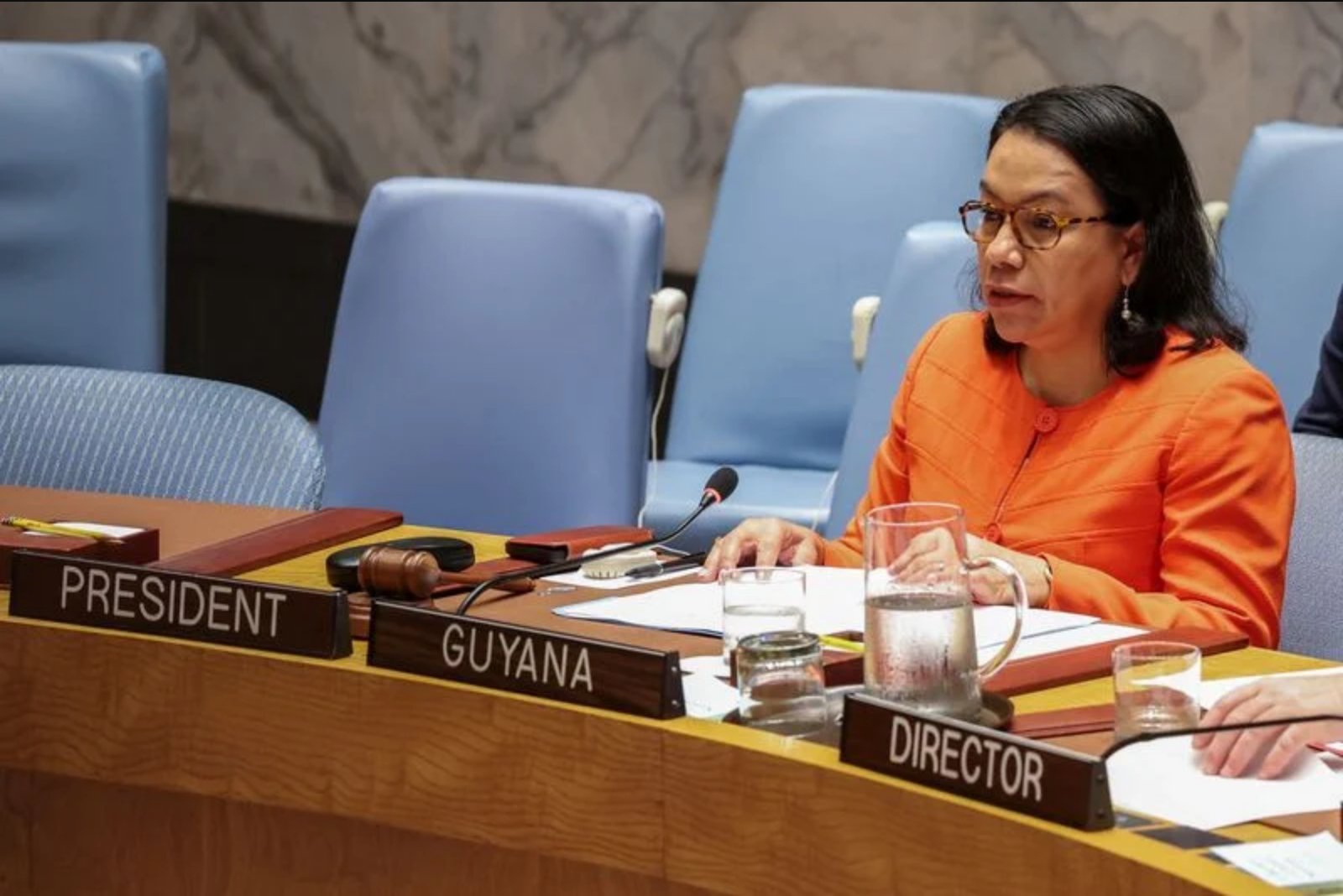
Carolyn Rodrigues-Birkett, Guyana’s candidate to become the next secretary-general of the United Nations, said on Thursday that the global body’s continuity and effectiveness are a matter of collective responsibility. Speaking at a hearing on her candidacy, Rodrigues-Birkett - a former schoolteacher who currently represents Guyana as its U.N. ambassador and previously served as the country’s foreign minister - stressed both the institution’s achievements and the need for reforms.
She framed her message around two central themes: a firm belief in the U.N.’s positive role and an acknowledgement of areas requiring improvement. "I believe in the United Nations. It is indispensable, it is incomparable, and it is a force for global good," Rodrigues-Birkett said. She added that while the organization’s faults should be acknowledged, its contributions to people around the world are substantial. "While it is important to highlight the U.N.’s shortcomings, we must also recognize the profound difference it has made in the lives of all of our peoples. Our collective responsibility is to make sure it continues to do so."
Like other contenders, Rodrigues-Birkett called for sustained reform efforts aimed at streamlining the U.N. She explicitly endorsed the objective of reshaping the institution "towards the goal of a more agile and effective organization." Those comments come as the next secretary-general will inherit an organization described by some as being in crisis and of declining stature, facing pressure to address a large, costly bureaucracy and to reduce duplication across its numerous agencies.
Rodrigues-Birkett is one of six candidates in the running to replace incumbent Antonio Guterres when his term expires at the end of the year. The field also includes Maria Fernanda Espinosa, a former foreign affairs and defense minister of Ecuador; Rebeca Grynspan, a former vice president of Costa Rica; Michelle Bachelet, the former president of Chile; Macky Sall, a former president of Senegal; and Rafael Grossi of Argentina, who serves as director-general of the International Atomic Energy Agency.
Elections are scheduled for later this year. The selection process is shaped by longstanding precedent that generally excludes candidates from the five permanent members of the U.N. Security Council - Britain, China, France, Russia and the United States - although securing the backing of those major powers is widely regarded as crucial in what is often described as a lengthy and arcane selection process. No woman has ever held the post of U.N. secretary-general.
Context and implications
Rodrigues-Birkett’s remarks highlight a tension at the heart of the next secretary-general’s mandate: to preserve the U.N.’s role as a global force for good while pressing through reforms to make the institution leaner and more effective. Her background as a former schoolteacher, foreign minister and current ambassador informs her emphasis on both service and institutional stewardship.
As the campaign proceeds, the six candidates will contend with expectations to address bureaucratic bloat and duplication across agencies, and they will navigate a selection system that places weight on the views of the major powers.