
Global attention to Greenland's strategic position and its mineral endowment has intensified since U.S. President Donald Trump publicly suggested that Washington should assert control over the semi-autonomous Danish territory, according to Bo Mf8ller Stensgaard, President of Greenland Mines (NASDAQ:GRML).
Speaking exclusively, Stensgaard said the spike in interest has been evident in "broader discussions around offtake, financing and supply-chain security." He emphasized that Greenland Mines is not reacting to any single comment or market movement, but is actively engaging with stakeholders in the United States and the European Union to contribute to the establishment of more resilient supply lines for Western countries.
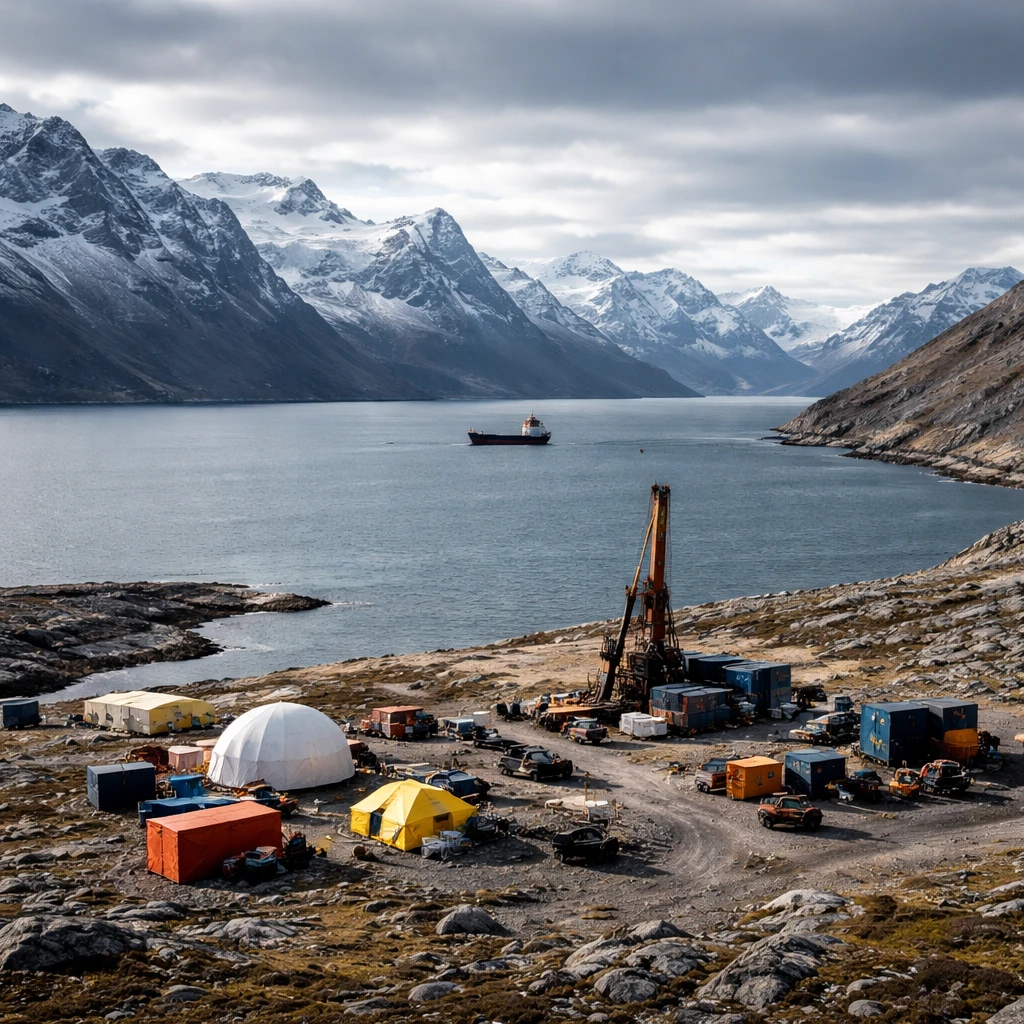
Greenland Mines' current operational focus is twofold. The company is developing the Skaergaard project in southeast Greenland and, subject to completion of a previously announced transaction, expects to bring the Sarfartoq neodymium-praseodymium rare earths project in southwest Greenland into its portfolio.
Stensgaard said the company has observed measurable improvements at its Skaergaard site, noting increased grade and quantity across gold, platinum and palladium zones. At Sarfartoq, Greenland Mines reports promising potential for rare earth elements used in magnet production - materials that are important for green energy systems, electric vehicles and a range of other devices.
"Together, Skaergaard and Sarfartoq position Greenland Mines with a balanced portfolio of a large-scale precious and critical metals resource on the one hand, and magnet-grade REE potential on the other, giving us exposure to near-term strategic partnerships and midstream processing initiatives, while preserving significant long-term growth through staged development of multiple assets," said Stensgaard.
Stensgaard acknowledged the realities of developing large-scale projects in the Arctic, including the need for strong economics and, in some circumstances, public-sector participation. He said the company's approach is to first build technically sound and commercially viable projects under rigorous SEC and international reporting standards, while simultaneously evaluating appropriate forms of political and financial support.
Political leaders in Greenland have been measured about how quickly major mines will appear. In May, Greenland's Prime Minister Jens-Frederik Nielsen said that the territory is open for business but cautioned that he does not expect major mining operations to emerge at scale immediately, stating that large-scale extraction projects often require public-sector backing and guarantees to be commercially viable.
Beyond economics, development in Greenland faces practical and regulatory hurdles. The territory's harsh climate and strict environmental controls increase the complexity and cost of projects. Nonetheless, increased attention has come from the United States and other Western nations that want to reduce dependence on Chinese supplies of rare earth minerals and, in some public comments attributed to President Trump, to gain a strategic advantage in the Arctic and North Atlantic approaches to North America.
Those comments about U.S. priorities toward Greenland have been a source of unease among some NATO and European partners, who have expressed concern about the rhetoric of forceful acquisition. Greenland Mines, for its part, stresses engagement and constructive collaboration with Western stakeholders as it advances its exploration and development agenda.
The companys statements situate it at the intersection of several market themes: evolving geopolitics in the Arctic, the strategic push to diversify rare earth supply chains, and ongoing investment decisions around capital-intensive, frontier mining projects that may require public-private collaboration.
As Greenland Mines pursues staged development across its assets, observers will be watching whether interest from Western governments and industries translates into concrete offtake agreements, financing arrangements and midstream processing partnerships that can help underpin project economics in a challenging environment.