
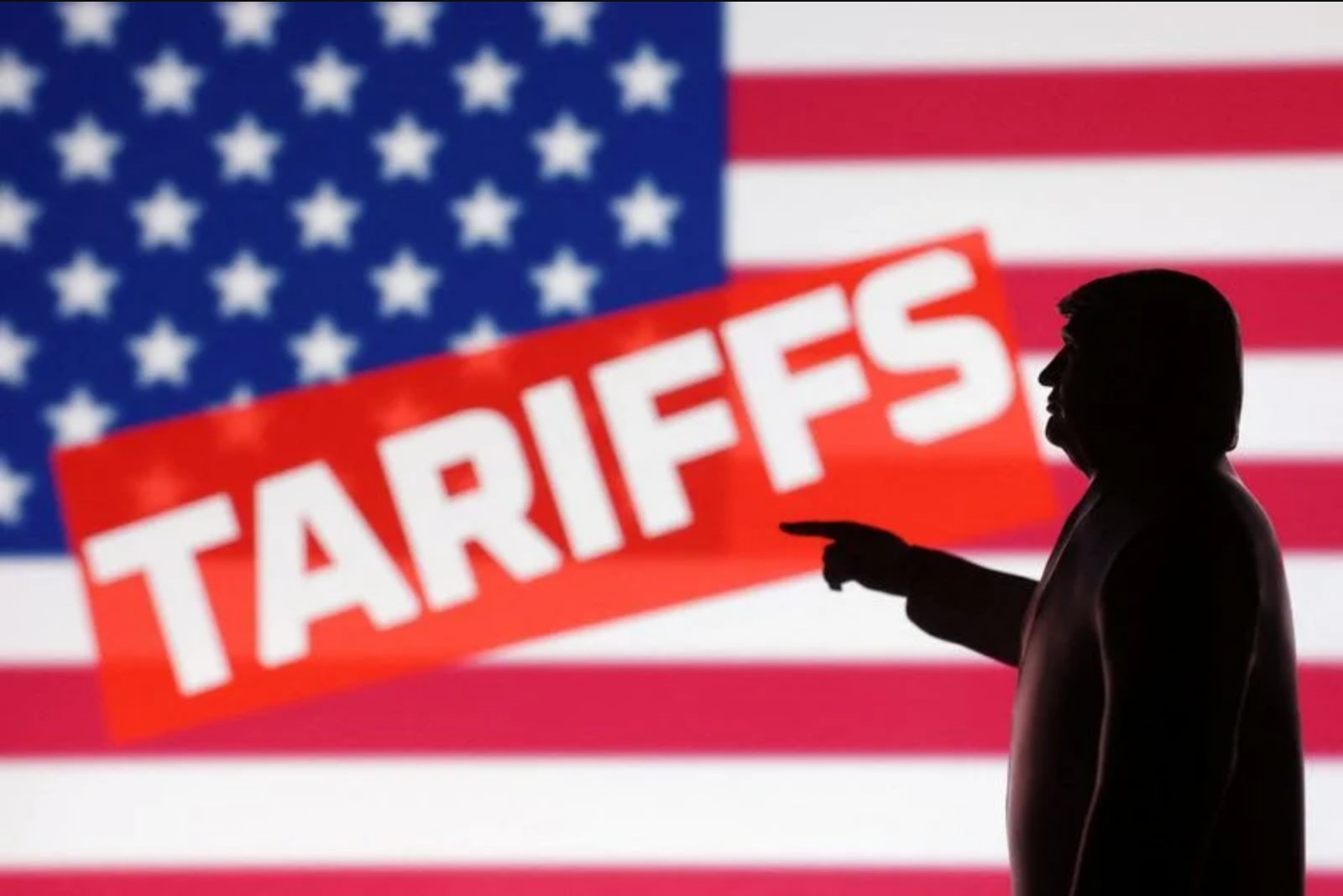
The prospect of sweeping U.S. tariffs on branded medicines has prompted global pharmaceutical companies to move quickly to protect market access and limit exposure. The proposed policy would impose 100% tariffs on branded drugs unless manufacturers either cut prices or shift production to the United States. While enforcement of the tariff regime has been delayed for firms that commit to investing in U.S. manufacturing, the threat alone has catalyzed rapid responses across the sector.
Executives and corporate announcements show a range of mitigation strategies that include accelerated capital expenditure, expanded inventories in the U.S., technology transfers and direct-to-consumer pricing adjustments. Some firms negotiated multi-year tariff exemptions in return for price concessions and participation in the new pricing platform, while others disclosed large-scale plans to expand U.S. production capacity.
Deals and exemptions
Two of the largest multinational drugmakers secured temporary relief from the proposed tariffs by striking pricing agreements and pledging to participate in the administration’s platform. Pfizer and AstraZeneca obtained multi-year exemptions after reaching pricing deals and committing to the new TrumpRx.gov platform, shielding their branded medicines from immediate tariff exposure.
Separately, companies including Eli Lilly, Johnson & Johnson and Merck have publicly committed billions of dollars in planned investments in U.S. manufacturing and research to avoid future penalties under the tariff proposal. For some firms, the result has been immediate: projects were moved up the schedule, price adjustments were implemented, and in some cases firms began selling more directly to consumers to manage pricing and distribution.
Company-specific actions
Pfizer reached an agreement on September 30 to invest $70 billion in research and development and domestic manufacturing. Under that deal, Pfizer received a three-year grace period that exempts its products from the pharmaceutical-targeted tariffs.
GSK said it will invest $30 billion in U.S. research and development and supply-chain infrastructure over five years, committing significant resources to domestic operations.
Eli Lilly has detailed plans for a major expansion of U.S. manufacturing. U.S. President Donald Trump said in January that Lilly plans to build six plants in the United States. Lilly itself had said last year it planned to spend at least $27 billion to build four U.S. plants to expand production and strengthen medical supply chains. The company has since announced details for three of those sites, in Alabama, Virginia and Texas, and in January added a $3.5 billion pharmaceutical manufacturing facility in Pennsylvania as its fourth new site.
Johnson & Johnson plans to increase U.S. investment by 25%, bringing total planned U.S. spending to $55 billion over the next four years. The company said it intends to build four plants, including one in Wilson, North Carolina, and another at Fujifilm Biotechnologies’ manufacturing site in Holly Springs, North Carolina, with the buildup to occur over the next 10 years. J&J also noted roughly $1 billion invested in Jacksonville, Florida, to strengthen U.S.-based manufacturing for its eye care business; that facility is expected to be fully operational in 2028.
Roche announced an intent last April to invest $50 billion in the United States over the following five years. A subsequent $550 million investment was designated to expand its Indianapolis diagnostics manufacturing hub, with an expansion footprint described to include Indiana, Pennsylvania, Massachusetts and California and an expected creation of more than 12,000 jobs. In January, Roche said it would more than double its investment in a drug manufacturing facility in Holly Springs, North Carolina, to about $2 billion, up from the over $700 million announced in May 2025.
AstraZeneca is targeting $50 billion in U.S. manufacturing investments by 2030. That commitment will fund a new drug substance facility in Virginia described as its largest single-site global investment, alongside expansions in Maryland, Massachusetts, California, Indiana and Texas. The company reported that technology transfers and inventory management took place in 2025 to limit tariff exposure, and executives characterized any impact as "very short-lived."
Novartis plans to spend $23 billion to build and expand 10 facilities in the United States over the next five years, including six new manufacturing plants and an expansion of its San Diego research and development site; Novartis said the expansion is expected to create more than 1,000 jobs.
Sanofi intends to invest at least $20 billion in the United States through 2030 to increase manufacturing and research capacity. The French firm said it would expand through both direct investments at company sites and partnerships with domestic manufacturers. Chief Financial Officer François Roger noted in July that potential tariffs were expected to have a limited impact in 2025 since Sanofi already had inventory in place in the United States.
Biogen will add $2 billion in investment to its existing manufacturing plants in North Carolina to increase capacity for gene-targeting therapies and automation. The company currently operates seven factories in the state and expects an eighth to start operations in late 2025.
Merck is building a $3 billion pharmaceutical manufacturing plant in Virginia as part of an overall plan exceeding $70 billion to expand domestic manufacturing and research and development. Merck also plans to invest $1 billion in a new Delaware plant to produce biologics and its cancer drug Keytruda, with the combined effort described as likely to create over 4,500 jobs. The company opened a $1 billion facility at a North Carolina site in March. Merck’s animal health unit will invest $895 million to expand its Kansas manufacturing and R&D site as part of a broader $9 billion U.S. investment through 2028. CEO Robert Davis said in July that the impact of potential tariffs was expected to be minimal in 2025 because of inventory management and shifting manufacturing to the United States.
Amgen plans a $900 million expansion of its Ohio manufacturing operations, bringing total investment in the state to $1.4 billion and adding 750 jobs. In December the company committed $1 billion for a second facility in Holly Springs, North Carolina, and it reported more than $600 million for a new research and development center at its Thousand Oaks, California headquarters. Amgen also announced a $650 million expansion of drug manufacturing at its Juncos, Puerto Rico facility that is expected to create nearly 750 jobs, and an additional $300 million in U.S. manufacturing network investments to expand a biologics facility in Puerto Rico and support construction employment.
Novo Nordisk said its strong U.S. manufacturing footprint positions it well for potential tariff challenges and described itself as "very U.S.-centric and U.S.-focused."
AbbVie committed $100 billion over the next decade to U.S.-based research and development under a three-year agreement with the administration to reduce drug prices. With 11 manufacturing sites in the United States, AbbVie said it was "fairly insulated" from tariff impacts this year due to inventory management. The company also announced a planned $380 million investment to build two manufacturing facilities at its North Chicago, Illinois campus to support production of neuroscience and obesity therapies.
Gilead Sciences disclosed $11 billion in new planned investment in the United States to expand domestic manufacturing and research, bringing its total pledged investment to $32 billion. The company said it had begun work on a pharmaceutical development and manufacturing hub at its Foster City, California headquarters and is developing two additional sites.
Cipla is expanding its U.S. footprint by investing in capacity for complex respiratory products at advanced facilities in Fall River, Massachusetts, and Central Islip, New York.
CSL of Australia said in November it would invest $1.5 billion in the United States to manufacture plasma-derived therapies and expand its U.S. presence over the next five years. In March the company announced an expansion of a plasma therapy manufacturing facility in Kankakee, Illinois, which is expected to be operational by 2031.
Market and operational implications
- Companies are using a mix of expedited capital projects and inventory strategies to mitigate tariff risk while securing continued U.S. market access.
- Tariff exemptions tied to price concessions and participation in the federal pricing platform have already reduced near-term exposure for certain firms.
- Large-scale investments and planned plant builds are intended to shift portions of supply chains to the United States, with implications for domestic jobs and regional manufacturing ecosystems.
What remains uncertain
While many companies have said they are repositioning to limit tariff exposure, the full scope of enforcement timing and the long-term commercial impact remain unclear. Some firms have stated they expect only limited near-term impact, citing inventory onshore and manufacturing transfers, but how these preparations will affect costs, pricing and competitive dynamics over a longer horizon has not been quantified by the companies in the public statements summarized here.
Investors and supply-chain planners will be watching execution timelines closely, since accelerated construction, technology transfers and workforce development are operationally complex and capital intensive.
Bottom line
Faced with the prospect of severe tariffs on branded medicines, global drugmakers have responded with a combination of negotiated exemptions, immediate inventory actions and large-scale investments in U.S.-based manufacturing and R&D. The announcements documented here reflect a sector-wide push to reduce tariff exposure and strengthen domestic supply chains, with plans that range from multi-billion dollar factory builds to technology transfers and inventory positioning.