
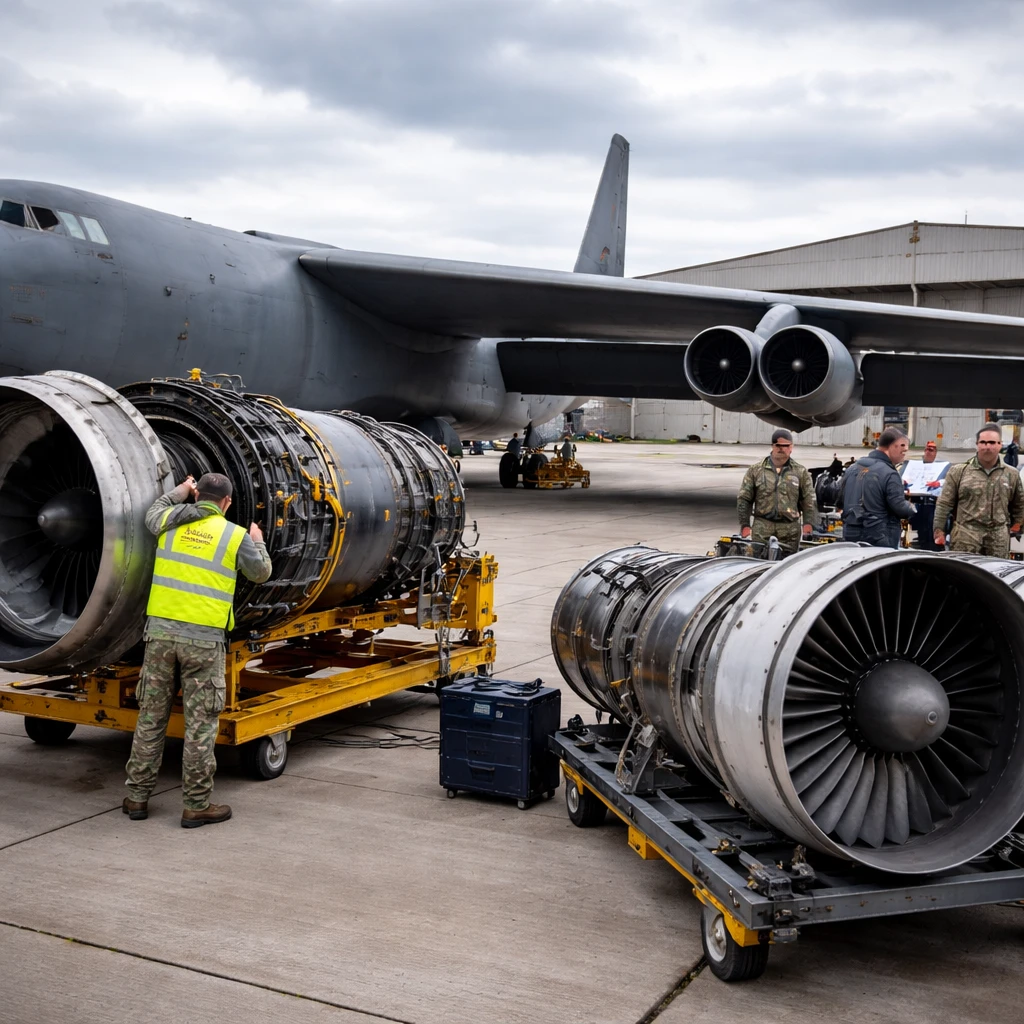
The U.S. Air Force's $21 billion initiative to upgrade the B-52 bomber fleet, overseen by Boeing Co., is experiencing cost growth and timeline setbacks during early development, according to a Government Accountability Office report released Friday.
The GAO found that 10 of the 13 individual upgrade efforts tied to the program are contending with challenges related to cost, schedule or performance. Two efforts - a Rolls-Royce engine upgrade and a radar modernization - are cited as facing all three categories of problems.
The Air Force currently fields 76 B-52s from the 744 originally built. The long-serving bomber, which entered service in 1955, has significantly exceeded its planned lifespan, the GAO observed. The modernization program is intended to sustain the aircraft's operational role through the 2050s in concert with the service's B-2 and B-21 stealth platforms.
Capabilities of the B-52 cited in the report include an unrefueled range of 8,800 miles, the ability to execute both conventional and nuclear missions, and a maximum ordnance capacity of 70,000 pounds. The aircraft has also been employed on missions targeting Iran since March, the GAO noted.
The most expensive portion of the upgrade package is the F130-200 engine program. The Air Force's cost estimate for the engine development phase has risen to roughly $15 billion, up from $11 billion in 2018. The program's initial operational capability has been pushed to 2033, which the GAO describes as a five-year slip from the original target and an additional 15-month delay compared with the timeline reported in 2023.
The GAO warned that the engine effort faces elevated risk because the Air Force intends to begin production later this decade with minimal or no developmental flight testing completed. Launching production before comprehensive flight testing - a practice known as concurrency - can increase the likelihood of additional schedule slippages and cost overruns when testing uncovers design deficiencies that must be corrected.
In response to rising costs, the Air Force initiated an affordability study; the GAO reported that this review was ongoing as of March. Service officials told the GAO they are aware of the concurrency and other risks but are prepared to accept them in order to avoid further schedule delays.
Once production begins, the Air Force plans to procure between 600 and 650 engines from Rolls-Royce and to purchase aircraft subsystems from Boeing.
Context and program status
The GAO's assessment highlights broad programmatic stress across the modernization effort. While the report points to specific technical efforts such as the Rolls-Royce engine upgrade and a radar project as particularly troubled, it also frames the challenges as systemic, with multiple upgrade lines exhibiting cost, schedule or performance shortcomings.
The Air Force is balancing the need to field upgraded capability on a timetable intended to keep the B-52 relevant into the 2050s against the financial and technical risks of advancing production before full developmental testing is complete.