
Shares of European airlines declined on Monday, slipping between 0.07% and 2% as renewed U.S. strikes on Iranian targets over the weekend sent crude oil prices higher and sharpened concerns about security in the Strait of Hormuz.
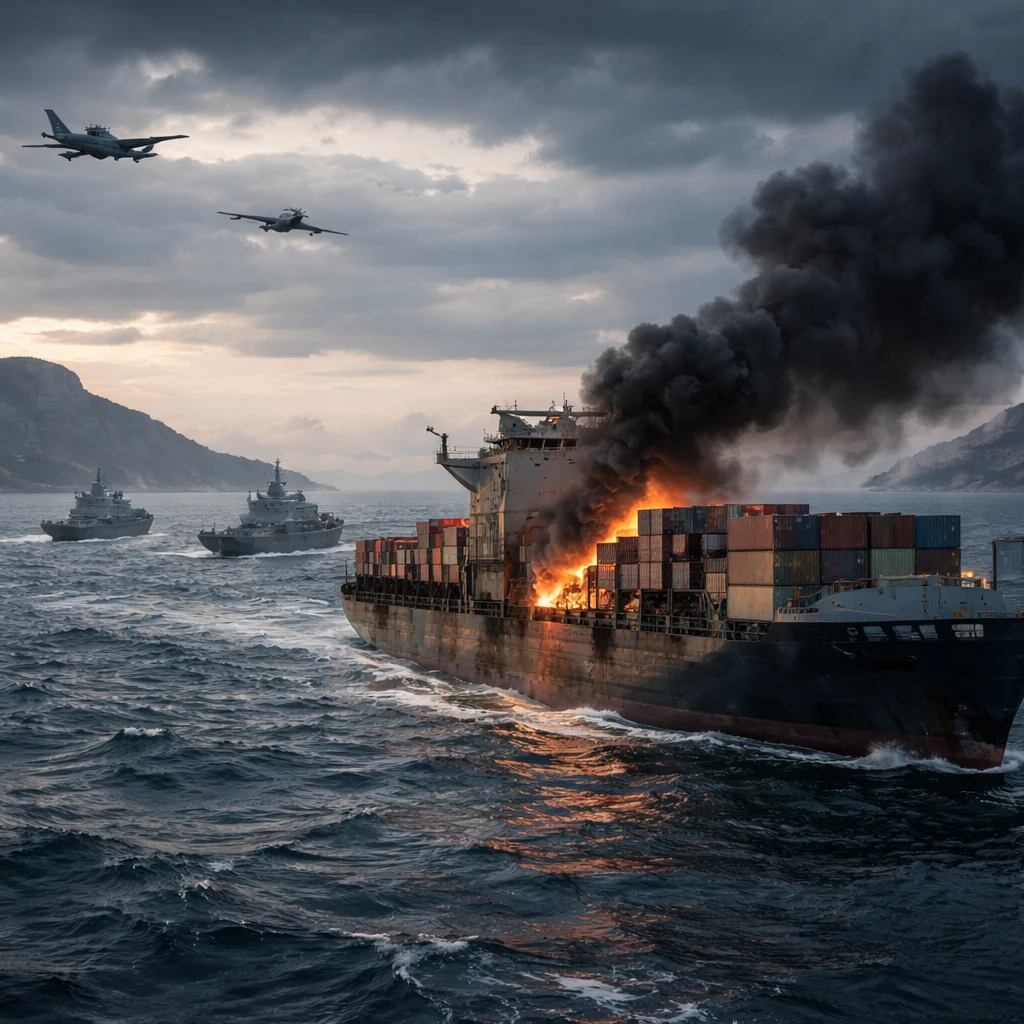
U.S. Central Command (CENTCOM) stated that it conducted another round of strikes intended to further degrade Iran’s ability to threaten civilian mariners and commercial vessels using the strategic waterway. The strikes followed an attack by Islamic Revolutionary Guard Corps forces on the M/V GFS Galaxy, a Cyprus-flagged container vessel transiting the Strait of Hormuz, CENTCOM said.
CENTCOM reported that one civilian crew member from the GFS Galaxy is missing and that the ship cannot continue its voyage because of an onboard fire and significant engine room damage. The incident and the U.S. response coincided with gains in crude prices: Brent rose $2.30, or 3.03%, while U.S. West Texas Intermediate increased $2.06, or 2.88%.
According to CENTCOM, Saturday marked a third round of strikes during the week against Iranian targets. The strikes employed precision munitions launched from land- and sea-based fighter aircraft, drones, and naval vessels, and hit roughly 140 military targets in that latest surge. Over the course of three nights, CENTCOM said it struck more than 300 targets.
The list of targets in the recent operations included Iranian missile and drone sites, naval capabilities, ammunition storage facilities, communication networks, and coastal surveillance locations, CENTCOM said. The stated objective of the strikes was to reduce Tehran’s ability to threaten commercial shipping and civilian mariners in the region.
In comments on NBC’s Meet the Press, U.S. President Donald Trump said a tentative agreement with Tehran had collapsed hours after being reached. He said: "We had meetings with them. They agreed to a deal yesterday. A perfect deal for us. No nuclear, no this, no that, no nothing. They gave up everything, and then after that, they left the room and then within an hour they launched a drone at a ship." He added: "It’s open," regarding the Strait of Hormuz. "We bombed the hell out of them last night."
On his social platform, Mr. Trump wrote: "1000 Missiles are Locked and Loaded and aimed at the Islamic Republic of Iran," and warned of further action should Iran act on threats against him.
Iran’s Persian Gulf Strait Authority said passage through the strait was "currently not possible" because of what it called "recent illegal movements" by U.S. military forces, and said transit would require a permit from the authority. CENTCOM disputed that characterization on X, stating: "Iran does not control the Strait of Hormuz. It remains an international waterway. U.S. forces are positioned and prepared to keep it that way."
Iranian Foreign Minister Seyed Abbas Araghchi, in an X post, said Iran had "kept its word," accused the U.S. Treasury Secretary of violating "Para 9 of the MoU," and added: "There can only be mutual compliance."
Market reaction over the weekend and into Monday reflected heightened geopolitical risk around a critical shipping chokepoint and a direct U.S.-Iran military exchange. The move in Brent and WTI was notable for its size given the brief timeframe and the accompanying statements from military and political actors that framed the strikes and subsequent posture in strongly adversarial terms.
European aviation names, sensitive to fuel costs and to disruptions in travel and shipping, registered small to mid-single-digit declines as oil moved higher and as the safety of key maritime routes was called into question. Shipping interests were directly implicated by the reported attack on the M/V GFS Galaxy and by competing statements over control and access to the Strait of Hormuz.
The situation remains dynamic based on the public statements and military activity described by CENTCOM and by Iranian authorities, and market participants continued to weigh the immediate impacts on fuel costs and the longer-term implications for commercial transit through the strait.