
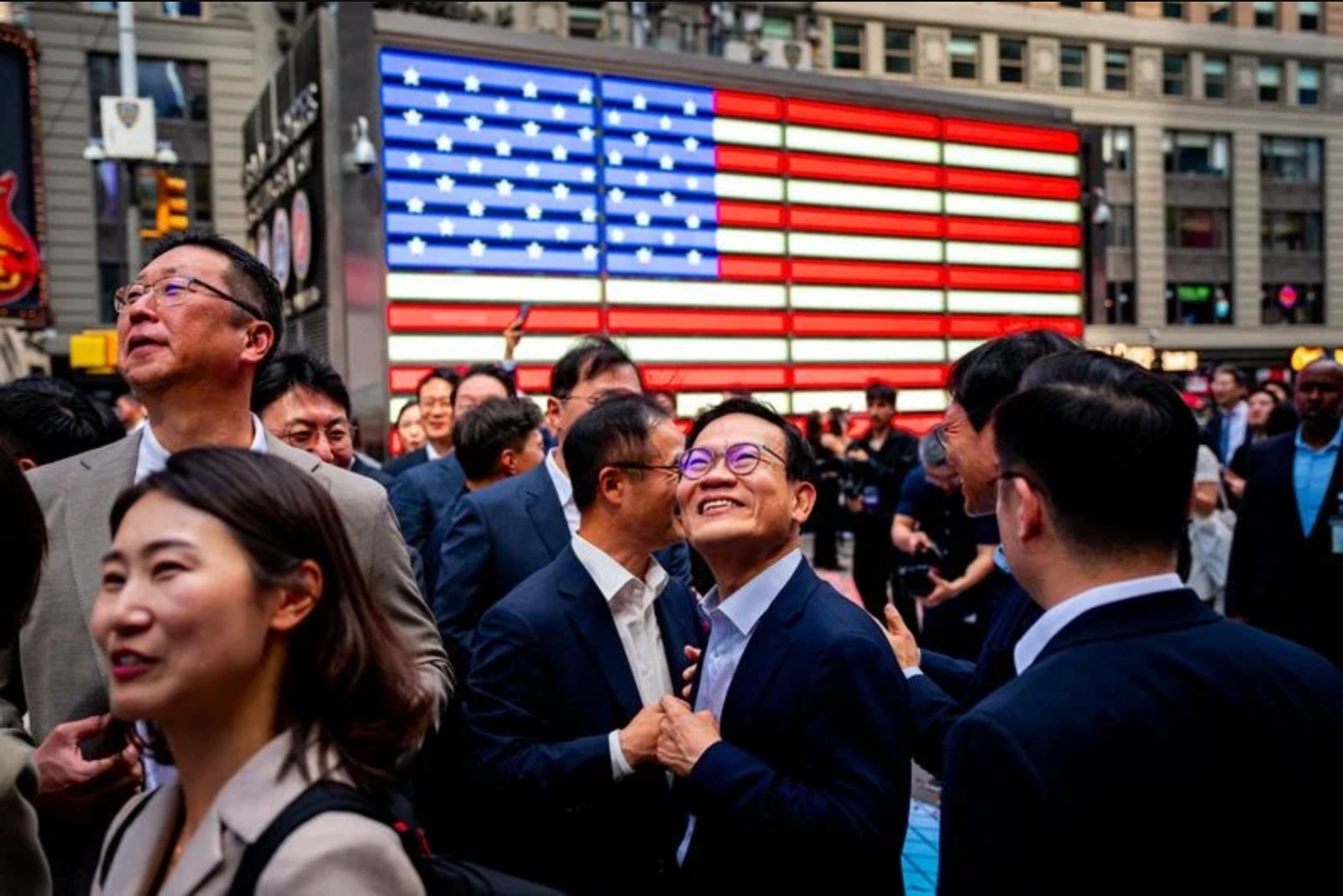
SK Hynix’s blockbuster $26.5 billion U.S. listing last week crystallised two market dynamics: deep investor demand for assets tied directly to artificial intelligence and the premium placed on timing. The South Korean chipmaker’s success was driven in large part by its crucial role in supplying high-bandwidth memory for AI chipsets and by coming to market while investor appetite for AI exposure was strong.
Market participants say other Asian technology companies will take note and many will consider tapping foreign pools of capital, particularly in the United States. But they caution the reception will be more selective outside a narrow set of AI-critical names.
Investors warn that the current wave of enthusiasm for AI is difficult to sustain and that some froth may be cooling as concerns grow about how long AI-driven rallies can last. Chipmakers are also subject to historically pronounced cycles of boom and bust, which adds another layer of volatility to investor assessments.
"SK Hynix is a special case because it is large, liquid, AI-critical, and hard for many U.S. investors to own directly," said Ophir Gottlieb, CEO of Capital Market Laboratories. "I’d call this timing for SK about as perfect as possible, but becoming less perfect daily."
Giuseppe Sette, co-founder of AI investment analytics platform Reflexivity, similarly stressed that not every issuer will enjoy the same reception. He said SK Hynix "works because it plugs a specific hole in U.S. portfolios - AI memory - at peak enthusiasm ... 'me-too' listings without a clear AI or scarcity angle shouldn’t assume the same reception."
Data compiled by LSEG shows relentless investment into artificial intelligence has helped the Asian technology sector raise a record $84 billion for the year to July 10, more than triple the amount raised over the same period in 2025. Of that total, American depositary receipts (ADRs) and global depositary receipts (GDRs) represented $29 billion, an all-time high for that category.
The United States is attractive to issuers for several practical reasons cited by bankers and investors: a broader and deeper investor base, greater liquidity, and corporate governance standards that often translate into higher valuations compared with local markets.
Several companies have been identified as potential candidates for U.S. listings. Japanese memory chipmaker Kioxia has publicly said it plans an ADR listing as soon as the April-June quarter of 2027; the company’s shares have risen roughly sixfold this year on strong AI-related demand. Singapore-based data centre operator DayOne is understood to be pursuing a U.S.-Singapore dual-listing targeted at a $20 billion valuation while also holding talks with a potential buyer, according to sources familiar with the matter. DayOne did not immediately respond to a request for comment.
Bankers expect more issuers will move to access international capital markets. "The current technology fundraising cycle still has considerable runway. We believe the structural drivers behind AI investment will continue to support healthy capital markets activity over the next two to three years," said James Wang, head of Asia ex-Japan ECM at Goldman Sachs. Aaron Oh, UBS head of ECM for Asia Pacific, added he expects tech fundraising to continue "but faster and larger, and I’d expect Asian issuers to access this cycle earlier than they have in the past."
Even where demand is strong, however, market discipline is increasingly apparent in pricing. Taiwan’s Unimicron Technology, a maker of printed circuit boards, raised $1.4 billion last week through a global depositary share issue that was reportedly oversubscribed multiple times. The deal was nonetheless priced toward the bottom of the marketed range and settled at a 5.3% discount to its closing price on the day, underlining investor insistence on appropriate valuation terms.
"Investors still have appetite for Asian tech issuance, but due to increased volatility they require appropriate pricing and are exercising greater discipline," said Manoj Jain, co-founder and co-CIO of Hong Kong-based hedge fund Maso Capital.
For Asian technology companies contemplating cross-border listings, the market message is clear: while foreign capital remains accessible and potentially rewarding, the outlook will likely favour large, liquid companies with demonstrable AI relevance or other scarcity attributes. Smaller or less differentiated issuers should expect closer scrutiny on valuation and may need to adjust pricing expectations to secure demand.